Loading...
Juan Carlos I of Spain vs Victor Emmanuel II
Victor Emmanuel II leads by 4.2 pts · 2 figures compared
…
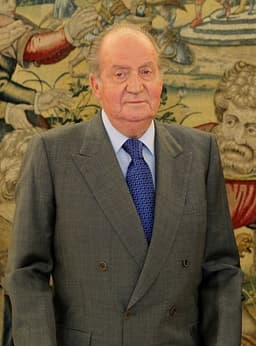
Juan Carlos I of Spain
Emperor · Modern
57.1Total
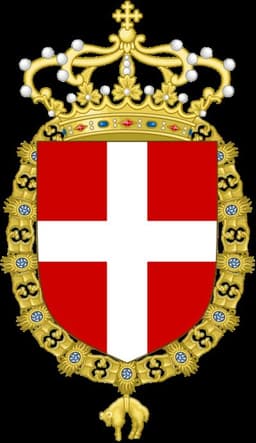
Victor Emmanuel II
Emperor · Modern
61.3Total
Basic Information
Born
1938
1820
Died
—
1878
Era
Modern
Modern
Nationality
Spain
Italy
Occupation
Emperor
Emperor
Civilization
Western
Western
Score Comparison
Military (10%)
27.1
47.5
Political (20%)
75.0
78.0
Influence (20%)
55.0
56.7
Legacy (20%)
52.0
52.0
Leadership (15%)
72.0
78.0
Strategy (15%)
56.0
60.0
TOTAL
57.1
61.3
Juan Carlos I of Spain — Complete Timeline
1969 AD
Appointment as Franco's successorPolitical Action
Francisco Franco designated Juan Carlos as his successor, with the title of Prince of Spain. This decision was made to ensure the continuation of the regime after Franco's death, but Juan Carlos secretly worked to transition Spain to democracy.
SuccessionFrancoTransition
Impact: national
1975 AD
Proclamation as King of SpainPolitical Action
Juan Carlos I was proclaimed king two days after Franco's death. He inherited a dictatorial regime but quickly moved to dismantle it, initiating a process of political reform that would lead to democracy.
ProclamationMonarchyReform
Impact: nationalconstructive
1977 AD
Legalization of political partiesReform◆ Major
Under Juan Carlos I's guidance, the Spanish government legalized political parties, including the Communist Party. This was a key step in the transition to democracy, allowing for free elections and the establishment of a pluralistic political system.
DemocracyPolitical ReformLegalization
Impact: nationalprogressive
1978 AD
Approval of the 1978 ConstitutionReform
Juan Carlos I oversaw the drafting and approval of a new democratic constitution. The constitution established a parliamentary monarchy, guaranteed civil rights, and decentralized the state through autonomous communities, ending the Francoist centralization.
ConstitutionDemocracyDecentralization
Impact: nationalconstructive
1981 AD
Role in thwarting the 1981 coup attemptPolitical Action
During an attempted military coup, Juan Carlos I went on national television to denounce the coup and order the military to remain loyal to the democratic government. His decisive action helped defeat the coup and consolidate Spanish democracy.
CoupDemocracyLeadership
Impact: nationalconstructive
2014 AD
Abdication in favor of Felipe VIPolitical Action◆ Major
Juan Carlos I abdicated the throne, citing personal reasons and a desire to rejuvenate the monarchy. His abdication followed a series of scandals that had damaged the monarchy's reputation, and he handed over the crown to his son Felipe VI.
AbdicationSuccessionFelipe VI
Impact: national
Victor Emmanuel II — Complete Timeline
1848 AD
Promulgation of the Statuto AlbertinoReform◆ Major
As King of Sardinia, Victor Emmanuel II retained the Statuto Albertino, a constitution granted by his father. This constitution became the legal foundation of the Kingdom of Italy, establishing a constitutional monarchy with a parliamentary system.
ConstitutionMonarchyReform
Impact: nationalconstructive
1855 AD
Alliance with France in the Crimean WarWar◆ Major
Victor Emmanuel II sent Sardinian troops to fight alongside France and Britain in the Crimean War. This participation elevated Sardinia's diplomatic standing, leading to French support for Italian unification in the subsequent Plombi
Crimean WarDiplomacyItalian Unification
Impact: regionalconstructive
1861 AD
Proclaimed King of ItalyPolitical Action
Victor Emmanuel II was proclaimed King of Italy by the first Italian Parliament in Turin. This event formally unified most of the Italian peninsula under the House of Savoy, with the exception of Venetia and Rome, marking the birth of the Kingdom of Italy.
Italian UnificationRisorgimentoKingship
Impact: nationalconstructive
1866 AD
Annexation of VenetiaWar◆ Major
Following the Austro-Prussian War, Italy, allied with Prussia, annexed Venetia from Austria. Victor Emmanuel II's forces suffered defeats on land but gained the territory through the Treaty of Vienna, completing a key step in unification.
Italian UnificationVenetiaAnnexation
Impact: nationalconstructive
1870 AD
Capture of RomeWar
Italian troops under Victor Emmanuel II breached the Porta Pia in Rome, completing the unification of Italy. The Papal States were annexed, and Rome became the capital of the Kingdom of Italy, ending the temporal power of the Pope.
Italian UnificationRomePapal States
Impact: nationalconstructive
1878 AD
Death and LegacyOther◆ Major
Victor Emmanuel II died in Rome, having unified Italy under his rule. His death marked the end of the founding era of the Kingdom of Italy, and he was buried in the Pantheon, becoming a symbol of Italian unification.
DeathLegacyItalian Unification
Impact: national
Expert Analysis
Origins
**Juan Carlos I** was born on January 5, 1938, in Rome, Italy, during the Spanish Civil War. He was the grandson of King Alfonso XIII, who had been deposed in 1931. His father, Don Juan de Borbón, was the heir to the throne but lived in exile. Juan Carlos spent his early years in exile in Italy and Switzerland, receiving a strict education. In 1948, Francisco Franco agreed to allow him to be educated in Spain, where he attended military academies and later studied at the University of Madrid. His upbringing was carefully managed by Franco to produce a compliant successor.
**Victor Emmanuel II** was born on March 14, 1820, in Turin, Kingdom of Sardinia. He was the eldest son of King Charles Albert and Maria Theresa of Tuscany. His early education focused on military and political training. He fought in the First Italian War of Independence (1848-1849) and became king after his father abdicated following defeat by Austria. His background was steeped in the Risorgimento, the movement for Italian unification.
Rise to Power
**Juan Carlos I** was formally designated as Franco's successor in 1969, becoming Prince of Spain. After Franco's death on November 20, 1975, Juan Carlos was proclaimed king on November 22. He surprised many by immediately initiating political reforms. He appointed Adolfo Suárez as prime minister in 1976, who legalized political parties, including the Communist Party, and called for democratic elections. The 1978 Constitution was approved by referendum, establishing a parliamentary monarchy. His rise was a carefully orchestrated transition from dictatorship to democracy.
**Victor Emmanuel II** ascended the throne of Sardinia in 1849 after his father's abdication. He retained the liberal constitution, the Statuto Albertino, which became the legal foundation for unified Italy. He appointed Count Camillo Benso di Cavour as prime minister in 1852. Through strategic alliances, particularly with France in the Crimean War (1855) and the Second Italian War of Independence (1859), he expanded Sardinian territory. In 1861, he was proclaimed King of Italy, unifying most of the peninsula except Venetia and Rome.
Leadership & Governance
**Juan Carlos I** scored 72.0 in leadership and 75.0 in political ability. His governance style was constitutional and democratic. He acted as a figurehead who intervened decisively during crises, notably during the 1981 coup attempt when he ordered the military to remain loyal to the democratic government. His political score reflects his role in dismantling Francoist institutions and establishing a stable democracy. However, his military score of 27.1 indicates no direct combat role.
**Victor Emmanuel II** scored 78.0 in leadership and 78.0 in political ability. He was a more hands-on ruler, personally leading troops in battle. His leadership was instrumental in the unification process, though he often deferred to Cavour's political acumen. He retained the Statuto Albertino, which provided constitutional continuity. His military score of 47.5 is higher than Juan Carlos's, reflecting his involvement in wars against Austria and the capture of Rome in 1870.
Triumph & Tragedy
**Juan Carlos I**'s greatest triumph was overseeing Spain's peaceful transition to democracy and thwarting the 1981 coup attempt. His legacy is tied to the 1978 Constitution and the consolidation of democratic institutions. However, his later years were marred by scandals, including a controversial elephant-hunting trip in 2012 and allegations of financial impropriety, leading to his abdication in 2014. His reputation declined significantly, with some viewing him as having betrayed the trust he earned during the transition.
**Victor Emmanuel II**'s greatest triumph was achieving the unification of Italy, a goal pursued for decades. He captured Rome in 1870, completing unification. However, his reign saw ongoing tensions with the Catholic Church (the Pope became a self-proclaimed prisoner in the Vatican), and the unification process left deep regional divisions that persist today. His military campaigns were not always successful; for instance, Italian forces were defeated by Austria in 1866, and only gained Venetia through Prussia's victory.
Character & Destiny
**Juan Carlos I** was pragmatic and adept at navigating political transitions. He showed decisiveness during the 1981 coup, but his later years revealed poor judgment and a sense of entitlement. His character shaped his destiny: his initial popularity gave way to public disillusionment.
**Victor Emmanuel II** was known for his straightforward, soldierly demeanor. He was nicknamed "Re Galantuomo" (the Gentleman King) for his perceived honesty. He relied heavily on Cavour and other advisors, which limited his independent political vision. His character contributed to the success of unification but also to the centralization of power that alienated regions.
Legacy
**Juan Carlos I**'s legacy is mixed. He is credited with leading Spain's democratic transition, but his later scandals tarnished his image. His influence score of 55.0 reflects ongoing debates about his historical role. The monarchy he helped restore remains in place, but his abdication under pressure has set a precedent for accountability.
**Victor Emmanuel II** is remembered as the Father of the Fatherland (Padre della Patria). His legacy score of 52.0 is similar to Juan Carlos's, but his impact on Italian unification is undeniable. The Statuto Albertino influenced Italy's legal system until 1948. However, his reign also set the stage for the authoritarian turn under Mussolini, as the centralization he fostered weakened regional checks.
Conclusion
While both men were transitional figures who unified their nations, Victor Emmanuel II had a greater overall impact, as reflected in his total score of 61.3 compared to Juan Carlos I's 57.1. Victor Emmanuel's role in creating a unified Italy fundamentally altered the European balance of power, whereas Juan Carlos's transition to democracy, though impressive, was a restoration of a political system that had existed before Franco. Victor Emmanuel's military and political scores are higher, and his unification project had lasting geopolitical consequences. Juan Carlos's later scandals also diminish his long-term standing. Therefore, Victor Emmanuel II emerges as the more significant historical figure.
Rankings
🥇
Victor Emmanuel IILeader
Mil: 47.5Pol: 78.0Inf: 56.7
61.3
🥈
Juan Carlos I of Spain
Mil: 27.1Pol: 75.0Inf: 55.0
57.1
+4.2 behind
How This Comparison Works
Algorithm
Each figure is scored on 6 dimensions (0—100 scale) based on structured historical data: Military (10%), Political (20%), Influence (20%), Legacy (20%), Leadership (15%), Strategy (15%). The weighted total produces the final ranking.
Data Sources
Scores are computed from structured sub-indicators in the database. Scale factors adjust for era (Ancient ×0.85, Modern ×1.0) and civilization size (Eastern ×1.05, Other ×0.80) to account for differences in population and military scale.
Maximum 3 Figures
Comparisons are limited to 2—3 figures to ensure readability and statistical meaningfulness.
Error Margins
±5 points per dimension — Sub-scores are derived from historical records with inherent uncertainty. Two figures within 5 points on a dimension should be considered roughly equivalent in that area.
Total Score Accuracy
±3 points overall — The weighted combination of 6 dimensions produces a total score with approximately ±3 points of uncertainty. Differences of less than 3 points are not statistically significant— the figures are effectively tied.
Known Limitations
- Historical records are incomplete and uneven across civilizations
- Figures from oral-tradition societies may be underrepresented
- Occupation labels can misclassify multi-role figures
- Scores measure capability and impact, not moral character
- Quantitative scoring is a comparison tool, not absolute truth
Capability Radar
Military (10%) — Battles & Warfare
Battles
35
45
Win Rate
37
55
Expansion
42
65
Political (20%) — Governance & Reform
Reform
85
75
Diplomacy
80
80
Economy
60
60
Influence (20%) — Cultural & Global Reach
Cultural
55
65
Global
65
60
Legacy (20%) — Historical Impact
Historical
70
70
Longevity
60
65
Leadership (15%) — Power & Stability
Tenure
65
70
Stability
75
55
Strategy (15%) — Tactics & Innovation
Strategy
48
60
Tactics
49
40
Reform
51
50
Similar Comparisons
Comments & Discussion
No comments yet. Be the first to share your thoughts!