Loading...
Juan Carlos I vs King Sunjo of Joseon
Juan Carlos I leads by 5.2 pts · 2 figures compared
…
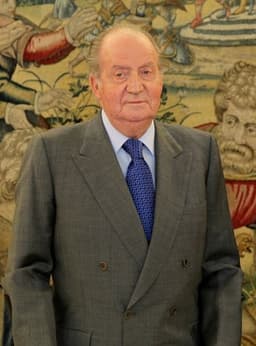
Juan Carlos I
Emperor · Modern
57.5Total

King Sunjo of Joseon
Emperor · Modern
52.3Total
Basic Information
Born
1938
1790
Died
—
1834
Era
Modern
Modern
Nationality
Spain
Korea
Occupation
Emperor
Emperor
Civilization
Western
Eastern
Score Comparison
Military (10%)
26.8
43.3
Political (20%)
75.0
54.7
Influence (20%)
55.0
51.8
Legacy (20%)
52.0
42.5
Leadership (15%)
72.0
72.0
Strategy (15%)
60.0
54.3
TOTAL
57.5
52.3
Juan Carlos I — Complete Timeline
1975 AD
King of Spain CoronationPolitical Action◆ Major
Juan Carlos I was crowned King of Spain on November 22, 1975, two days after Francisco Franco's death. He inherited a dictatorship and immediately began steering the country toward democratic reform.
CoronationTransitionDemocracy
Impact: nationalconstructive
1976 AD
Spanish Transition to DemocracyReform
Juan Carlos I appointed Adolfo Suarez as Prime Minister and supported the Political Reform Act of 1976, which dismantled Francoist institutions. He used his authority to push through democratic reforms, leading to free elections in 1977.
DemocratizationReformConstitution
Impact: nationalprogressive
1981 AD
1981 Spanish Coup d'état AttemptPolitical Action
On February 23, 1981, Civil Guard officers led by Antonio Tejero stormed the Spanish Congress. Juan Carlos I appeared on national television in military uniform, denouncing the coup and ordering the military to remain loyal, which ended the attempt.
Coup AttemptCrisisLeadership
Impact: nationalconstructive
2014 AD
Abdication in Favor of Felipe VIPolitical Action◆ Major
Juan Carlos I abdicated the throne on June 2, 2014, citing personal reasons and the need for generational renewal. His son Felipe VI succeeded him. The abdication followed years of declining popularity due to scandals and economic crisis.
AbdicationMonarchySuccession
Impact: national
2020 AD
Corruption Scandals and ExilePolitical Action◆ Major
In August 2020, Juan Carlos I left Spain for the United Arab Emirates amid investigations into alleged financial irregularities, including hidden bank accounts and commissions from a high-speed rail contract in Saudi Arabia. He remained in self-imposed exile.
CorruptionExileScandal
Impact: nationaldestructive
King Sunjo of Joseon — Complete Timeline
1800 AD
Reign under Andong Kim Clan RegencyPolitical Action◆ Major
Sunjo ascended the throne as a child, and the Andong Kim clan dominated the court through the regency of Queen Dowager Jeongsun. This period saw corruption and factional infighting, weakening the monarchy and central authority.
RegencyFactional DominationCorruption
Impact: nationaldestructive
1801 AD
Persecution of Catholics (Sinyu Persecution)Political Action◆ Major
King Sunjo's reign saw the Sinyu Persecution, a large-scale crackdown on Korean Catholics. Hundreds of believers were executed, including the scholar Hwang Sayeong, who wrote a letter calling for foreign intervention. This persecution strengthened anti-Western sentiment.
Religious PersecutionCatholicismJoseon Dynasty
Impact: nationaldestructive
1811 AD
Hong Gyeong-rae RebellionWar◆ Major
A major peasant rebellion led by Hong Gyeong-rae broke out in Pyeongan Province, fueled by heavy taxation and corruption. The rebellion was suppressed after several months, but it exposed the deep social and economic problems in Joseon.
Peasant RebellionSocial UnrestJoseon Dynasty
Impact: regionaltragic
Expert Analysis
Origins
**Juan Carlos I** was born on January 5, 1938, in Rome, Italy, during the Spanish Civil War. He was the grandson of King Alfonso XIII, who had been exiled in 1931. His father, Juan de Borbón, was the heir to the throne, but Francisco Franco bypassed him in favor of Juan Carlos, whom he groomed as his successor. Juan Carlos was educated in Spain and received military training at the Zaragoza Military Academy, the Naval Military School, and the General Air Academy. He also studied law and political science at the Complutense University of Madrid.
**King Sunjo of Joseon** was born on July 29, 1790, in Seoul, as the second son of King Jeongjo. He ascended the throne at age 10 in 1800, following his father's sudden death. His mother, Queen Hyoui, served as regent initially, but power soon fell to the Andong Kim clan, who dominated the court through the regency of Queen Dowager Jeongsun. Sunjo's early education was focused on Confucian classics, but his rule was heavily influenced by the in-law families.
Rise to Power
Juan Carlos's rise was orchestrated by Franco. In 1969, Franco designated him as his successor with the title of Prince of Spain. After Franco's death on November 20, 1975, Juan Carlos was crowned king on November 22, 1975. He immediately began steering Spain towards democracy, appointing Adolfo Suárez as Prime Minister and supporting the Political Reform Act of 1976, which dismantled Francoist institutions. His pivotal moment came during the 1981 coup attempt, when he appeared on television in military uniform to denounce the coup, securing his role as a defender of democracy.
Sunjo's rise was as a child king. After his father's death, he became king in 1800 at age 10. The Andong Kim clan, led by Queen Dowager Jeongsun, seized power and ruled in his name. Sunjo's reign was marked by factional strife, with the Andong Kims monopolizing high offices and suppressing rivals. It was only after the regency ended in 1803 that Sunjo began to exert some authority, but the Andong Kims remained influential throughout his reign.
Leadership & Governance
Juan Carlos I scored 72.0 in leadership and 75.0 in political acumen. He used his symbolic power to unify Spain and support democratic reforms. He faced the 1981 coup by standing firm, which bolstered his legitimacy. However, his later years were tarnished by corruption scandals, leading to his abdication in 2014 and self-exile in 2020. His governance style was constitutional, acting as a mediator and symbol of unity.
Sunjo scored 72.0 in leadership and 54.7 in politics. He attempted to strengthen royal authority but was constrained by the Andong Kim clan. His reign saw the Sinyu Persecution of Catholics in 1801, where hundreds were executed, and the Hong Gyeong-rae Rebellion in 1811-1812, a peasant uprising against corruption and heavy taxes. Sunjo's governance was reactionary, focusing on suppressing dissent rather than reform.
Triumph & Tragedy
Juan Carlos's greatest triumph was orchestrating Spain's transition to democracy without civil war, a feat scored highly in political influence (75.0). He also thwarted the 1981 coup. His greatest tragedy was his fall from grace due to corruption investigations, which damaged his legacy and forced him into exile in 2020.
Sunjo's triumphs include suppressing the Hong Gyeong-rae Rebellion, which temporarily restored order, and maintaining the Joseon dynasty despite internal strife. His tragedies include the violent persecution of Catholics, which led to the execution of many scholars and strained relations with Western powers, and the enduring dominance of the Andong Kim clan, which weakened the throne.
Character & Destiny
Juan Carlos was pragmatic and risk-taking, as shown by his support for democracy despite his Francoist upbringing. His decision to abdicate was seen as a strategic move to preserve the monarchy. However, his personal financial dealings revealed a sense of entitlement that contradicted his public image.
Sunjo was cautious and indecisive, often yielding to the Andong Kim clan. His character was shaped by his Confucian education, which emphasized filial piety and respect for tradition, but this also made him reluctant to challenge the powerful families. His destiny was to be a figurehead rather than a strong ruler.
Legacy
Juan Carlos's legacy is mixed. He is credited with bringing democracy to Spain, but his later scandals tarnish his reputation. His son Felipe VI has sought to distance the monarchy from his father's controversies. His influence score of 55.0 reflects his role in Spain's modern history.
Sunjo's legacy is overshadowed by the persecution of Catholics and the weakening of the Joseon dynasty. His rule is seen as a period of decline, with his total score of 52.3 reflecting limited impact. He is remembered as a king who failed to modernize or strengthen the state.
Conclusion
Juan Carlos I had a greater impact than King Sunjo of Joseon. His political score of 75.0 versus Sunjo's 54.7 highlights his role in transforming Spain from a dictatorship to a democracy, a change that affected millions. Sunjo's reign was marked by stagnation and persecution, with a legacy score of 42.5 versus Juan Carlos's 52.0. While both faced challenges, Juan Carlos's actions had lasting consequences for Spain's place in Europe, whereas Sunjo's rule did little to alter Joseon's trajectory. The data supports the conclusion that Juan Carlos I was the more significant historical figure.
Rankings
🥇
Juan Carlos ILeader
Mil: 26.8Pol: 75.0Inf: 55.0
57.5
🥈
King Sunjo of Joseon
Mil: 43.3Pol: 54.7Inf: 51.8
52.3
+5.2 behind
How This Comparison Works
Algorithm
Each figure is scored on 6 dimensions (0—100 scale) based on structured historical data: Military (10%), Political (20%), Influence (20%), Legacy (20%), Leadership (15%), Strategy (15%). The weighted total produces the final ranking.
Data Sources
Scores are computed from structured sub-indicators in the database. Scale factors adjust for era (Ancient ×0.85, Modern ×1.0) and civilization size (Eastern ×1.05, Other ×0.80) to account for differences in population and military scale.
Maximum 3 Figures
Comparisons are limited to 2—3 figures to ensure readability and statistical meaningfulness.
Error Margins
±5 points per dimension — Sub-scores are derived from historical records with inherent uncertainty. Two figures within 5 points on a dimension should be considered roughly equivalent in that area.
Total Score Accuracy
±3 points overall — The weighted combination of 6 dimensions produces a total score with approximately ±3 points of uncertainty. Differences of less than 3 points are not statistically significant— the figures are effectively tied.
Known Limitations
- Historical records are incomplete and uneven across civilizations
- Figures from oral-tradition societies may be underrepresented
- Occupation labels can misclassify multi-role figures
- Scores measure capability and impact, not moral character
- Quantitative scoring is a comparison tool, not absolute truth
Capability Radar
Military (10%) — Battles & Warfare
Battles
34
5
Win Rate
39
5
Expansion
41
5
Political (20%) — Governance & Reform
Reform
85
40
Diplomacy
80
45
Economy
60
40
Influence (20%) — Cultural & Global Reach
Cultural
55
30
Global
65
20
Legacy (20%) — Historical Impact
Historical
70
35
Longevity
60
30
Leadership (15%) — Power & Stability
Tenure
65
60
Stability
75
50
Strategy (15%) — Tactics & Innovation
Strategy
44
5
Tactics
46
5
Reform
52
5
Similar Comparisons
Comments & Discussion
No comments yet. Be the first to share your thoughts!