Loading...
Juan Carlos I vs Qin Shi Huang
Qin Shi Huang leads by 27.7 pts · 2 figures compared
…
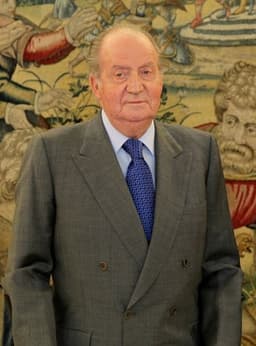
Juan Carlos I
Emperor · Modern
57.5Total
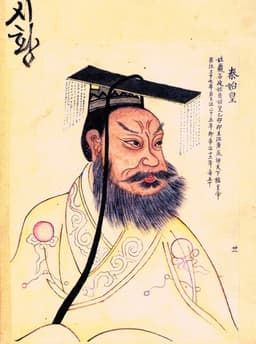
Qin Shi Huang
Emperor · Ancient
85.2Total
Basic Information
Born
1938
-259
Died
—
-210
Era
Modern
Ancient
Nationality
Spain
China
Occupation
Emperor
Emperor
Civilization
Western
Eastern
Score Comparison
Military (10%)
26.8
80.0
Political (20%)
75.0
90.0
Influence (20%)
55.0
85.0
Legacy (20%)
52.0
90.0
Leadership (15%)
72.0
78.0
Strategy (15%)
60.0
82.0
TOTAL
57.5
85.2
Juan Carlos I — Complete Timeline
1975 AD
King of Spain CoronationPolitical Action◆ Major
Juan Carlos I was crowned King of Spain on November 22, 1975, two days after Francisco Franco's death. He inherited a dictatorship and immediately began steering the country toward democratic reform.
CoronationTransitionDemocracy
Impact: nationalconstructive
1976 AD
Spanish Transition to DemocracyReform
Juan Carlos I appointed Adolfo Suarez as Prime Minister and supported the Political Reform Act of 1976, which dismantled Francoist institutions. He used his authority to push through democratic reforms, leading to free elections in 1977.
DemocratizationReformConstitution
Impact: nationalprogressive
1981 AD
1981 Spanish Coup d'état AttemptPolitical Action
On February 23, 1981, Civil Guard officers led by Antonio Tejero stormed the Spanish Congress. Juan Carlos I appeared on national television in military uniform, denouncing the coup and ordering the military to remain loyal, which ended the attempt.
Coup AttemptCrisisLeadership
Impact: nationalconstructive
2014 AD
Abdication in Favor of Felipe VIPolitical Action◆ Major
Juan Carlos I abdicated the throne on June 2, 2014, citing personal reasons and the need for generational renewal. His son Felipe VI succeeded him. The abdication followed years of declining popularity due to scandals and economic crisis.
AbdicationMonarchySuccession
Impact: national
2020 AD
Corruption Scandals and ExilePolitical Action◆ Major
In August 2020, Juan Carlos I left Spain for the United Arab Emirates amid investigations into alleged financial irregularities, including hidden bank accounts and commissions from a high-speed rail contract in Saudi Arabia. He remained in self-imposed exile.
CorruptionExileScandal
Impact: nationaldestructive
Qin Shi Huang — Complete Timeline
246 BC
Construction of the Mausoleum and Terracotta ArmyOther◆ Major
Qin Shi Huang commissioned a vast mausoleum complex near Xi'an, guarded by thousands of life-sized terracotta soldiers, horses, and chariots. The project employed hundreds of thousands of workers and reflected his obsession with immortality and imperial power.
Impact: global
230 BC
Conquest of the Six Warring StatesWar
From 230 to 221 BCE, Ying Zheng led the Qin state in a series of campaigns that conquered the Han, Zhao, Wei, Chu, Yan, and Qi states. This unified China under a single ruler for the first time, ending the Warring States period.
Impact: global
221 BC
Standardization of Writing, Currency, and MeasurementsReform◆ Major
Qin Shi Huang ordered the standardization of Chinese script, currency, and weights and measures across the unified empire. This facilitated administration, trade, and cultural integration, laying a foundation for future dynasties.
Impact: globalconstructive
Proclamation of the Qin DynastyPolitical Action
After conquering the last independent state, Ying Zheng declared himself Shi Huangdi (First Emperor), founding the Qin Dynasty. He adopted a new title to signify his supreme authority and initiated centralized imperial rule.
Impact: global
214 BC
Initiation of the Great Wall ConstructionOther◆ Major
Qin Shi Huang ordered the connection and extension of existing northern fortifications to create a unified defensive wall against nomadic Xiongnu raids. This project involved massive conscripted labor and became the precursor to the later Great Wall.
Impact: regional
213 BC
Burning of Books and Burying of ScholarsPolitical Action◆ Major
On the advice of Li Si, Qin Shi Huang ordered the burning of historical records and philosophical texts not aligned with Legalist doctrine. He also had 460 Confucian scholars buried alive to suppress dissent and consolidate ideological control.
Impact: nationaldestructive
Expert Analysis
juan-carlos-i-vs-qin-shi-huang
# The Emperor’s Two Faces
On a winter night in 221 BC, a young king in his late twenties stood before the walls of a conquered city and declared himself the First Emperor of all China. Two thousand years later, on a November morning in 1975, a middle-aged prince placed his hand on a Bible and swore to uphold a dictatorship he would soon dismantle. Between these two moments lies the entire arc of human civilization—and a question that haunts history: What does it mean to hold absolute power?
Origins
Ying Zheng was born into chaos. The Warring States period had torn China apart for centuries, and his father’s kingdom of Qin was just one of seven contenders. His childhood was spent in a palace where poison and intrigue were as common as rice. When he ascended the throne at thirteen, he was a boy surrounded by eunuchs and regents who saw him as a puppet. The lesson he learned was simple: trust no one, control everything.
Juan Carlos de Borbón was born into a different kind of chaos—the wreckage of a Spanish monarchy that had collapsed, a civil war that had torn families apart, and a dictatorship that had silenced a nation. His grandfather, King Alfonso XIII, had fled Spain. His father, Don Juan, lived in exile. Young Juan Carlos grew up not in a palace but in a Swiss boarding school, then in Franco’s Spain as a hostage of sorts—the dictator’s chosen heir, groomed to preserve the old order. The lesson he learned was equally simple: survive first, act later.
Rise to Power
Ying Zheng’s path was forged in blood. Between 230 and 221 BC, he led his armies in a series of campaigns that historians still describe with a mixture of awe and horror. State after state fell: Han, Zhao, Wei, Chu, Yan, Qi. He did not merely conquer—he obliterated. The defeated nobles were executed or relocated. Their armies were absorbed. Their walls were torn down. By the time he declared himself Shi Huangdi—First Emperor—he had created something China had never seen: a single, unified realm stretching from the Gobi Desert to the Yangtze River.
Juan Carlos’s rise was quieter, more patient. Franco had personally chosen him as successor in 1969, bypassing his own father. For six years, Juan Carlos played the role of loyal prince—attending ceremonies, smiling for cameras, saying nothing controversial. When Franco died on November 20, 1975, the world held its breath. Two days later, Juan Carlos was crowned. The dictatorship’s apparatus remained intact. The old guard watched him. The democrats watched him. He watched everyone.
Leadership & Governance
Here the two emperors diverge like rivers splitting a continent.
Qin Shi Huang governed through terror and efficiency. He standardized the written script so that a man from the Yellow River could read a document drafted in the Yangtze valley. He unified currency and measurements, making trade possible across vast distances. He ordered the construction of roads and canals that tied his empire together. But he also burned books—historical records, philosophical texts, anything that challenged his vision—and buried scholars alive. His philosophy was Legalism: the state is everything, the individual nothing. “The ruler,” he declared, “should be like a god, unseen but all-powerful.”
Juan Carlos governed through subtlety and symbolism. He appointed Adolfo Suárez, a reformer, as Prime Minister in 1976. He supported the Political Reform Act, which dismantled Franco’s institutions from within. He stood by while the Communist Party was legalized, while trade unions were restored, while free elections were held. His power was not absolute—it was constitutional, limited, fragile. But he used it with surgical precision. On February 23, 1981, when Civil Guard officers led by Antonio Tejero stormed the Spanish Congress, Juan Carlos appeared on television in his military uniform and ordered the coup leaders to surrender. That single broadcast saved Spanish democracy.
Triumph & Tragedy
Qin Shi Huang’s triumph was the unification of China—a feat so monumental that the very name “China” derives from his dynasty. His tragedy was his obsession with immortality. He sent expeditions for the elixir of life, built a vast mausoleum guarded by thousands of life-sized terracotta soldiers, and died at fifty while on a journey seeking magical herbs. His empire collapsed within four years of his death.
Juan Carlos’s triumph was the Spanish Transition—a peaceful shift from dictatorship to democracy that became a model for the world. His tragedy came decades later. In 2014, amid corruption scandals involving his son-in-law and allegations of financial impropriety, he abdicated in favor of his son, Felipe VI. By 2020, he had fled Spain for the United Arab Emirates, a king in exile, his reputation in tatters.
Character & Destiny
Qin Shi Huang was a man who believed in the power of the will. He would reshape the world through sheer force—and if the world resisted, he would destroy it. His personality was rigid, paranoid, and absolute. He could not imagine sharing power because he had never seen power shared.
Juan Carlos was a man who believed in the power of patience. He had learned, in exile and under Franco’s shadow, that power is often most effective when held loosely. His personality was pragmatic, adaptable, and secretive. He could imagine sharing power because he had spent his life waiting for the right moment to do so.
Legacy
Qin Shi Huang left behind a unified China, a standardized script, and the Great Wall—but also a template for authoritarian rule that would echo through two millennia. He is remembered as both founder and tyrant, the man who made China possible and the man who nearly destroyed it.
Juan Carlos left behind a democratic Spain, a constitutional monarchy, and a peaceful transition—but also a cautionary tale about the corrupting influence of power. He is remembered as both savior and scandal, the king who gave Spain its freedom and then lost his own.
Conclusion
Perhaps the deepest difference between these two emperors is not in their methods but in their understanding of time. Qin Shi Huang believed he could freeze history—standardize everything, control everything, live forever. Juan Carlos believed he could guide history—nudge it, shape it, then step aside. One built a mausoleum to contain eternity. The other built a democracy that would outlive him. Both discovered, in the end, that power is a loan, not a possession. What matters is what you do with it while you have it.
Rankings
🥇
Qin Shi HuangLeader
Mil: 80.0Pol: 90.0Inf: 85.0
85.2
🥈
Juan Carlos I
Mil: 26.8Pol: 75.0Inf: 55.0
57.5
+27.7 behind
How This Comparison Works
Algorithm
Each figure is scored on 6 dimensions (0—100 scale) based on structured historical data: Military (10%), Political (20%), Influence (20%), Legacy (20%), Leadership (15%), Strategy (15%). The weighted total produces the final ranking.
Data Sources
Scores are computed from structured sub-indicators in the database. Scale factors adjust for era (Ancient ×0.85, Modern ×1.0) and civilization size (Eastern ×1.05, Other ×0.80) to account for differences in population and military scale.
Maximum 3 Figures
Comparisons are limited to 2—3 figures to ensure readability and statistical meaningfulness.
Error Margins
±5 points per dimension — Sub-scores are derived from historical records with inherent uncertainty. Two figures within 5 points on a dimension should be considered roughly equivalent in that area.
Total Score Accuracy
±3 points overall — The weighted combination of 6 dimensions produces a total score with approximately ±3 points of uncertainty. Differences of less than 3 points are not statistically significant— the figures are effectively tied.
Known Limitations
- Historical records are incomplete and uneven across civilizations
- Figures from oral-tradition societies may be underrepresented
- Occupation labels can misclassify multi-role figures
- Scores measure capability and impact, not moral character
- Quantitative scoring is a comparison tool, not absolute truth
Capability Radar
Military (10%) — Battles & Warfare
Battles
34
85
Win Rate
39
90
Expansion
41
90
Political (20%) — Governance & Reform
Reform
85
95
Diplomacy
80
75
Economy
60
90
Influence (20%) — Cultural & Global Reach
Cultural
55
95
Global
65
85
Legacy (20%) — Historical Impact
Historical
70
95
Longevity
60
95
Leadership (15%) — Power & Stability
Tenure
65
70
Stability
75
65
Strategy (15%) — Tactics & Innovation
Strategy
44
85
Tactics
46
80
Reform
52
95
Similar Comparisons
Comments & Discussion
ShanghaiSlasher6/17/2026
Calling this a comparison is like comparing a guillotine to a Swiss army knife. Qin Shi Huang buried scholars alive—literally—to control thought. He standardized writing, sure, but also turned dissidents into fertilizer for his Great Wall. Juan Carlos? He inherited a fascist state and chose to dismantle it from within. One was a tyrant who crushed freedom. The other was a king who gave it away. Don't moral-equivalence this into something it's not.
长城守卫6/17/2026
当国王当到主动下台放权,和当皇帝当到给自己修地下兵马俑军团,这能是一回事?秦始皇统一度量衡、文字、货币是伟大,但他焚书坑儒、严刑峻法,活生生把六国子民变成秦国的螺丝钉。而胡安·卡洛斯一世呢?他接过佛朗哥的烂摊子,亲手把权力还给了议会。一个建了长城把自己圈起来,一个拆了墙让西班牙人走出去——这就是根本区别。
PhD_in_Paradox6/17/2026
As a data skeptic, I’m suspicious of how we frame “absolute power.” Qin Shi Huang held it for 11 years—but his dynasty lasted 15. Juan Carlos held a constitutional crown for 39 years—but his reputation cratered after 2012’s hunting scandal and corruption allegations. So who was the better absolutist? Neither. Both ended their reigns with messy legacies, but one unified a continent-sized civilization, while the other presided over a banking crisis. Context matters more than clickbait.
秦史发烧友6/17/2026
列位怕是忘了,秦始皇统一六国后在位仅十一年便暴毙,死前连太子都没立稳——这叫什么绝对权力?他晚年痴迷长生药,把自己关在咸阳宫里,连丞相李斯都见不到他。而胡安·卡洛斯在1975年登基后,用六年时间亲手摧毁了佛朗哥体制,1981年政变时穿军装电视讲话稳住民主——这才是清醒的掌权者。别拿一个早逝的独夫和一个智勇双全的君主相提并论。