Loading...
This comparison has not been analyzed yet.
One-time AI generation (~1 minute). Scores and timeline are already available below.
Juan Carlos Ongania vs Suchinda Kraprayoon
Juan Carlos Ongania leads by 6.8 pts · 2 figures compared
…

Juan Carlos Ongania
General · Modern
43.9Total
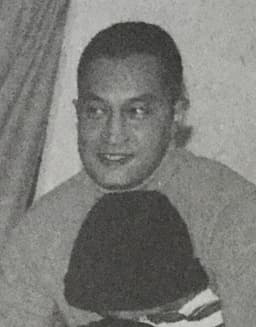
Suchinda Kraprayoon
General · Modern
37.1Total
Basic Information
Born
1914
1933
Died
1995
—
Era
Modern
Modern
Nationality
Argentina
Thailand
Occupation
General
General
Civilization
Western
Eastern
Score Comparison
Military (10%)
22.6
10.2
Political (20%)
39.4
27.9
Influence (20%)
49.4
47.1
Legacy (20%)
38.3
37.5
Leadership (15%)
64.5
45.0
Strategy (15%)
41.0
39.6
TOTAL
43.9
37.1
Juan Carlos Ongania — Complete Timeline
1966 AD
Led the 1966 Argentine coup d'étatPolitical Action◆ Major
General Juan Carlos Ongan
Military CoupDictatorshipArgentine Revolution
Impact: nationaldestructive
1967 AD
Implemented economic stabilization planOther◆ Major
Onganía's government implemented an economic stabilization plan under Minister Adalbert Krieger Vasena. The plan included a 40% devaluation of the peso, wage freezes, and price controls, which temporarily reduced inflation but increased unemployment and social unrest.
Economic PolicyStabilizationSocial Unrest
Impact: nationaldestructive
1969 AD
Suppressed the 1969 Cordobazo uprisingOther◆ Major
Onganía's regime violently suppressed the Cordobazo, a major popular uprising in Córdoba led by students and workers protesting economic policies and police brutality. The military response resulted in dozens of deaths and hundreds of arrests, marking a turning point against the dictatorship.
RepressionCordobazoSocial Protest
Impact: nationaldestructive
1970 AD
Ousted by military juntaPolitical Action◆ Major
Onganía was removed from power by the military junta of the Argentine Revolution, led by General Alejandro Lanusse. The junta replaced him with General Roberto Marcelo Levingston, citing Onganía's failure to resolve political and economic crises.
Military CoupPower TransitionDictatorship
Impact: nationaldestructive
Suchinda Kraprayoon — Complete Timeline
1991 AD
Leadership of the 1991 Thai Coup d'ÉtatPolitical Action◆ Major
General Suchinda Kraprayoon led the National Peace Keeping Council in a bloodless coup that overthrew Prime Minister Chatichai Choonhavan. The coup was justified by claims of corruption and political instability, establishing a military junta.
CoupMilitary JuntaPower Seizure
Impact: nationaldestructive
1992 AD
Appointment as Prime MinisterPolitical Action◆ Major
After a general election, Suchinda was appointed Prime Minister despite not being an elected MP. His appointment sparked widespread protests, as it was seen as a continuation of military rule and a violation of democratic principles.
Prime MinisterControversyMilitary Rule
Impact: nationaldestructive
Black May 1992 Uprising and ResignationPolitical Action
Massive pro-democracy protests in Bangkok, led by Chamlong Srimuang, demanded Suchinda's resignation. The military crackdown resulted in dozens of deaths. King Bhumibol intervened, leading to Suchinda's resignation and the restoration of civilian government.
UprisingBlack MayResignation
Impact: nationaltragic
This comparison has not been analyzed yet.
One-time AI generation (~1 minute). Scores and timeline are already available below.
Rankings
🥇
Juan Carlos OnganiaLeader
Mil: 22.6Pol: 39.4Inf: 49.4
43.9
🥈
Suchinda Kraprayoon
Mil: 10.2Pol: 27.9Inf: 47.1
37.1
+6.8 behind
How This Comparison Works
Algorithm
Each figure is scored on 6 dimensions (0—100 scale) based on structured historical data: Military (10%), Political (20%), Influence (20%), Legacy (20%), Leadership (15%), Strategy (15%). The weighted total produces the final ranking.
Data Sources
Scores are computed from structured sub-indicators in the database. Scale factors adjust for era (Ancient ×0.85, Modern ×1.0) and civilization size (Eastern ×1.05, Other ×0.80) to account for differences in population and military scale.
Maximum 3 Figures
Comparisons are limited to 2—3 figures to ensure readability and statistical meaningfulness.
Error Margins
±5 points per dimension — Sub-scores are derived from historical records with inherent uncertainty. Two figures within 5 points on a dimension should be considered roughly equivalent in that area.
Total Score Accuracy
±3 points overall — The weighted combination of 6 dimensions produces a total score with approximately ±3 points of uncertainty. Differences of less than 3 points are not statistically significant— the figures are effectively tied.
Known Limitations
- Historical records are incomplete and uneven across civilizations
- Figures from oral-tradition societies may be underrepresented
- Occupation labels can misclassify multi-role figures
- Scores measure capability and impact, not moral character
- Quantitative scoring is a comparison tool, not absolute truth
Capability Radar
Military (10%) — Battles & Warfare
Battles
10
5
Win Rate
10
5
Expansion
5
5
Political (20%) — Governance & Reform
Reform
30
5
Diplomacy
25
10
Economy
20
5
Influence (20%) — Cultural & Global Reach
Cultural
15
5
Global
10
5
Legacy (20%) — Historical Impact
Historical
20
10
Longevity
10
5
Leadership (15%) — Power & Stability
Tenure
55
10
Stability
15
5
Strategy (15%) — Tactics & Innovation
Strategy
15
10
Tactics
15
10
Reform
20
5
Similar Comparisons
Comments & Discussion
No comments yet. Be the first to share your thoughts!