Loading...
This comparison has not been analyzed yet.
One-time AI generation (~1 minute). Scores and timeline are already available below.
Juan Jose Arevalo vs Raul Alberto Lastiri
Juan Jose Arevalo leads by 11.8 pts · 2 figures compared
…

Juan Jose Arevalo
Politician · Modern
49.9Total
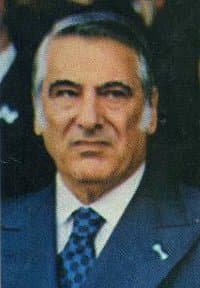
Raul Alberto Lastiri
Politician · Modern
38.1Total
Basic Information
Born
1904
1915
Died
1990
1978
Era
Modern
Modern
Nationality
Guatemala
Argentina
Occupation
Politician
Politician
Civilization
Western
Western
Score Comparison
Military (10%)
49.7
49.6
Political (20%)
53.8
26.4
Influence (20%)
54.1
45.5
Legacy (20%)
45.0
35.8
Leadership (15%)
53.2
31.2
Strategy (15%)
41.3
42.0
TOTAL
49.9
38.1
Juan Jose Arevalo — Complete Timeline
1945 AD
Elected President in 1945Political Action
Juan José Arévalo was elected president of Guatemala in the country's first democratic election after the 1944 revolution. He won with 85% of the vote, ushering in a period of progressive reform.
GuatemalaDemocracy1944 Revolution
Impact: nationalprogressive
1946 AD
Founded the Social Security Institute (IGSS)Reform◆ Major
Arévalo established the Guatemalan Social Security Institute (IGSS), providing health insurance, pensions, and other benefits to workers. This was a key component of his 'spiritual socialism' program.
GuatemalaSocial SecurityWelfare
Impact: nationalprogressive
1947 AD
Enacted the Labor Code of 1947Reform◆ Major
Arévalo's government enacted a comprehensive Labor Code that established the right to organize unions, collective bargaining, an eight-hour workday, and minimum wage. This was a landmark reform for workers' rights in Guatemala.
GuatemalaLabor RightsSocial Reform
Impact: nationalprogressive
1949 AD
Survived Multiple Coup AttemptsPolitical Action◆ Major
Arévalo survived several coup attempts by conservative and military factions, including a major uprising in 1949 led by Colonel Francisco Arana. His ability to remain in power demonstrated popular support for his reforms.
GuatemalaCoup AttemptPolitical Stability
Impact: national
1951 AD
Completed His Term and Transferred Power PeacefullyPolitical Action◆ Major
Arévalo completed his six-year term and peacefully transferred power to his elected successor, Jacobo Árbenz. This was a rare event in Guatemalan history and a testament to the democratic gains of the revolution.
GuatemalaDemocracyPeaceful Transition
Impact: nationalconstructive
Raul Alberto Lastiri — Complete Timeline
1973 AD
Appointment as Minister of Social WelfarePolitical Action◆ Major
Raul Alberto Lastiri was appointed Minister of Social Welfare under President Juan Per
Social WelfarePerón GovernmentLópez Rega
Impact: national
Assumed Interim Presidency of ArgentinaOther◆ Major
Lastiri became interim president of Argentina after President H
Interim PresidencyPerónPolitical Transition
Impact: national
Role in the Ezeiza MassacreOther◆ Major
Lastiri was implicated in the planning of the Ezeiza massacre, where Peronist right-wing snipers opened fire on left-wing Peronists at the airport during Per
Ezeiza MassacrePeronist ViolenceRight-WingFactionalism
Impact: nationaldestructive
1976 AD
Exile After the 1976 CoupOther
Following the military coup that overthrew Isabel Per
ExileMilitary CoupTriple AProsecution
Impact: nationaldestructive
This comparison has not been analyzed yet.
One-time AI generation (~1 minute). Scores and timeline are already available below.
Rankings
🥇
Juan Jose ArevaloLeader
Mil: 49.7Pol: 53.8Inf: 54.1
49.9
🥈
Raul Alberto Lastiri
Mil: 49.6Pol: 26.4Inf: 45.5
38.1
+11.8 behind
How This Comparison Works
Algorithm
Each figure is scored on 6 dimensions (0—100 scale) based on structured historical data: Military (10%), Political (20%), Influence (20%), Legacy (20%), Leadership (15%), Strategy (15%). The weighted total produces the final ranking.
Data Sources
Scores are computed from structured sub-indicators in the database. Scale factors adjust for era (Ancient ×0.85, Modern ×1.0) and civilization size (Eastern ×1.05, Other ×0.80) to account for differences in population and military scale.
Maximum 3 Figures
Comparisons are limited to 2—3 figures to ensure readability and statistical meaningfulness.
Error Margins
±5 points per dimension — Sub-scores are derived from historical records with inherent uncertainty. Two figures within 5 points on a dimension should be considered roughly equivalent in that area.
Total Score Accuracy
±3 points overall — The weighted combination of 6 dimensions produces a total score with approximately ±3 points of uncertainty. Differences of less than 3 points are not statistically significant— the figures are effectively tied.
Known Limitations
- Historical records are incomplete and uneven across civilizations
- Figures from oral-tradition societies may be underrepresented
- Occupation labels can misclassify multi-role figures
- Scores measure capability and impact, not moral character
- Quantitative scoring is a comparison tool, not absolute truth
Capability Radar
Military (10%) — Battles & Warfare
Battles
28
30
Win Rate
32
29
Expansion
36
37
Political (20%) — Governance & Reform
Reform
70
5
Diplomacy
55
10
Economy
50
5
Influence (20%) — Cultural & Global Reach
Cultural
35
5
Global
30
5
Legacy (20%) — Historical Impact
Historical
40
10
Longevity
30
5
Leadership (15%) — Power & Stability
Tenure
60
10
Stability
40
5
Strategy (15%) — Tactics & Innovation
Strategy
36
40
Tactics
39
38
Reform
44
43
Similar Comparisons
Comments & Discussion
No comments yet. Be the first to share your thoughts!