Loading...
Juan Jose Arevalo vs Seewoosagur Ramgoolam
Seewoosagur Ramgoolam leads by 5.1 pts · 2 figures compared
…

Juan Jose Arevalo
Politician · Modern
49.9Total
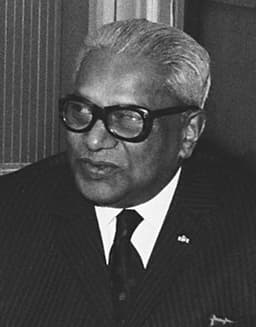
Seewoosagur Ramgoolam
Politician · Modern
55.0Total
Basic Information
Born
1904
1900
Died
1990
1985
Era
Modern
Modern
Nationality
Guatemala
Mauritius
Occupation
Politician
Politician
Civilization
Western
Other
Score Comparison
Military (10%)
49.7
24.1
Political (20%)
53.8
70.3
Influence (20%)
54.1
55.0
Legacy (20%)
45.0
52.0
Leadership (15%)
53.2
75.0
Strategy (15%)
41.3
40.2
TOTAL
49.9
55.0
Juan Jose Arevalo — Complete Timeline
1945 AD
Elected President in 1945Political Action
Juan José Arévalo was elected president of Guatemala in the country's first democratic election after the 1944 revolution. He won with 85% of the vote, ushering in a period of progressive reform.
GuatemalaDemocracy1944 Revolution
Impact: nationalprogressive
1946 AD
Founded the Social Security Institute (IGSS)Reform◆ Major
Arévalo established the Guatemalan Social Security Institute (IGSS), providing health insurance, pensions, and other benefits to workers. This was a key component of his 'spiritual socialism' program.
GuatemalaSocial SecurityWelfare
Impact: nationalprogressive
1947 AD
Enacted the Labor Code of 1947Reform◆ Major
Arévalo's government enacted a comprehensive Labor Code that established the right to organize unions, collective bargaining, an eight-hour workday, and minimum wage. This was a landmark reform for workers' rights in Guatemala.
GuatemalaLabor RightsSocial Reform
Impact: nationalprogressive
1949 AD
Survived Multiple Coup AttemptsPolitical Action◆ Major
Arévalo survived several coup attempts by conservative and military factions, including a major uprising in 1949 led by Colonel Francisco Arana. His ability to remain in power demonstrated popular support for his reforms.
GuatemalaCoup AttemptPolitical Stability
Impact: national
1951 AD
Completed His Term and Transferred Power PeacefullyPolitical Action◆ Major
Arévalo completed his six-year term and peacefully transferred power to his elected successor, Jacobo Árbenz. This was a rare event in Guatemalan history and a testament to the democratic gains of the revolution.
GuatemalaDemocracyPeaceful Transition
Impact: nationalconstructive
Seewoosagur Ramgoolam — Complete Timeline
1948 AD
Elected to the Legislative Council of MauritiusPolitical Action◆ Major
Ramgoolam was elected to the Legislative Council in the 1948 general election, representing the Labour Party. This marked the beginning of his political career in colonial Mauritius.
Political EntryColonial Politics
Impact: nationalconstructive
1961 AD
Became Chief Minister of MauritiusPolitical Action◆ Major
Ramgoolam became Chief Minister of Mauritius after the 1961 constitutional conference in London. He led the push for self-government and eventual independence from Britain.
Self-GovernmentIndependence Movement
Impact: nationalconstructive
1968 AD
Led Mauritius to IndependencePolitical Action
Ramgoolam led Mauritius to independence from the United Kingdom on March 12, 1968, becoming the first Prime Minister. He navigated ethnic tensions between Hindus and Creoles to achieve a peaceful transition.
IndependenceFounding Prime Minister
Impact: nationalconstructive
1976 AD
Implemented free education policyReform◆ Major
Ramgoolam's government introduced free primary and secondary education in Mauritius. This policy significantly increased literacy rates and access to education, laying the foundation for the country's human capital development.
Education ReformSocial Policy
Impact: nationalprogressive
1982 AD
Lost 1982 general electionPolitical Action◆ Major
Ramgoolam's Labour Party was defeated in the 1982 general election by the Militant Socialist Movement (MSM) led by Anerood Jugnauth. The defeat ended his 14-year tenure as Prime Minister, following economic difficulties and unemployment.
Electoral DefeatEnd of Era
Impact: nationaltragic
1983 AD
Appointed Governor-General of MauritiusPolitical Action
Ramgoolam was appointed Governor-General of Mauritius, a ceremonial role representing the British monarch. He served until his death in 1985, providing continuity and stability after his electoral loss.
Ceremonial RolePost-Prime Minister
Impact: national
Expert Analysis
Origins
Juan José Arévalo was born on September 17, 1904, in Taxisco, Guatemala, into a middle-class family. His father, a lawyer, died when he was young, and his mother raised him. Arévalo studied philosophy and education at the University of Guatemala, earning a doctorate in philosophy. He later pursued postgraduate studies in Argentina, focusing on education and psychology. He returned to Guatemala as a professor and eventually became a university administrator. His intellectual background shaped his 'spiritual socialism' ideology, emphasizing moral and cultural development over materialist Marxism.
Seewoosagur Ramgoolam was born on September 18, 1900, in Belle Rive, Mauritius, into a poor Indian immigrant family. His father, a sugarcane laborer, died when he was young. Ramgoolam excelled academically, winning a scholarship to study medicine at the Royal College of Mauritius and later at the University of London. He qualified as a doctor and returned to Mauritius in 1935, practicing medicine while becoming involved in politics. His humble origins and medical career gave him a deep connection to the working class and a pragmatic approach to governance.
Rise to Power
Arévalo's rise came through the 1944 Guatemalan Revolution, which overthrew dictator Jorge Ubico. Arévalo was in exile in Argentina at the time but was invited to run for president. He returned and won the 1945 election with 85% of the vote, becoming Guatemala's first democratically elected president. His victory was a turning point, marking the beginning of a decade of reform. He faced opposition from conservative elites and the military, but his popular support and intellectual prestige kept him in office.
Ramgoolam's political ascent began with his election to the Legislative Council in 1948 as a Labour Party candidate. He became Chief Minister in 1961 after constitutional negotiations in London, leading Mauritius toward self-government. He then led the country to independence on March 12, 1968, becoming its first Prime Minister. His leadership during this period required balancing ethnic tensions between Hindus, Muslims, and Creoles, a task he managed through coalition-building and inclusive rhetoric.
Leadership & Governance
Arévalo governed with a 'spiritual socialist' philosophy, focusing on social justice, labor rights, and education. His government enacted the Labor Code of 1947, which legalized unions, collective bargaining, an eight-hour workday, and paid vacations. He founded the Guatemalan Social Security Institute (IGSS) in 1946, providing health insurance and pensions. In education, he increased funding and built schools, raising literacy rates. However, his reforms alienated the landed elite and the military, leading to instability. Arévalo's leadership score of 53.2 reflects his idealistic but often ineffective governance amid constant coup attempts.
Ramgoolam's governance was pragmatic and developmental. He implemented free primary and secondary education, significantly boosting literacy and social mobility. His government expanded infrastructure, healthcare, and promoted economic diversification, including tourism and textiles. He maintained political stability by forming coalitions and managing ethnic diversity. His leadership score of 75.0 is high due to his successful transition to independence and sustained economic growth. However, his later years saw economic stagnation and corruption allegations, leading to his electoral defeat in 1982.
Triumph & Tragedy
Arévalo's greatest triumph was completing his term and peacefully transferring power to his elected successor, Jacobo Árbenz, in 1951—a rare achievement in Guatemalan history. He also survived multiple coup attempts, including a major uprising in 1949 led by Colonel Francisco Arana. His social reforms improved workers' lives and set a precedent for future governments. However, his tragedy was that his reforms were too moderate to satisfy the left and too radical for the right, leading to polarization. The 1954 coup that ousted Árbenz, partly a reaction to Arévalo's policies, undid many of his achievements. His legacy score of 45.0 reflects this reversal.
Ramgoolam's greatest triumph was leading Mauritius to independence peacefully and establishing a stable democracy. His free education policy transformed Mauritian society, creating a literate workforce. He also guided the economy through diversification, reducing dependence on sugar. However, his tragedy was his electoral defeat in 1982 amid economic difficulties and allegations of nepotism. Critics say he became out of touch, and his party lost to the Militant Socialist Movement. Yet, his legacy as 'Father of the Nation' remains strong, with a legacy score of 52.0.
Character & Destiny
Arévalo was an intellectual idealist, often prioritizing principles over political expediency. His 'spiritual socialism' was unique but impractical in a country with deep class divisions and a powerful military. He survived by sheer will and popular support, but his lack of military strategy (score 41.3) made him vulnerable. His character—philosophical, stubborn, and morally upright—shaped his destiny as a reformer whose work was largely undone.
Ramgoolam was a pragmatic consensus-builder. His medical background gave him a calm, methodical approach. He was adept at forming alliances, both with ethnic leaders and the British colonial authorities. His character—patient, diplomatic, and resilient—allowed him to navigate ethnic tensions and lead a peaceful independence. However, his later complacency and failure to address corruption contributed to his fall. His destiny was to be the founding father, but also a cautionary tale of political longevity.
Legacy
Arévalo's legacy is mixed. He is remembered as Guatemala's first democratic president and a reformer, but his achievements were short-lived. The Labor Code and IGSS survived in part, but subsequent dictatorships eroded them. His ideas influenced later leftist movements, but his immediate impact was limited. His total score of 49.9 reflects a moderate but ultimately reversed influence.
Ramgoolam's legacy is more enduring. He is universally revered as the 'Father of the Nation' in Mauritius. Free education, democratic institutions, and ethnic harmony are his lasting contributions. Mauritius became a stable, prosperous democracy, a model for Africa. His total score of 55.0 reflects a higher sustained impact. However, his later years tarnished his image slightly.
Conclusion
Seewoosagur Ramgoolam had a greater overall impact than Juan José Arévalo. While both were reformers, Ramgoolam's achievements in leading Mauritius to independence and establishing lasting institutions have endured. Arévalo's reforms were significant but were largely reversed within a decade. Ramgoolam's higher political (70.3 vs 53.8) and leadership (75.0 vs 53.2) scores reflect his more effective governance. Arévalo's intellectual idealism, though admirable, could not withstand Guatemala's entrenched power structures. Ramgoolam's pragmatic nation-building created a stable democracy that thrives today. Thus, Ramgoolam's legacy is more profound and lasting.
Rankings
🥇
Seewoosagur RamgoolamLeader
Mil: 24.1Pol: 70.3Inf: 55.0
55.0
🥈
Juan Jose Arevalo
Mil: 49.7Pol: 53.8Inf: 54.1
49.9
+5.1 behind
How This Comparison Works
Algorithm
Each figure is scored on 6 dimensions (0—100 scale) based on structured historical data: Military (10%), Political (20%), Influence (20%), Legacy (20%), Leadership (15%), Strategy (15%). The weighted total produces the final ranking.
Data Sources
Scores are computed from structured sub-indicators in the database. Scale factors adjust for era (Ancient ×0.85, Modern ×1.0) and civilization size (Eastern ×1.05, Other ×0.80) to account for differences in population and military scale.
Maximum 3 Figures
Comparisons are limited to 2—3 figures to ensure readability and statistical meaningfulness.
Error Margins
±5 points per dimension — Sub-scores are derived from historical records with inherent uncertainty. Two figures within 5 points on a dimension should be considered roughly equivalent in that area.
Total Score Accuracy
±3 points overall — The weighted combination of 6 dimensions produces a total score with approximately ±3 points of uncertainty. Differences of less than 3 points are not statistically significant— the figures are effectively tied.
Known Limitations
- Historical records are incomplete and uneven across civilizations
- Figures from oral-tradition societies may be underrepresented
- Occupation labels can misclassify multi-role figures
- Scores measure capability and impact, not moral character
- Quantitative scoring is a comparison tool, not absolute truth
Capability Radar
Military (10%) — Battles & Warfare
Battles
28
25
Win Rate
32
27
Expansion
36
29
Political (20%) — Governance & Reform
Reform
70
80
Diplomacy
55
85
Economy
50
75
Influence (20%) — Cultural & Global Reach
Cultural
35
60
Global
30
60
Legacy (20%) — Historical Impact
Historical
40
70
Longevity
30
65
Leadership (15%) — Power & Stability
Tenure
60
85
Stability
40
80
Strategy (15%) — Tactics & Innovation
Strategy
36
35
Tactics
39
35
Reform
44
41
Similar Comparisons
Comments & Discussion
No comments yet. Be the first to share your thoughts!