Loading...
Erich Honecker vs Seewoosagur Ramgoolam
Seewoosagur Ramgoolam leads by 2.8 pts · 2 figures compared
…

Erich Honecker
Politician · Modern
52.2Total
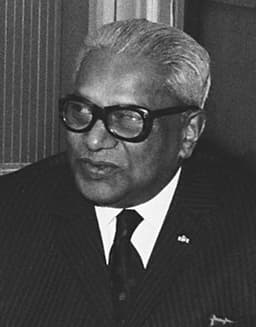
Seewoosagur Ramgoolam
Politician · Modern
55.0Total
Basic Information
Born
1912
1900
Died
1994
1985
Era
Modern
Modern
Nationality
East Germany
Mauritius
Occupation
Politician
Politician
Civilization
Western
Other
Score Comparison
Military (10%)
49.9
24.1
Political (20%)
39.4
70.3
Influence (20%)
54.9
55.0
Legacy (20%)
49.2
52.0
Leadership (15%)
74.0
75.0
Strategy (15%)
41.7
40.2
TOTAL
52.2
55.0
Erich Honecker — Complete Timeline
1961 AD
Construction of the Berlin WallPolitical Action
As head of state, Honecker oversaw the construction of the Berlin Wall, a fortified barrier dividing East and West Berlin. The wall was built to stop the mass emigration of East Germans to the West and became a symbol of the Cold War.
Cold WarBerlin Wall
Impact: globaldestructive
1971 AD
Implementation of the 'Unity of Economic and Social Policy'Reform
Honecker introduced a policy focused on increasing consumer goods and social welfare to improve living standards in East Germany. While popular, this policy strained the economy and increased dependence on West German loans.
Economic policySocial welfare
Impact: nationalconstructive
Appointment as General Secretary of the SEDPolitical Action◆ Major
Honecker succeeded Walter Ulbricht as General Secretary of the Socialist Unity Party of Germany (SED), becoming the de facto leader of East Germany. He consolidated power and pursued a policy of hardline communism.
Communist leadership
Impact: national
1989 AD
Fall of the Berlin WallPolitical Action
Following mass protests and a mistaken announcement by a party official, the Berlin Wall fell. Honecker, who had refused to use force against demonstrators, was forced to resign shortly afterward. The event marked the beginning of the end for East Germany.
Cold WarGerman reunification
Impact: global
Seewoosagur Ramgoolam — Complete Timeline
1948 AD
Elected to the Legislative Council of MauritiusPolitical Action◆ Major
Ramgoolam was elected to the Legislative Council in the 1948 general election, representing the Labour Party. This marked the beginning of his political career in colonial Mauritius.
Political EntryColonial Politics
Impact: nationalconstructive
1961 AD
Became Chief Minister of MauritiusPolitical Action◆ Major
Ramgoolam became Chief Minister of Mauritius after the 1961 constitutional conference in London. He led the push for self-government and eventual independence from Britain.
Self-GovernmentIndependence Movement
Impact: nationalconstructive
1968 AD
Led Mauritius to IndependencePolitical Action
Ramgoolam led Mauritius to independence from the United Kingdom on March 12, 1968, becoming the first Prime Minister. He navigated ethnic tensions between Hindus and Creoles to achieve a peaceful transition.
IndependenceFounding Prime Minister
Impact: nationalconstructive
1976 AD
Implemented free education policyReform◆ Major
Ramgoolam's government introduced free primary and secondary education in Mauritius. This policy significantly increased literacy rates and access to education, laying the foundation for the country's human capital development.
Education ReformSocial Policy
Impact: nationalprogressive
1982 AD
Lost 1982 general electionPolitical Action◆ Major
Ramgoolam's Labour Party was defeated in the 1982 general election by the Militant Socialist Movement (MSM) led by Anerood Jugnauth. The defeat ended his 14-year tenure as Prime Minister, following economic difficulties and unemployment.
Electoral DefeatEnd of Era
Impact: nationaltragic
1983 AD
Appointed Governor-General of MauritiusPolitical Action
Ramgoolam was appointed Governor-General of Mauritius, a ceremonial role representing the British monarch. He served until his death in 1985, providing continuity and stability after his electoral loss.
Ceremonial RolePost-Prime Minister
Impact: national
Expert Analysis
Origins
Erich Honecker was born on August 25, 1912, in Neunkirchen, Germany, into a coal mining family. His father was a communist activist. Honecker joined the Communist Party of Germany (KPD) at age 14 in 1926. He worked as a roofer and later attended the International Lenin School in Moscow from 1930 to 1931. Arrested by the Nazis in 1935, he spent 10 years in prison until 1945.
Seewoosagur Ramgoolam was born on September 18, 1900, in Belle Rive, Mauritius, to Indian immigrant parents. His father was a laborer. Ramgoolam won a scholarship to study medicine in the UK, earning a degree from the University of London in 1928. He returned to Mauritius in 1935 and became involved in politics, joining the Labour Party in 1940.
Rise to Power
Honecker rose through the ranks of the Free German Youth (FDJ) after World War II, becoming its chairman in 1946. He became a member of the Socialist Unity Party (SED) Central Committee in 1950. In 1958, he was appointed Secretary for Security, overseeing the construction of the Berlin Wall in 1961. He succeeded Walter Ulbricht as General Secretary of the SED in 1971, becoming the de facto leader of East Germany.
Ramgoolam was elected to the Legislative Council in 1948 as a Labour Party candidate. He became Chief Minister in 1961 after the London constitutional conference. He led negotiations for independence, which was achieved on March 12, 1968, making him the first Prime Minister. He won subsequent elections in 1970 and 1976.
Leadership & Governance
Honecker's leadership was authoritarian. He implemented the 'Unity of Economic and Social Policy' from 1971, focusing on consumer goods and social welfare. However, the economy stagnated due to inefficiency and reliance on Soviet subsidies. He suppressed dissent through the Stasi secret police, arresting thousands. His military score is 49.9, reflecting East Germany's well-equipped but domestically focused armed forces.
Ramgoolam governed democratically, managing ethnic tensions between Hindus, Creoles, and Muslims. He introduced free primary and secondary education in 1977, boosting literacy from 61% in 1960 to 83% by 1983. He pursued non-aligned foreign policy, maintaining ties with the West and China. His political score is 70.3, indicating effective coalition-building.
Triumph & Tragedy
Honecker's greatest success was stabilizing East Germany's population exodus through the Berlin Wall, which stopped the brain drain. However, his refusal to reform led to economic decline. His greatest failure was the fall of the Berlin Wall in 1989, which he failed to prevent. He was ousted in October 1989 and later fled to the Soviet Union, but was extradited to Germany. He died in exile in Chile in 1994.
Ramgoolam's greatest success was leading Mauritius to independence and establishing a stable democracy. His free education policy transformed the country's human capital. However, his greatest failure was losing the 1982 election due to economic hardship and allegations of corruption. He remained as opposition leader until his death in 1985.
Character & Destiny
Honecker was dogmatic and inflexible, believing in the inevitability of communism. His character—rigid, secretive, and power-hungry—led to his downfall. He scored 74.0 in leadership, reflecting his firm control, but his strategy score of 41.7 shows poor long-term planning.
Ramgoolam was pragmatic and conciliatory, often described as a father figure. He was patient and diplomatic, which helped unite diverse groups. His leadership score is 75.0, but his strategy score is 40.2, indicating reactive decision-making.
Legacy
Honecker's legacy is negative: the Berlin Wall and Stasi repression symbolize communist oppression. East Germany collapsed, and his policies are criticized. His influence score is 54.9, but legacy is 49.2, reflecting limited enduring impact.
Ramgoolam is revered as the 'Father of the Nation' in Mauritius. His education policy created a skilled workforce that attracted foreign investment. Mauritius transformed from a poor sugar economy to a middle-income country. His legacy score is 52.0, with influence at 55.0.
Conclusion
Seewoosagur Ramgoolam had greater impact than Erich Honecker. Ramgoolam's total score is 55.0 vs Honecker's 52.2, a gap of 2.8 points. Ramgoolam's democratic leadership and education reforms created lasting prosperity for a nation of 1.3 million. Honecker's authoritarian rule led to stagnation and collapse. While Honecker's leadership score is slightly lower, Ramgoolam's political skill and positive legacy outweigh Honecker's temporary control. Ramgoolam's impact is enduring and constructive; Honecker's is destructive and transient.
Rankings
🥇
Seewoosagur RamgoolamLeader
Mil: 24.1Pol: 70.3Inf: 55.0
55.0
🥈
Erich Honecker
Mil: 49.9Pol: 39.4Inf: 54.9
52.2
+2.8 behind
How This Comparison Works
Algorithm
Each figure is scored on 6 dimensions (0—100 scale) based on structured historical data: Military (10%), Political (20%), Influence (20%), Legacy (20%), Leadership (15%), Strategy (15%). The weighted total produces the final ranking.
Data Sources
Scores are computed from structured sub-indicators in the database. Scale factors adjust for era (Ancient ×0.85, Modern ×1.0) and civilization size (Eastern ×1.05, Other ×0.80) to account for differences in population and military scale.
Maximum 3 Figures
Comparisons are limited to 2—3 figures to ensure readability and statistical meaningfulness.
Error Margins
±5 points per dimension — Sub-scores are derived from historical records with inherent uncertainty. Two figures within 5 points on a dimension should be considered roughly equivalent in that area.
Total Score Accuracy
±3 points overall — The weighted combination of 6 dimensions produces a total score with approximately ±3 points of uncertainty. Differences of less than 3 points are not statistically significant— the figures are effectively tied.
Known Limitations
- Historical records are incomplete and uneven across civilizations
- Figures from oral-tradition societies may be underrepresented
- Occupation labels can misclassify multi-role figures
- Scores measure capability and impact, not moral character
- Quantitative scoring is a comparison tool, not absolute truth
Capability Radar
Military (10%) — Battles & Warfare
Battles
28
25
Win Rate
33
27
Expansion
34
29
Political (20%) — Governance & Reform
Reform
40
80
Diplomacy
30
85
Economy
20
75
Influence (20%) — Cultural & Global Reach
Cultural
20
60
Global
40
60
Legacy (20%) — Historical Impact
Historical
55
70
Longevity
30
65
Leadership (15%) — Power & Stability
Tenure
60
85
Stability
25
80
Strategy (15%) — Tactics & Innovation
Strategy
36
35
Tactics
43
35
Reform
41
41
Similar Comparisons
Comments & Discussion
No comments yet. Be the first to share your thoughts!