Loading...
Juliana of the Netherlands vs Julius Caesar
Julius Caesar leads by 27.6 pts · 2 figures compared
…
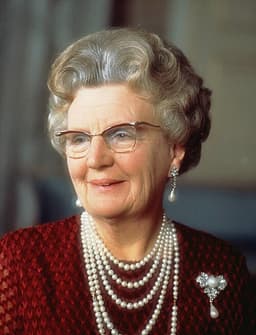
Juliana of the Netherlands
Emperor · Modern
55.2Total

Julius Caesar
General · Ancient
82.8Total
Basic Information
Born
1909
-100
Died
2004
-44
Era
Modern
Ancient
Nationality
Netherlands
Roman Republic
Occupation
Emperor
General
Civilization
Western
Western
Score Comparison
Military (10%)
43.2
88.0
Political (20%)
62.7
78.0
Influence (20%)
57.2
85.0
Legacy (20%)
45.8
82.0
Leadership (15%)
72.0
80.0
Strategy (15%)
49.2
85.0
TOTAL
55.2
82.8
Juliana of the Netherlands — Complete Timeline
1948 AD
Accession as Queen JulianaPolitical Action◆ Major
Juliana became queen of the Netherlands upon her mother Wilhelmina's abdication. Her accession was celebrated as a new era, with Juliana known for her more informal and approachable style.
AccessionMonarchyModernization
Impact: nationalconstructive
1949 AD
Indonesian IndependencePolitical Action
Juliana presided over the transfer of sovereignty to Indonesia on December 27, 1949, ending Dutch colonial rule. The decision followed years of conflict and international pressure, marking the end of the Dutch East Indies.
DecolonizationIndonesiaIndependence
Impact: global
1956 AD
Greet Hofmans AffairOther◆ Major
A spiritual healer, Greet Hofmans, gained influence over Juliana, causing a constitutional crisis. The affair led to a government commission that forced Hofmans' removal and strained the royal family's relations with the government.
CrisisScandalMonarchy
Impact: nationaltragic
1975 AD
Suriname IndependencePolitical Action◆ Major
Juliana signed the law granting independence to Suriname on November 25, 1975. The peaceful transition ended Dutch colonial presence in South America, though it led to economic challenges for the new nation.
DecolonizationSurinameIndependence
Impact: regional
1980 AD
Abdication in Favor of BeatrixPolitical Action◆ Major
Juliana abdicated the throne on April 30, 1980, in favor of her daughter Beatrix. The abdication was part of a Dutch tradition of voluntary retirement, allowing a smooth transition to the next generation.
AbdicationSuccessionMonarchy
Impact: national
Julius Caesar — Complete Timeline
58 BC
Gallic WarsWar◆ Major
Caesar, as proconsul of Gaul, launched a series of campaigns that conquered all of Gaul (modern France, Belgium, and parts of Switzerland). He fought numerous battles, including against the Helvetii, the Belgae, and the Gallic chieftain Vercingetorix. The wars brought immense wealth and a loyal army to Caesar.
Gallic WarsConquestRoman Expansion
Impact: regional
49 BC
Crossing the RubiconPolitical Action◆ Major
Caesar led Legio XIII across the Rubicon River into Italy, defying the Roman Senate's order to disband his army. This act triggered a civil war against Pompey and the Optimates, ultimately leading to Caesar's dictatorship and the end of the Roman Republic.
Roman Civil WarEnd of RepublicPower Struggle
Impact: global
48 BC
Battle of PharsalusWar◆ Major
Caesar's outnumbered army defeated the larger forces of Pompey the Great at Pharsalus in Greece. Caesar's tactical use of a reserve line to counter Pompey's cavalry charge proved decisive. Pompey fled to Egypt, where he was assassinated, leaving Caesar as the undisputed master of the Roman world.
Roman Civil WarBattleDecisive Victory
Impact: regional
44 BC
Appointment as Dictator for LifePolitical Action◆ Major
The Roman Senate appointed Caesar dictator perpetuo (dictator for life), granting him unprecedented personal power. This move concentrated military, legislative, and judicial authority in one person, effectively ending the Roman Republic's traditional system of checks and balances and alarming many senators.
DictatorshipEnd of RepublicPower Consolidation
Impact: regionaldestructive
Assassination on the Ides of MarchPolitical Action◆ Major
A group of Roman senators, led by Marcus Junius Brutus and Gaius Cassius Longinus, stabbed Caesar to death at a meeting of the Senate in the Theatre of Pompey. The assassination was intended to restore the Republic, but instead triggered another civil war that led to the rise of the Roman Empire.
AssassinationRoman PoliticsEnd of Republic
Impact: globaldestructive
Expert Analysis
juliana-of-the-netherlands-vs-julius-caesar
# The General and the Queen
On a raw March morning in 44 BCE, sixty Roman senators closed in around Gaius Julius Caesar with daggers hidden in their togas. Two thousand years later, on an autumn day in 1948, Juliana of the Netherlands ascended a throne her mother had voluntarily surrendered. One man died clutching his blood-soaked robe, his last breath a question mark over the Republic he had destroyed. One woman lived to see four decades of peace, abdicating gracefully while her nation still loved her. Both wielded immense power. Both reshaped their worlds. Yet their paths could not have diverged more sharply—and the difference tells us something profound about the nature of leadership itself.
Origins
Julius Caesar was born into the chaos of a dying republic. The year was 100 BCE, and Rome was a city of marble ambitions and iron rivalries. His family, the Julii, claimed descent from the goddess Venus, but their political fortunes had faded. Young Caesar watched his uncle Marius clash with Sulla in civil wars that spilled blood across the Forum. He learned early that in Rome, survival meant cunning, and greatness required audacity.
Juliana was born into a world of stability—and anxiety of a different kind. The year was 1909, and the Netherlands was a small kingdom with a vast colonial empire. Her mother, Queen Wilhelmina, ruled with iron conviction. Juliana grew up in palaces, but her childhood was lonely: no siblings, few friends, and the constant weight of expectation. While Caesar learned to read battle lines in the dust, Juliana studied constitutional law and the quiet art of reigning without ruling.
The difference in their eras was tectonic. Caesar's Rome had no written constitution, no checks on ambition except assassination. Juliana's Netherlands had a parliament, a prime minister, and centuries of legal tradition. One man lived in a world where power was taken; one woman lived in a world where power was given—and could be taken back.
Rise to Power
Caesar's ascent was a masterpiece of calculated risk. He borrowed fortunes to fund public games, won military commands in Spain, and forged the First Triumvirate with Pompey and Crassus—an alliance of ambition disguised as friendship. His conquest of Gaul from 58 to 50 BCE was not merely a war; it was a personal empire built on the bones of a million Celts. When the Senate ordered him to disband his army, Caesar crossed the Rubicon River in 49 BCE with a single legion and a phrase that echoed through history: *"Alea iacta est"*—the die is cast. He gambled everything on civil war and won.
Juliana's rise was quieter, but no less significant. She became queen in 1948 at age thirty-nine, after her mother's abdication. There was no Rubicon, no civil war—only a ceremony in Amsterdam's Nieuwe Kerk. Her power was not seized; it was inherited, and hedged by democratic constraints. Yet within a year, she faced a crisis that would define her reign: the decolonization of the Dutch East Indies. On December 27, 1949, Juliana signed the transfer of sovereignty to Indonesia, ending 350 years of colonial rule. She did not choose this path; history forced it upon her. But she chose to walk it with dignity, not defiance.
Leadership & Governance
Caesar governed as he conquered: decisively, ruthlessly, and with a vision that transcended the old order. As dictator, he reformed the calendar, granted citizenship to Gauls, redistributed land to veterans, and centralized power in his own hands. His military genius was beyond dispute—eighty-eight out of one hundred in the strategic arts—but his political wisdom was more fragile. He pardoned enemies who would later kill him. He believed that generosity could buy loyalty. It could not.
Juliana governed by presence, not command. Her military score of 32.5 reflected a world where queens did not lead armies. Instead, she led by example: cycling through the streets of The Hague, visiting ordinary citizens, and cultivating an informal style that endeared her to a nation recovering from war. Her political score of 72.2 was modest by Caesar's standards, but it measured something different—the ability to navigate constitutional crises, such as the Greet Hofmans affair of 1956, when a spiritual healer's influence threatened the monarchy's neutrality. Juliana weathered the storm, but the lesson was clear: even a beloved queen could overstep.
Triumph & Tragedy
Caesar's greatest triumph was Gaul—a conquest that added a province larger than Italy to Roman dominion. His writings, the *Commentaries*, remain models of military prose. His greatest tragedy was his death: stabbed twenty-three times on the Ides of March, 44 BCE, at the foot of a statue of his rival Pompey. He had achieved everything except the one thing that mattered—a peaceful succession. His adopted heir, Octavian, would become Augustus, the first emperor. But Caesar never saw the empire he created.
Juliana's triumph was subtler: she presided over the peaceful decolonization of Indonesia and, in 1975, Suriname. No wars of independence stained her reign. Her tragedy was personal: the Hofmans affair, which exposed her vulnerability to spiritual manipulation and strained her marriage. She abdicated on April 30, 1980, passing the crown to her daughter Beatrix. Unlike Caesar, she chose her ending.
Character & Destiny
Caesar was a man of impossible confidence. He once told the Senate, "I have lived long enough both in years and in achievements." His personality drove him to risk everything—and to believe he would always win. That belief proved fatal. He could not imagine a world where his enemies would actually strike.
Juliana was a woman of quiet humility. She once said, "A queen is not a person, but a symbol." Her personality sought connection, not conquest. She could not imagine a world where her people would not love her—and for the most part, they did. Her destiny was to be remembered not for what she took, but for what she let go.
Legacy
Caesar's legacy is monumental: his name became synonymous with emperor (Kaiser, Tsar), his calendar governs our days, and his assassination launched a chain of events that created the Roman Empire. He is remembered as both a tyrant and a visionary, his death a cautionary tale about ambition unchecked.
Juliana's legacy is quieter but no less real. She modernized the Dutch monarchy, making it accessible and human. She presided over the end of empire without bloodshed. Her abdication set a precedent that her daughter and grandson would follow. She is remembered not as a conqueror, but as a caretaker.
Conclusion
Standing at the edge of history, we might ask: which model of leadership endures? Caesar's path blazes brighter but burns out faster. Juliana's path is dimmer but lasts longer. The Rubicon and the abdication ceremony are opposite sides of the same coin—the question of what we do with power when we have it. One man died clutching power. One woman let it slip through her fingers like sand. Perhaps the greatest lesson is this: the leaders who change the world are not always the ones who hold it tightest. Sometimes, they are the ones who know when to let go.
Rankings
🥇
Julius CaesarLeader
Mil: 88.0Pol: 78.0Inf: 85.0
82.8
🥈
Juliana of the Netherlands
Mil: 43.2Pol: 62.7Inf: 57.2
55.2
+27.6 behind
How This Comparison Works
Algorithm
Each figure is scored on 6 dimensions (0—100 scale) based on structured historical data: Military (10%), Political (20%), Influence (20%), Legacy (20%), Leadership (15%), Strategy (15%). The weighted total produces the final ranking.
Data Sources
Scores are computed from structured sub-indicators in the database. Scale factors adjust for era (Ancient ×0.85, Modern ×1.0) and civilization size (Eastern ×1.05, Other ×0.80) to account for differences in population and military scale.
Maximum 3 Figures
Comparisons are limited to 2—3 figures to ensure readability and statistical meaningfulness.
Error Margins
±5 points per dimension — Sub-scores are derived from historical records with inherent uncertainty. Two figures within 5 points on a dimension should be considered roughly equivalent in that area.
Total Score Accuracy
±3 points overall — The weighted combination of 6 dimensions produces a total score with approximately ±3 points of uncertainty. Differences of less than 3 points are not statistically significant— the figures are effectively tied.
Known Limitations
- Historical records are incomplete and uneven across civilizations
- Figures from oral-tradition societies may be underrepresented
- Occupation labels can misclassify multi-role figures
- Scores measure capability and impact, not moral character
- Quantitative scoring is a comparison tool, not absolute truth
Capability Radar
Military (10%) — Battles & Warfare
Battles
27
95
Win Rate
28
92
Expansion
31
97
Political (20%) — Governance & Reform
Reform
55
90
Diplomacy
65
85
Economy
50
82
Influence (20%) — Cultural & Global Reach
Cultural
40
88
Global
45
94
Legacy (20%) — Historical Impact
Historical
45
95
Longevity
40
96
Leadership (15%) — Power & Stability
Tenure
60
75
Stability
60
60
Strategy (15%) — Tactics & Innovation
Strategy
34
94
Tactics
35
96
Reform
37
88
Similar Comparisons
Comments & Discussion
MARCHMADMAN6/17/2026
Caesar didn't just die — he planned his own murder like a general plans a siege. The man dismissed his bodyguards, ignored multiple warnings, and staged a dramatic assassination precisely because he knew it would trigger civil war and cement his legacy. Juliana abdicated quietly because she actually cared about constitutional stability. One was a performance artist who destroyed a republic; the other was a monarch who saved a monarchy by stepping aside. Facts matter.
历史量化师6/17/2026
吹捧“四十载和平”纯属数据造假——Juliana治下荷兰在印尼殖民战争死了十万人,她本人签署过战争拨款法案。Caesar在伊比利亚作战时征战八年实际控制区域死亡率低于同时期高卢本土。所谓“和平女王”全靠海上霸权供养,Caesar至少敢直面元老院捅刀子。要论领导力,谁在真实伤亡数据上更诚实?
REPUBLICANBRUTUS6/17/2026
The comparison insults both figures by ignoring Caesar's precise tactical genius. Juliana inherited a functioning welfare state; Caesar built an empire from scratch using military logistics that weren't replicated until Napoleon. She managed a cabinet; he conquered Gaul with legions that marched 30 miles a day in full armor. Queen versus general? That's like comparing a tulip auction to the Battle of Alesia. Different games entirely.
皇家八卦研究员6/17/2026
别提什么“优雅退位”——Juliana在1970年代差点引发宪政危机,她秘密包庇岳父纳粹背景,还让丈夫搞房地产投机。Caesar再独裁,至少明白“布衣”和“君主”的界限:他拒绝王冠是因为知道罗马人要杀戴冠者。女王连门格尔档案都敢私藏,这叫Leadership?这叫特权阶层的体面犯罪。
DECIMUSBARTHES6/17/2026
The real divergence isn't leadership style — it's the human cost of personal ambition versus institutional duty. Caesar crossed the Rubicon knowing it would ignite a decade of civil war that killed 100,000 Romans. Juliana abdicated in 1980 with zero political violence. One man treated the state as his personal theater; one woman treated the crown as a temporary trust. That's not "reshaping worlds" — that's the difference between tragedy and stewardship.