Loading...
Julius Nepos vs Taharqa
Taharqa leads by 21.4 pts · 2 figures compared
…

Julius Nepos
Emperor · Ancient
36.8Total
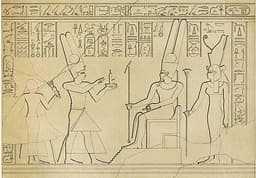
Taharqa
Emperor · Ancient
58.2Total
Basic Information
Born
430
-690
Died
480
-664
Era
Ancient
Ancient
Nationality
Western Roman Empire
Third Intermediate Egypt
Occupation
Emperor
Emperor
Civilization
Western
Other
Score Comparison
Military (10%)
10.2
52.5
Political (20%)
29.3
68.0
Influence (20%)
44.8
56.4
Legacy (20%)
39.2
48.3
Leadership (15%)
39.0
74.0
Strategy (15%)
45.0
55.0
TOTAL
36.8
58.2
Julius Nepos — Complete Timeline
474 AD
Proclaimed Emperor by the Eastern Roman EmpirePolitical Action◆ Major
The Eastern Roman Emperor Leo I recognized Julius Nepos as the legitimate Western Roman Emperor, sending him to Italy with military support to depose the usurper Glycerius. This established Nepos as the last emperor recognized by both halves of the empire.
Imperial SuccessionEastern-Western Relations
Impact: regional
475 AD
Deposed by OrestesPolitical Action◆ Major
The magister militum Orestes rebelled against Julius Nepos, forcing him to flee from Ravenna to Dalmatia. Orestes then installed his own son Romulus Augustulus as emperor, though Nepos continued to claim legitimacy from his exile.
UsurpationCivil WarFall of Western Empire
Impact: regionaldestructive
480 AD
Assassinated in DalmatiaPolitical Action
Julius Nepos was murdered by his own soldiers in his villa near Salona, Dalmatia. His death ended the line of legitimate Western Roman emperors recognized by the Eastern court, and the Eastern Emperor Zeno formally abolished the separate Western imperial title.
AssassinationEnd of Western Roman Empire
Impact: regionaltragic
Taharqa — Complete Timeline
701 BC
Mention in the Bible as TirhakahCultural
Taharqa is mentioned in the Hebrew Bible (2 Kings 19:9, Isaiah 37:9) as 'Tirhakah, king of Cush,' who marched against the Assyrian king Sennacherib during the siege of Jerusalem. This reference confirms his historical significance in the Levant.
BiblicalTirhakahJerusalem
Impact: regional
690 BC
Accession to the thronePolitical Action◆ Major
Taharqa became pharaoh of the 25th Dynasty, succeeding his brother Shebitku. He inherited a kingdom facing Assyrian expansion under Sennacherib and later Esarhaddon.
Accession25th DynastyKushite
Impact: national
680 BC
Construction of the Kawa TempleCultural◆ Major
Taharqa commissioned a large temple to the god Amun at Kawa in Nubia, along with other building projects at Karnak and Jebel Barkal. These constructions reinforced Kushite religious legitimacy.
ArchitectureTempleKawa
Impact: regionalconstructive
671 BC
Assyrian invasion of EgyptWar
The Assyrian king Esarhaddon invaded Egypt, defeating Taharqa's forces at the Battle of Ishupri. Esarhaddon captured Memphis, forcing Taharqa to flee south to Nubia, and installed Assyrian vassal rulers.
Assyrian InvasionEsarhaddonMemphis
Impact: regionaldestructive
669 BC
Recapture of MemphisWar◆ Major
After Esarhaddon's death, Taharqa returned from Nubia and recaptured Memphis from the Assyrian garrison. This brief reconquest restored Kushite control over Lower Egypt for a short period.
RecaptureMemphisKushite
Impact: regional
664 BC
Final defeat by AshurbanipalWar
The Assyrian king Ashurbanipal launched a second invasion of Egypt, defeating Taharqa's forces and sacking Thebes. Taharqa fled to Nubia, where he died later that year, ending effective Kushite rule over Egypt.
AshurbanipalThebesKushite Defeat
Impact: regionaltragic
Expert Analysis
Origins
Julius Nepos was born around 430 AD in Dalmatia, part of the Western Roman Empire. He came from a prominent military family; his uncle was Marcellinus, a powerful general who ruled Dalmatia independently. Nepos was well-educated in Roman traditions and military affairs, but his power base was regional rather than imperial. In contrast, Taharqa was born around 700 BC in Nubia (modern Sudan), a member of the Kushite royal family of the 25th Dynasty. He was the son of Piye, who had conquered Egypt, and brother to Shebitku, whom he succeeded. Taharqa grew up in a militaristic and religious environment, trained in archery and governance, and was deeply involved in the Kushite project of restoring Egyptian traditions.
Rise to Power
Julius Nepos rose to power through Eastern Roman intervention. In 474 AD, Eastern Emperor Leo I appointed him as Western Emperor, sending him with a fleet to Ravenna to overthrow the usurper Glycerius. Nepos landed near Rome, deposed Glycerius without a major battle, and was proclaimed Augustus. His position was weak from the start, dependent on Eastern support and lacking control over the Western military. Taharqa's rise was more organic: he became pharaoh around 690 BC after his brother Shebitku's death, inheriting a kingdom that already controlled Egypt and Nubia. Taharqa had military experience from campaigns against Assyria, and he quickly consolidated power, building alliances with Egyptian priests and nobles. His accession was marked by grand ceremonies at Thebes and Napata, legitimizing his rule through traditional pharaonic rituals.
Leadership & Governance
Nepos ruled for only about 14 months in Italy (474-475 AD). His leadership was pragmatic: he negotiated peace with the Visigoths and Vandals, and attempted to stabilize the empire through diplomacy rather than military force. He appointed loyal officials and tried to maintain Roman law, but his authority was undermined by the general Orestes, who rebelled and forced him to flee to Dalmatia. Nepos never regained power, governing in exile until his assassination in 480 AD. Taharqa, by contrast, ruled for 26 years (690-664 BC). He was an active builder, constructing monuments at Karnak, Jebel Barkal, and Kawa, including the Kawa Temple to Amun. He promoted Kushite culture while respecting Egyptian traditions, and his governance emphasized religious piety and military preparedness. However, his administrative reach was limited by the Assyrian threat, and he struggled to maintain control over Lower Egypt.
Triumph & Tragedy
Nepos's greatest triumph was becoming emperor at all, given his obscure origins. He managed to depose a usurper and gain recognition from the East. His tragedy was his inability to hold power: after Orestes's revolt, he became a figurehead, and his assassination in Dalmatia ended the line of legitimate Western Roman emperors. His military score of 10.2 reflects his lack of battlefield success. Taharqa's triumphs include the reconquest of Memphis after Esarhaddon's death, which briefly restored Kushite control over Egypt. He also successfully defended Egypt for years against Assyrian invasions. His tragedies were the Assyrian invasions: Esarhaddon captured Memphis in 671 BC, and later Ashurbanipal sacked Thebes in 663 BC, leading to Taharqa's flight to Nubia and death. His military score of 52.5 is higher than Nepos's but still moderate.
Character & Destiny
Nepos was a cautious, diplomatic leader in an era of violent military coups. His reliance on Eastern support and inability to command loyalty from Western generals sealed his fate. He was not ruthless enough to survive. Taharqa was a more assertive and ambitious ruler, deeply religious and determined to restore Egypt's glory. His character combined piety with military resolve, but he underestimated Assyrian power. His destiny was to be the last great pharaoh of the 25th Dynasty, presiding over its golden age and its collapse. Historical assessments: Taharqa is remembered as a heroic figure in Nubian and Egyptian history; Nepos is a footnote, the last legitimate emperor.
Legacy
Nepos's legacy is technical: he is the last emperor recognized by the Eastern Roman Empire, and his death marks the end of the Western Roman Empire. However, his influence is minimal, scoring 44.8. Taharqa's legacy is substantial: his building projects influenced Nubian and Egyptian architecture; his military campaigns are recorded in the Bible (2 Kings 19:9) and Assyrian annals. He is a symbol of Kushite independence and resistance. His legacy score of 48.3 is slightly higher than Nepos's, reflecting his cultural and historical impact.
Conclusion
Taharqa had a greater impact than Julius Nepos. His total score of 58.2 versus Nepos's 36.8 reflects his longer reign, more significant military and political achievements, and lasting legacy. While Nepos represents the end of an era, Taharqa represents the height of a civilization that resisted a superpower. The 21.4-point gap is justified by Taharqa's concrete accomplishments in governance, construction, and warfare. Nepos, despite his legitimate title, was a puppet who never truly ruled.
Rankings
🥇
TaharqaLeader
Mil: 52.5Pol: 68.0Inf: 56.4
58.2
🥈
Julius Nepos
Mil: 10.2Pol: 29.3Inf: 44.8
36.8
+21.4 behind
How This Comparison Works
Algorithm
Each figure is scored on 6 dimensions (0—100 scale) based on structured historical data: Military (10%), Political (20%), Influence (20%), Legacy (20%), Leadership (15%), Strategy (15%). The weighted total produces the final ranking.
Data Sources
Scores are computed from structured sub-indicators in the database. Scale factors adjust for era (Ancient ×0.85, Modern ×1.0) and civilization size (Eastern ×1.05, Other ×0.80) to account for differences in population and military scale.
Maximum 3 Figures
Comparisons are limited to 2—3 figures to ensure readability and statistical meaningfulness.
Error Margins
±5 points per dimension — Sub-scores are derived from historical records with inherent uncertainty. Two figures within 5 points on a dimension should be considered roughly equivalent in that area.
Total Score Accuracy
±3 points overall — The weighted combination of 6 dimensions produces a total score with approximately ±3 points of uncertainty. Differences of less than 3 points are not statistically significant— the figures are effectively tied.
Known Limitations
- Historical records are incomplete and uneven across civilizations
- Figures from oral-tradition societies may be underrepresented
- Occupation labels can misclassify multi-role figures
- Scores measure capability and impact, not moral character
- Quantitative scoring is a comparison tool, not absolute truth
Capability Radar
Military (10%) — Battles & Warfare
Battles
5
55
Win Rate
5
40
Expansion
5
60
Political (20%) — Governance & Reform
Reform
10
50
Diplomacy
20
55
Economy
10
50
Influence (20%) — Cultural & Global Reach
Cultural
10
55
Global
15
45
Legacy (20%) — Historical Impact
Historical
25
60
Longevity
20
50
Leadership (15%) — Power & Stability
Tenure
15
65
Stability
10
45
Strategy (15%) — Tactics & Innovation
Strategy
5
55
Tactics
5
50
Reform
5
45
Similar Comparisons
Comments & Discussion
No comments yet. Be the first to share your thoughts!