Loading...
Ramesses XI vs Taharqa
Taharqa leads by 23.3 pts · 2 figures compared
…

Ramesses XI
Emperor · Ancient
34.9Total
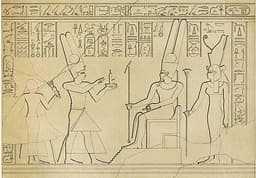
Taharqa
Emperor · Ancient
58.2Total
Basic Information
Born
-1107
-690
Died
-1077
-664
Era
Ancient
Ancient
Nationality
Egypt
Third Intermediate Egypt
Occupation
Emperor
Emperor
Civilization
Middle Eastern
Other
Score Comparison
Military (10%)
10.2
52.5
Political (20%)
30.7
68.0
Influence (20%)
43.2
56.4
Legacy (20%)
35.0
48.3
Leadership (15%)
34.6
74.0
Strategy (15%)
45.0
55.0
TOTAL
34.9
58.2
Ramesses XI — Complete Timeline
1094 BC
The Year of the HyenasOther
A period of severe famine and social unrest occurred during Ramesses XI's reign, recorded in the Turin Papyrus as 'The Year of the Hyenas.' The scarcity of food led to widespread suffering and contributed to the breakdown of central authority in Egypt.
FamineUnrestCrisis
Impact: nationaltragic
1080 BC
The Wenamun expeditionPolitical Action
The priest Wenamun was sent to Byblos to procure cedar wood for the temple of Amun. The account of his journey, recorded in the Papyrus Moscow 120, describes the weakened state of Egyptian influence in the Levant, where Wenamun was treated with disrespect by local rulers.
DiplomacyTradeDecline
Impact: regional
1077 BC
End of the New KingdomPolitical Action◆ Major
Ramesses XI's death marked the end of the New Kingdom and the beginning of the Third Intermediate Period. During his reign, the power of the pharaoh declined significantly, with the High Priest of Amun at Thebes and the Viceroy of Kush exercising de facto control over Upper Egypt.
End of EraDeclineThird Intermediate Period
Impact: globaltragic
Taharqa — Complete Timeline
701 BC
Mention in the Bible as TirhakahCultural
Taharqa is mentioned in the Hebrew Bible (2 Kings 19:9, Isaiah 37:9) as 'Tirhakah, king of Cush,' who marched against the Assyrian king Sennacherib during the siege of Jerusalem. This reference confirms his historical significance in the Levant.
BiblicalTirhakahJerusalem
Impact: regional
690 BC
Accession to the thronePolitical Action◆ Major
Taharqa became pharaoh of the 25th Dynasty, succeeding his brother Shebitku. He inherited a kingdom facing Assyrian expansion under Sennacherib and later Esarhaddon.
Accession25th DynastyKushite
Impact: national
680 BC
Construction of the Kawa TempleCultural◆ Major
Taharqa commissioned a large temple to the god Amun at Kawa in Nubia, along with other building projects at Karnak and Jebel Barkal. These constructions reinforced Kushite religious legitimacy.
ArchitectureTempleKawa
Impact: regionalconstructive
671 BC
Assyrian invasion of EgyptWar
The Assyrian king Esarhaddon invaded Egypt, defeating Taharqa's forces at the Battle of Ishupri. Esarhaddon captured Memphis, forcing Taharqa to flee south to Nubia, and installed Assyrian vassal rulers.
Assyrian InvasionEsarhaddonMemphis
Impact: regionaldestructive
669 BC
Recapture of MemphisWar◆ Major
After Esarhaddon's death, Taharqa returned from Nubia and recaptured Memphis from the Assyrian garrison. This brief reconquest restored Kushite control over Lower Egypt for a short period.
RecaptureMemphisKushite
Impact: regional
664 BC
Final defeat by AshurbanipalWar
The Assyrian king Ashurbanipal launched a second invasion of Egypt, defeating Taharqa's forces and sacking Thebes. Taharqa fled to Nubia, where he died later that year, ending effective Kushite rule over Egypt.
AshurbanipalThebesKushite Defeat
Impact: regionaltragic
Expert Analysis
Origins
Ramesses XI (reigned c. 1107–1078 BCE) was the tenth and final pharaoh of the 20th Dynasty, born into the declining Ramesside line. His father Ramesses X ruled briefly, and the royal authority had already weakened significantly. The priesthood of Amun at Thebes held substantial power, and the central government struggled to maintain control. Ramesses XI's early life was overshadowed by the fading glory of the New Kingdom, with limited resources and growing internal strife.
Taharqa (reigned c. 690–664 BCE) was born in Napata, Nubia (modern Sudan), into the royal family of the Kingdom of Kush. He was the son of Piye, the Kushite king who conquered Egypt and founded the 25th Dynasty. Taharqa's upbringing blended Nubian traditions with Egyptian culture, as his family actively embraced the legacy of pharaonic civilization. He succeeded his brother Shebitku, inheriting a kingdom that controlled both Egypt and Nubia, but faced the rising threat of the Neo-Assyrian Empire.
Rise to Power
Ramesses XI ascended the throne as a child or young adult, inheriting a realm in crisis. His reign is marked by the increasing power of the High Priest of Amun, Herihor, who effectively ruled Upper Egypt from Thebes. The pharaoh's authority was challenged by the viceroy of Nubia, Panehesy, who marched north and besieged Thebes. Ramesses XI's reign saw the fragmentation of Egypt into competing spheres: the pharaoh in the north, the priesthood in the south, and Nubian forces in between. His inability to assert control led to the eventual collapse of the New Kingdom.
Taharqa's rise was shaped by military and diplomatic acumen. He may have served as a commander under his brother Shebitku, leading campaigns in the Levant against Assyrian expansion. When Shebitku died around 690 BCE, Taharqa became pharaoh. He immediately faced the Assyrian king Sennacherib, who had besieged Jerusalem but failed to capture it. Taharqa's support for the Judean king Hezekiah is recorded in the Bible (2 Kings 19:9) as the 'King of Ethiopia' (Tirhakah). This involvement positioned Taharqa as a major anti-Assyrian leader in the region.
Leadership & Governance
Ramesses XI's leadership was weak and reactive. He relied on local strongmen like Herihor and Smendes to maintain order. His governance was characterized by a lack of central control: the state could not collect taxes effectively, and the economy stagnated. The 'Year of the Hyenas' (c. 1090 BCE) saw severe famine, with the Turin Papyrus recording that people resorted to cannibalism. Ramesses XI's reign saw the de facto partition of Egypt, with Herihor taking the title of high priest and later assuming pharaonic regalia in the south, while Smendes ruled the north from Tanis. Ramesses XI's score of 34.6 in leadership reflects his inability to stem the decline.
Taharqa, by contrast, scored 74.0 in leadership. He actively consolidated his control over Egypt and Nubia through a program of temple building and religious patronage. He constructed the Kawa Temple in Nubia, expanded the Amun temple at Karnak, and erected monuments at Jebel Barkal. These projects promoted the legitimacy of Kushite rule and fostered loyalty among the priesthood. Politically, Taharqa maintained a dual court in Memphis and Napata, effectively managing a bicultural empire. However, his governance was challenged by the Assyrian threat, and his military decisions ultimately failed to secure Egypt's independence.
Triumph & Tragedy
Ramesses XI's greatest success was perhaps simply surviving for 29 years on the throne, but his reign witnessed no major triumphs. The Wenamun expedition (c. 1078 BCE) highlights the decline: the priest Wenamun, sent to Byblos for cedar, was treated with contempt by local rulers, revealing Egypt's diminished prestige. Ramesses XI's greatest failure was his inability to prevent the collapse of the New Kingdom. His death triggered the Third Intermediate Period, a time of fragmentation and foreign rule.
Taharqa's triumphs include the recapture of Memphis from the Assyrians after Esarhaddon's death in 669 BCE. He restored Kushite control over Egypt for a brief period, and his building projects left a lasting architectural legacy. However, his tragedy was the ultimate failure to repel the Assyrians. In 667 BCE, Ashurbanipal invaded, defeated Taharqa's forces, and sacked Thebes (a major center of Egyptian culture). Taharqa fled to Nubia, where he died soon after. His dynasty's hold on Egypt was broken, and the Assyrians installed a puppet ruler.
Character & Destiny
Ramesses XI appears as a passive figure, overshadowed by his officials. His name is associated with the final gasp of the New Kingdom, and he is often dismissed as a weak ruler. The historical record shows little personal initiative, and his destiny was to be the last of a once-great line. His score of 34.9 reflects his inability to shape events.
Taharqa was more dynamic: a warrior-king who actively sought to defend his empire. His character combined religious devotion with military ambition. He is remembered as a builder and a defender of Egyptian traditions. However, his destiny was tied to the overwhelming power of Assyria. Despite his political skill (68.0) and leadership, he could not overcome the military disparity. His score of 58.2 is higher, but his efforts ultimately failed.
Legacy
Ramesses XI's legacy is primarily negative: his reign marked the end of an era. The New Kingdom's collapse led to centuries of foreign domination. He is a footnote in Egyptian history, with no monuments bearing his name prominently. His total score of 34.9 is the lowest among pharaohs of the New Kingdom.
Taharqa's legacy is more positive. He is remembered as the greatest Kushite pharaoh, a builder, and a figure who resisted Assyrian aggression. His monuments at Kawa and Jebel Barkal are important archaeological sites. The 25th Dynasty's rule revived Egyptian art and architecture, influencing later Nubian kingdoms. Taharqa's score of 58.2 is significantly higher, reflecting his greater impact on history.
Conclusion
Taharqa had a greater impact than Ramesses XI. With a total score of 58.2 compared to Ramesses XI's 34.9, the gap of 23.3 points is substantial. Taharqa actively shaped events, built lasting monuments, and resisted a major empire, while Ramesses XI presided over decline. Although Taharqa ultimately failed against the Assyrians, his efforts were more consequential and his legacy more enduring. Ramesses XI's reign was a passive end to a great period, but Taharqa's was a dynamic attempt to revive it. The data supports Taharqa as the more significant historical figure.
Rankings
🥇
TaharqaLeader
Mil: 52.5Pol: 68.0Inf: 56.4
58.2
🥈
Ramesses XI
Mil: 10.2Pol: 30.7Inf: 43.2
34.9
+23.3 behind
How This Comparison Works
Algorithm
Each figure is scored on 6 dimensions (0—100 scale) based on structured historical data: Military (10%), Political (20%), Influence (20%), Legacy (20%), Leadership (15%), Strategy (15%). The weighted total produces the final ranking.
Data Sources
Scores are computed from structured sub-indicators in the database. Scale factors adjust for era (Ancient ×0.85, Modern ×1.0) and civilization size (Eastern ×1.05, Other ×0.80) to account for differences in population and military scale.
Maximum 3 Figures
Comparisons are limited to 2—3 figures to ensure readability and statistical meaningfulness.
Error Margins
±5 points per dimension — Sub-scores are derived from historical records with inherent uncertainty. Two figures within 5 points on a dimension should be considered roughly equivalent in that area.
Total Score Accuracy
±3 points overall — The weighted combination of 6 dimensions produces a total score with approximately ±3 points of uncertainty. Differences of less than 3 points are not statistically significant— the figures are effectively tied.
Known Limitations
- Historical records are incomplete and uneven across civilizations
- Figures from oral-tradition societies may be underrepresented
- Occupation labels can misclassify multi-role figures
- Scores measure capability and impact, not moral character
- Quantitative scoring is a comparison tool, not absolute truth
Capability Radar
Military (10%) — Battles & Warfare
Battles
5
55
Win Rate
5
40
Expansion
5
60
Political (20%) — Governance & Reform
Reform
10
50
Diplomacy
15
55
Economy
10
50
Influence (20%) — Cultural & Global Reach
Cultural
15
55
Global
10
45
Legacy (20%) — Historical Impact
Historical
15
60
Longevity
15
50
Leadership (15%) — Power & Stability
Tenure
30
65
Stability
10
45
Strategy (15%) — Tactics & Innovation
Strategy
5
55
Tactics
5
50
Reform
5
45
Similar Comparisons
Comments & Discussion
No comments yet. Be the first to share your thoughts!