Loading...
Joseph I of Portugal vs Julius of Brunswick
Joseph I of Portugal leads by 2.7 pts · 2 figures compared
…
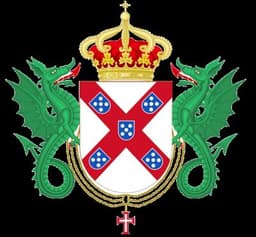
Joseph I of Portugal
Emperor · Modern
52.3Total

Julius of Brunswick
Emperor · Modern
49.6Total
Basic Information
Born
1714
1528
Died
1777
1589
Era
Modern
Modern
Nationality
Portugal
Brunswick
Occupation
Emperor
Emperor
Civilization
Western
Western
Score Comparison
Military (10%)
12.4
20.0
Political (20%)
72.0
68.0
Influence (20%)
51.8
53.3
Legacy (20%)
43.3
42.5
Leadership (15%)
72.0
53.2
Strategy (15%)
57.3
54.6
TOTAL
52.3
49.6
Joseph I of Portugal — Complete Timeline
1750 AD
Accession to the thronePolitical Action◆ Major
Joseph I became King of Portugal after the death of his father John V. His reign is notable for the effective governance of his chief minister, the Marquis of Pombal.
SuccessionMonarchyPombal
Impact: national
1755 AD
1755 Lisbon earthquakeOther
A massive earthquake, followed by a tsunami and fire, destroyed much of Lisbon. Joseph I and his court survived, and the disaster prompted Pombal's extensive rebuilding and reforms.
EarthquakeDisasterRebuilding
Impact: globaltragic
1758 AD
Távora affairPolitical Action◆ Major
An assassination attempt on Joseph I led to the T
Assassination attemptPurgeNobility
Impact: nationaldestructive
1759 AD
Expulsion of the JesuitsPolitical Action◆ Major
Under Pombal's influence, Joseph I expelled the Jesuits from Portugal and its colonies. This was part of a broader Enlightenment reform to reduce Church power and centralize state authority.
JesuitsExpulsionEnlightenment
Impact: globaldestructive
1760 AD
Reforms of the Marquis of PombalReform◆ Major
Joseph I supported Pombal's reforms, including the abolition of slavery in Portugal, educational reforms, and economic modernization. These reforms strengthened the state but faced opposition from the Church and nobility.
ReformEnlightenmentPombal
Impact: nationalconstructive
Julius of Brunswick — Complete Timeline
1568 AD
Introduced the Reformation in Brunswick-WolfenbüttelReform◆ Major
Julius introduced the Lutheran Reformation in his duchy, adopting the Augsburg Confession and establishing a state church. He dissolved monasteries, secularized church property, and appointed Protestant clergy, making the duchy a center of Lutheranism.
ReformationLutheranism
Impact: regionalprogressive
Became Duke of Brunswick-WolfenbüttelPolitical Action◆ Major
Julius inherited the Duchy of Brunswick-Wolfenb
InheritanceReformation
Impact: regionalprogressive
1570 AD
Implemented Economic ReformsReform
Julius implemented economic reforms to strengthen his duchy, including the promotion of mining, trade, and infrastructure. He improved roads, established markets, and supported the mining of silver and copper, boosting the duchy's prosperity.
Economic ReformDevelopment
Impact: regionalconstructive
Built the Castle of WolfenbüttelCultural
Julius expanded and renovated the Castle of Wolfenb
ArchitectureRenaissance
constructive
1572 AD
Established the Wolfenbüttel LibraryCultural◆ Major
Julius established the Herzog August Library in Wolfenb
LibraryScholarship
Impact: regionalconstructive
1576 AD
Founded the University of HelmstedtCultural◆ Major
Julius founded the University of Helmstedt, also known as Academia Julia, which became a leading Protestant university in northern Germany. It attracted scholars from across Europe and played a key role in the education of Lutheran clergy and officials.
UniversityEducation
Impact: regionalconstructive
Expert Analysis
Origins
Joseph I of Portugal was born in 1714, the third child of King John V and Maria Anna of Austria. He grew up in the opulent Portuguese court, receiving a religious education. His father's reign was marked by lavish spending, which left Joseph with a depleted treasury. In contrast, Julius of Brunswick was born in 1528, the son of Henry V, Duke of Brunswick-Wolfenbüttel, a staunch Catholic. Julius was initially destined for a church career, studying at the University of Padua, but later took over the duchy at age 40 after his father's death. His upbringing was influenced by humanist scholarship and the Counter-Reformation.
Rise to Power
Joseph became king in 1750 upon his father's death. He was not particularly ambitious or capable, relying heavily on his chief minister, Sebastião José de Carvalho e Melo, later the Marquis of Pombal. Joseph's reign was defined by the 1755 Lisbon earthquake, which destroyed the capital and killed tens of thousands. Joseph survived, and Pombal organized the reconstruction, gaining immense power. Julius became duke in 1568 after his father's death. He immediately reversed his father's Catholic policies, introducing the Lutheran Reformation in Brunswick-Wolfenbüttel. He consolidated power by dissolving monasteries and seizing church lands, which funded his reforms.
Leadership & Governance
Joseph I was a passive ruler who delegated authority to Pombal. His governance style was one of trust and delegation, allowing Pombal to centralize power, suppress the nobility, and implement Enlightenment reforms. For example, after the 1758 Távora affair (an assassination attempt on Joseph), Pombal executed or imprisoned the powerful Távora family, breaking the aristocracy's influence. Joseph also supported the expulsion of the Jesuits in 1759, reducing church power. Julius was an active reformer who personally oversaw his duchy's transformation. He introduced the Reformation, established a state church, and founded the University of Helmstedt in 1576, which became a center of Lutheran learning. He also built the Herzog August Library, amassing a vast collection of manuscripts. While Joseph scored 72.0 in leadership, Julius scored 53.2, reflecting Joseph's effective delegation versus Julius's hands-on approach.
Triumph & Tragedy
Joseph's greatest triumph was the reconstruction of Lisbon after the earthquake, which showcased Pombal's efficient planning and resulted in a modern, earthquake-resistant city. The expulsion of the Jesuits and economic reforms also modernized Portugal. However, his tragedy was the Távora affair, which tarnished his reign with brutality and injustice. Many historians believe the Távoras were innocent, and the affair was a power grab by Pombal. Julius's triumph was the founding of the University of Helmstedt, which educated generations of Protestant clergy and scholars. His economic reforms improved mining and trade. His tragedy was that his reforms were not sustained; after his death, his son Henry Julius faced financial troubles, and the duchy declined. Julius scored 20.0 in military, while Joseph scored 12.4, as neither was a military leader.
Character & Destiny
Joseph was known for his piety and fear of assassination, which made him dependent on Pombal. He suffered from melancholy after the earthquake and rarely left the royal tent city built after the disaster. His character allowed Pombal to dominate, for better or worse. Julius was determined and reform-minded, but also pragmatic. He converted to Lutheranism not out of deep conviction but to secure church lands and strengthen his state. His character drove him to build institutions, but his lack of financial restraint led to debt. Both rulers were shaped by their eras: Joseph by the Enlightenment and absolutism, Julius by the Reformation and territorial consolidation.
Legacy
Joseph's legacy is inseparable from Pombal's. The Pombaline reforms abolished slavery in Portugal (though not in colonies), reformed education, and modernized the economy. The reconstruction of Lisbon remains a model of urban planning. However, his reign also strengthened absolutism and suppressed dissent. Julius's legacy is the University of Helmstedt, which lasted until 1810, and the Wolfenbüttel Library, now a major research library. He also established the Lutheran church in his duchy. In terms of scores, Joseph has a total of 52.3, while Julius has 49.6. Joseph's influence score is 51.8, slightly below Julius's 53.3, but his political and leadership scores are higher.
Conclusion
While both rulers were reformers, Joseph I of Portugal had a greater impact due to the magnitude of the events he oversaw. The 1755 earthquake and the subsequent reconstruction were transformative for Portugal and influenced European urban planning. Pombal's reforms were far-reaching and centralized, setting Portugal on a path of modernization. Julius's achievements were more localized; the University of Helmstedt was important but did not change the course of European history. Joseph's total score of 52.3 exceeds Julius's 49.6, and his political acumen (72.0) and leadership (72.0) contrast sharply with Julius's lower scores (68.0 and 53.2). Therefore, Joseph I of Portugal had a greater historical impact, despite his personal weakness, because he enabled a minister who reshaped a nation.
Rankings
🥇
Joseph I of PortugalLeader
Mil: 12.4Pol: 72.0Inf: 51.8
52.3
🥈
Julius of Brunswick
Mil: 20.0Pol: 68.0Inf: 53.3
49.6
+2.7 behind
How This Comparison Works
Algorithm
Each figure is scored on 6 dimensions (0—100 scale) based on structured historical data: Military (10%), Political (20%), Influence (20%), Legacy (20%), Leadership (15%), Strategy (15%). The weighted total produces the final ranking.
Data Sources
Scores are computed from structured sub-indicators in the database. Scale factors adjust for era (Ancient ×0.85, Modern ×1.0) and civilization size (Eastern ×1.05, Other ×0.80) to account for differences in population and military scale.
Maximum 3 Figures
Comparisons are limited to 2—3 figures to ensure readability and statistical meaningfulness.
Error Margins
±5 points per dimension — Sub-scores are derived from historical records with inherent uncertainty. Two figures within 5 points on a dimension should be considered roughly equivalent in that area.
Total Score Accuracy
±3 points overall — The weighted combination of 6 dimensions produces a total score with approximately ±3 points of uncertainty. Differences of less than 3 points are not statistically significant— the figures are effectively tied.
Known Limitations
- Historical records are incomplete and uneven across civilizations
- Figures from oral-tradition societies may be underrepresented
- Occupation labels can misclassify multi-role figures
- Scores measure capability and impact, not moral character
- Quantitative scoring is a comparison tool, not absolute truth
Capability Radar
Military (10%) — Battles & Warfare
Battles
35
5
Win Rate
39
5
Expansion
45
5
Political (20%) — Governance & Reform
Reform
70
65
Diplomacy
55
40
Economy
65
45
Influence (20%) — Cultural & Global Reach
Cultural
30
40
Global
20
20
Legacy (20%) — Historical Impact
Historical
40
35
Longevity
30
30
Leadership (15%) — Power & Stability
Tenure
60
50
Stability
50
50
Strategy (15%) — Tactics & Innovation
Strategy
47
5
Tactics
46
5
Reform
52
10
Similar Comparisons
Comments & Discussion
No comments yet. Be the first to share your thoughts!