Loading...
Jungcheon of Goguryeo vs Thutmose I
Thutmose I leads by 11.0 pts · 2 figures compared
…
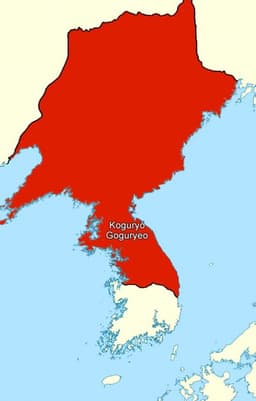
Jungcheon of Goguryeo
Emperor · Ancient
48.5Total
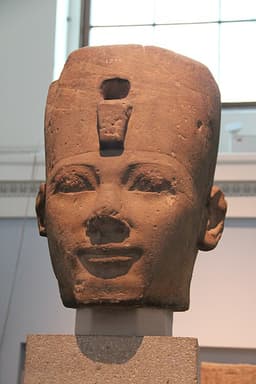
Thutmose I
Emperor · Ancient
59.5Total
Basic Information
Born
248
-1506
Died
270
-1493
Era
Ancient
Ancient
Nationality
Goguryeo
Egypt
Occupation
Emperor
Emperor
Civilization
Eastern
Middle Eastern
Score Comparison
Military (10%)
20.0
78.0
Political (20%)
68.0
68.0
Influence (20%)
48.6
54.9
Legacy (20%)
40.8
48.3
Leadership (15%)
53.2
68.0
Strategy (15%)
60.0
55.0
TOTAL
48.5
59.5
Jungcheon of Goguryeo — Complete Timeline
248 AD
Stabilization after Wei invasionPolitical Action◆ Major
Jungcheon ascended the throne following the devastating Wei invasion of Goguryeo in 244. He focused on rebuilding the state structure, restoring the capital, and consolidating royal authority to prevent future collapses.
RebuildingPost-war recovery
Impact: nationalconstructive
250 AD
Internal reforms and centralizationReform◆ Major
Jungcheon implemented administrative reforms to strengthen central control over the aristocracy and local clans. He reorganized the bureaucracy and tax system to stabilize the kingdom after the war.
Administrative reformCentralization
Impact: nationalconstructive
255 AD
Defensive consolidation against WeiWar
Jungcheon fortified Goguryeo's borders and rebuilt its military to deter further Wei incursions. He established defensive alliances with neighboring tribes, ensuring a period of relative peace.
DefenseMilitary rebuilding
Impact: regionalconstructive
Thutmose I — Complete Timeline
1502 BC
Conquest of NubiaWar◆ Major
Thutmose I launched a campaign into Nubia, extending Egyptian control as far south as the Fourth Cataract of the Nile. He crushed local rebellions and secured access to gold mines and trade routes, strengthening Egypt's southern border.
NubiaConquestGold
Impact: regional
1500 BC
Campaign to the Euphrates RiverWar◆ Major
Thutmose I led a military campaign into Syria and Mesopotamia, reaching the Euphrates River. He erected a victory stele there, marking the farthest extent of Egyptian expansion up to that time and establishing Egyptian dominance in the region.
Military CampaignExpansionEuphrates
Impact: regional
Construction of the First Royal Tomb in the Valley of the KingsCultural◆ Major
Thutmose I commissioned the first known royal tomb in the Valley of the Kings (KV38). This set a precedent for subsequent pharaohs, moving away from pyramid burials to hidden rock-cut tombs in the Theban hills.
Valley of the KingsTombInnovation
Impact: globalconstructive
Expert Analysis
Origins
Jungcheon of Goguryeo (born around 224, reigned 248–270) was a ruler of the Korean kingdom Goguryeo during a period of crisis. His early life coincided with the decline of the Han dynasty and the rise of the Chinese state Cao Wei. Little is known of his youth, but he was likely trained in statecraft and military matters as a prince. He ascended the throne after his father, King Dongcheon, died following the disastrous Wei invasion of 244. The kingdom was in ruins, with its capital Hwando destroyed and its population scattered. Jungcheon's formative experience was the need to rebuild from near-total collapse.
Thutmose I (reigned c. 1506–1493 BCE) was a pharaoh of the 18th Dynasty of Egypt. He was likely the son of Amenhotep I or a military commander who rose to power. His early career is obscure, but he inherited a stable, prosperous Egypt that had already expelled the Hyksos and begun imperial expansion. Thutmose I was a seasoned warrior from a young age, possibly serving as a general under his predecessor. His origins in a militaristic royal family shaped his ambition to extend Egypt's borders.
Rise to Power
Jungcheon came to power in 248 after his father Dongcheon died of illness exacerbated by the Wei invasion. The invasion had been led by the Wei general Guanqiu Jian, who defeated Goguryeo forces, sacked the capital, and forced Dongcheon to flee. Jungcheon's immediate task was to restore the monarchy's authority. He did not achieve military glory but instead focused on internal consolidation. He established a new capital at Pyongyang in 249, moving the center of power southward to safer ground. This strategic relocation allowed him to rebuild the state away from Wei's reach.
Thutmose I rose to prominence through military campaigns. He may have co-ruled with Amenhotep I before becoming sole pharaoh. His first major campaign was into Nubia, where he crushed a rebellion and extended Egyptian control to the Fourth Cataract of the Nile, securing gold mines and trade routes. He then turned to Asia, leading his army through Syria and defeating the Mitanni kingdom, reaching the Euphrates River in c. 1490 BCE. There, he erected a victory stele, marking the farthest point any Egyptian army had ever reached. These conquests established him as a warrior pharaoh and expanded Egypt's empire to its greatest extent.
Leadership & Governance
Jungcheon's leadership was defined by administrative reform and centralization. He reorganized the bureaucracy, reducing the power of local clans and aristocrats who had grown strong during the crisis. He implemented a system of provincial governors appointed by the crown and standardized tax collection. He also promoted agriculture and trade to revive the economy. His governance was cautious and pragmatic, focusing on stability rather than expansion. In contrast, Thutmose I was an expansionist leader who personally led his armies into battle. He governed through a combination of military might and diplomatic marriages. He appointed his daughter Hatshepsut as God's Wife of Amun, a powerful religious position, to consolidate his dynasty's control. He also initiated massive building projects, including the expansion of the Temple of Amun at Karnak and the construction of the first royal tomb in the Valley of the Kings (KV38), moving away from pyramid tombs. This innovation set a precedent for future pharaohs.
Triumph & Tragedy
Jungcheon's greatest triumph was the successful restoration of Goguryeo after the Wei invasion. He rebuilt the capital, restored the economy, and reestablished central authority. His reforms allowed Goguryeo to survive and later thrive under his successors, such as King Micheon. However, his reign was not without failures. He failed to recover the territory lost to Wei, and his defensive posture meant Goguryeo remained a tributary state of Wei for much of his reign. His scores reflect this: military 20.0, political 68.0, strategy 60.0. Thutmose I's triumphs were his military campaigns that expanded Egypt's borders to their greatest extent. He conquered Nubia to the Fourth Cataract and reached the Euphrates, bringing immense wealth and prestige. His tragedy was that his empire was difficult to hold. After his death, his son Thutmose II faced rebellions, and the Egyptian hold on Syria weakened. His scores: military 78.0, political 68.0, strategy 55.0, leadership 68.0.
Character & Destiny
Jungcheon was a pragmatic and patient ruler, focused on long-term stability. He accepted short-term subordination to Wei to rebuild his kingdom. His character was cautious and methodical, avoiding risky ventures. This allowed Goguryeo to survive but limited his personal glory. Historical assessments note that he was a skilled administrator but not a warrior. Thutmose I was ambitious, aggressive, and charismatic. He personally led campaigns and inspired loyalty. His destiny was to be remembered as a great conqueror, but his aggression also created overextension. His character drove him to push boundaries, but his successors could not maintain them. The contrast is between a builder and a conqueror.
Legacy
Jungcheon's legacy is as the restorer of Goguryeo. His administrative reforms laid the foundation for the kingdom's later golden age. He moved the capital to Pyongyang, which became a major center. However, his impact was largely internal and regional. Thutmose I's legacy is monumental. He set the template for New Kingdom imperial expansion and his tomb in the Valley of the Kings became the standard for pharaohs. His campaigns established Egypt as a superpower in the Near East. His influence is reflected in scores: influence 54.9 vs 48.6, legacy 48.3 vs 40.8.
Conclusion
Thutmose I had a greater impact on world history. His military campaigns expanded Egypt's borders to an unprecedented extent, and his innovations in tomb construction influenced Egyptian culture for centuries. Jungcheon's reforms were crucial for Goguryeo's survival, but his influence was confined to the Korean peninsula. Thutmose I's total score of 59.5 versus Jungcheon's 48.5 reflects this. While Jungcheon was a skilled administrator, Thutmose I was a transformative figure who reshaped the ancient Near East. The data supports Thutmose I as the more significant historical figure.
Rankings
🥇
Thutmose ILeader
Mil: 78.0Pol: 68.0Inf: 54.9
59.5
🥈
Jungcheon of Goguryeo
Mil: 20.0Pol: 68.0Inf: 48.6
48.5
+11.0 behind
How This Comparison Works
Algorithm
Each figure is scored on 6 dimensions (0—100 scale) based on structured historical data: Military (10%), Political (20%), Influence (20%), Legacy (20%), Leadership (15%), Strategy (15%). The weighted total produces the final ranking.
Data Sources
Scores are computed from structured sub-indicators in the database. Scale factors adjust for era (Ancient ×0.85, Modern ×1.0) and civilization size (Eastern ×1.05, Other ×0.80) to account for differences in population and military scale.
Maximum 3 Figures
Comparisons are limited to 2—3 figures to ensure readability and statistical meaningfulness.
Error Margins
±5 points per dimension — Sub-scores are derived from historical records with inherent uncertainty. Two figures within 5 points on a dimension should be considered roughly equivalent in that area.
Total Score Accuracy
±3 points overall — The weighted combination of 6 dimensions produces a total score with approximately ±3 points of uncertainty. Differences of less than 3 points are not statistically significant— the figures are effectively tied.
Known Limitations
- Historical records are incomplete and uneven across civilizations
- Figures from oral-tradition societies may be underrepresented
- Occupation labels can misclassify multi-role figures
- Scores measure capability and impact, not moral character
- Quantitative scoring is a comparison tool, not absolute truth
Capability Radar
Military (10%) — Battles & Warfare
Battles
40
70
Win Rate
45
75
Expansion
30
80
Political (20%) — Governance & Reform
Reform
55
55
Diplomacy
50
60
Economy
45
55
Influence (20%) — Cultural & Global Reach
Cultural
30
50
Global
20
40
Legacy (20%) — Historical Impact
Historical
35
55
Longevity
30
45
Leadership (15%) — Power & Stability
Tenure
60
60
Stability
60
65
Strategy (15%) — Tactics & Innovation
Strategy
40
70
Tactics
35
65
Reform
50
50
Similar Comparisons
Comments & Discussion
No comments yet. Be the first to share your thoughts!