Loading...
Ezana of Axum vs Thutmose I
Thutmose I leads by 2.5 pts · 2 figures compared
…
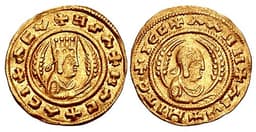
Ezana of Axum
Emperor · Ancient
57.0Total
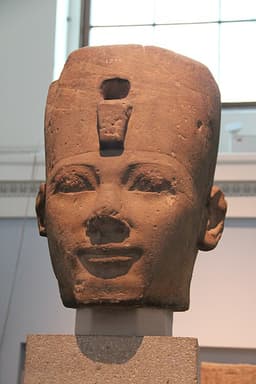
Thutmose I
Emperor · Ancient
59.5Total
Basic Information
Born
325
-1506
Died
356
-1493
Era
Ancient
Ancient
Nationality
Axum
Egypt
Occupation
Emperor
Emperor
Civilization
Other
Middle Eastern
Score Comparison
Military (10%)
50.0
78.0
Political (20%)
68.0
68.0
Influence (20%)
61.0
54.9
Legacy (20%)
58.0
48.3
Leadership (15%)
40.0
68.0
Strategy (15%)
60.0
55.0
TOTAL
57.0
59.5
Ezana of Axum — Complete Timeline
330 AD
Conversion to ChristianityCultural
Ezana converted to Christianity under the influence of Frumentius, a Syrian Christian who became bishop of Axum. Ezana declared Christianity the state religion of Axum, making it one of the earliest Christian kingdoms.
ChristianizationState ReligionFrumentius
Impact: globalconstructive
Issuance of CoinageCultural◆ Major
Ezana introduced gold, silver, and bronze coins bearing Christian symbols, such as the cross. These coins facilitated trade across the Red Sea and Indian Ocean, and their inscriptions in Ge'ez and Greek reflect Axum's cultural connections.
CoinageTradeChristian Symbolism
Impact: regionalconstructive
Inscription at AxumCultural
Ezana erected a stone inscription in Ge'ez, Greek, and Sabaean at Axum, recording his military victories and his conversion to Christianity. The inscription invokes the Christian God instead of pagan deities, marking a religious shift.
InscriptionPropagandaReligious Shift
Impact: regional
340 AD
Campaign against the BejaWar
Ezana conducted a military campaign against the Beja people, who raided Axumite territory. He defeated them and imposed tribute, securing the northern borders of his kingdom and protecting trade routes to the Red Sea.
Military CampaignBejaBorder Security
Impact: regional
350 AD
Conquest of MeroëWar◆ Major
Ezana led a military campaign against the Kingdom of Kush, conquering its capital Mero
ConquestKushMeroë
Impact: regional
Thutmose I — Complete Timeline
1502 BC
Conquest of NubiaWar◆ Major
Thutmose I launched a campaign into Nubia, extending Egyptian control as far south as the Fourth Cataract of the Nile. He crushed local rebellions and secured access to gold mines and trade routes, strengthening Egypt's southern border.
NubiaConquestGold
Impact: regional
1500 BC
Campaign to the Euphrates RiverWar◆ Major
Thutmose I led a military campaign into Syria and Mesopotamia, reaching the Euphrates River. He erected a victory stele there, marking the farthest extent of Egyptian expansion up to that time and establishing Egyptian dominance in the region.
Military CampaignExpansionEuphrates
Impact: regional
Construction of the First Royal Tomb in the Valley of the KingsCultural◆ Major
Thutmose I commissioned the first known royal tomb in the Valley of the Kings (KV38). This set a precedent for subsequent pharaohs, moving away from pyramid burials to hidden rock-cut tombs in the Theban hills.
Valley of the KingsTombInnovation
Impact: globalconstructive
Expert Analysis
Origins
Ezana of Axum (c. 320–360 AD) was born into the royal family of the Kingdom of Axum, a powerful state in the Horn of Africa. Little is known of his early life, but he was likely educated in the court and trained in military and administrative duties. His father, King Ousanas, died when Ezana was young, and his mother, Queen Sofya, served as regent. Under her guidance, Ezana was introduced to Christianity through Frumentius, a Syrian Christian who had been shipwrecked in Axum and rose to a position of influence. Frumentius became Ezana's tutor and later the first bishop of Axum, shaping the king's religious outlook.
Thutmose I (c. 1506–1493 BC) was a pharaoh of the 18th Dynasty of Egypt. His parentage is uncertain; he may have been the son of Pharaoh Amenhotep I or of a military officer. He rose through the ranks of the Egyptian army, likely serving as a general before seizing the throne. His military background gave him a strong foundation for his later conquests. He married Queen Ahmose, a royal princess, to legitimize his claim, and he also had a secondary wife, Mutnofret, who bore his successor, Thutmose II.
Rise to Power
Ezana became king of Axum around 320 AD, after his father's death. He initially ruled under a regency, but by the time he reached adulthood, he was fully in control. His conversion to Christianity was a gradual process, influenced by Frumentius. Around 330 AD, Ezana declared Christianity the state religion, marking a turning point in Axumite history. This move aligned Axum with the Roman Empire and opened trade and diplomatic ties. Ezana also began issuing coins with Christian symbols, such as the cross, which became a hallmark of his reign.
Thutmose I ascended the throne after the death of Amenhotep I, likely with military support. He quickly consolidated power by marrying Ahmose and by launching campaigns to secure Egypt's borders. His first major campaign was against the Nubians to the south, where he extended Egyptian control to the Fourth Cataract of the Nile. This success boosted his prestige and allowed him to focus on the north. Around 1493 BC, he led a massive army into Syria and Mesopotamia, reaching the Euphrates River—the farthest any Egyptian pharaoh had ventured. He erected a victory stele there, marking the extent of his empire.
Leadership & Governance
Ezana's leadership was marked by his religious transformation and administrative reforms. By adopting Christianity, he unified Axum under a single faith and created a state church. He used inscriptions in Ge'ez, Greek, and Sabaean to publicize his achievements, including his conversion and military victories. His governance was decentralized, relying on local chiefs to maintain order. He also promoted trade across the Red Sea and Indian Ocean, using coinage to facilitate commerce. However, his religious shift alienated some pagan subjects, leading to occasional unrest.
Thutmose I ruled as a traditional pharaoh, centralizing power and emphasizing military might. He was an able administrator who built on the foundations of his predecessors. He commissioned the first royal tomb in the Valley of the Kings, moving away from pyramid burials to hidden rock-cut tombs to deter grave robbers. This innovation influenced all subsequent New Kingdom pharaohs. Thutmose also appointed loyal officials and expanded the bureaucracy to manage his growing empire. His governance style was autocratic, with the pharaoh as the ultimate authority.
Triumph & Tragedy
Ezana's greatest success was the conversion of Axum to Christianity, which had enduring religious and cultural impacts. He also conquered the Kingdom of Kush (Meroë) around 350 AD, ending the Meroitic kingdom and extending Axumite control over the Nile Valley. His coinage and inscriptions promoted trade and literacy. However, his conquest of Meroë may have been short-lived, as Axumite control weakened after his death. Additionally, his religious policies may have caused internal strife, though records are sparse.
Thutmose I's greatest triumph was his campaign to the Euphrates, which established Egypt as a major power in the Near East. His conquest of Nubia secured access to gold and other resources. He also built temples and monuments, including additions to Karnak. However, his reign was relatively short (about 13 years), and he did not fully consolidate his gains. His successor, Thutmose II, faced rebellions, and the empire's borders were not firmly held. Thutmose I also failed to establish a clear succession, leading to a power struggle after his death.
Character & Destiny
Ezana was a visionary leader who embraced a new religion and used it to reshape his kingdom. His decision to convert was strategic, aligning Axum with the Christian Roman world. He was also a capable military commander, as shown by his campaigns against the Beja and Meroë. However, his religious zeal may have blinded him to the costs of cultural change. Historians note that his inscriptions emphasize piety and divine favor, suggesting a ruler who saw himself as God's instrument.
Thutmose I was a pragmatic and ambitious pharaoh, driven by a desire to expand Egypt's borders and secure his legacy. He was a skilled general who personally led his troops into battle. His construction of the Valley of the Kings tomb shows a concern for his afterlife security. However, his focus on military expansion may have strained Egypt's resources, and his relatively short reign prevented him from fully stabilizing his conquests. His character was that of a conqueror, not a builder of lasting institutions.
Legacy
Ezana's legacy is profound: he made Christianity a state religion in Africa centuries before it spread widely in Europe. The Ethiopian Orthodox Church traces its roots to his reign. By conquering Meroë, he ended the ancient Kingdom of Kush and brought the region under Axumite influence. His coinage and inscriptions provide valuable historical records. However, his empire declined after his death, and Axum eventually fell to Islamic expansion. Nonetheless, his religious choices shaped Ethiopian identity for millennia.
Thutmose I's legacy is tied to Egypt's imperial expansion. He set a precedent for future pharaohs like Thutmose III, who would build on his conquests. His tomb in the Valley of the Kings became the standard for royal burials for centuries. He also expanded Egypt's borders to their greatest extent in the north, though they were not permanently held. His military campaigns provided a template for Egyptian imperialism. However, his influence is often overshadowed by his more famous successors.
Conclusion
Comparing Ezana and Thutmose I requires weighing long-term cultural impact against immediate territorial expansion. Ezana scored 57.0 overall, while Thutmose I scored 59.5, a gap of 2.5 points. Thutmose I's higher military score (78.0 vs 50.0) reflects his impressive campaigns, but Ezana's influence (61.0 vs 54.9) and legacy (58.0 vs 48.3) show his enduring religious and cultural impact. In terms of lasting change, Ezana's conversion of Axum to Christianity had repercussions that lasted over 1,500 years, shaping Ethiopian civilization. Thutmose I's conquests, while significant, were temporary and later surpassed by his grandson Thutmose III. Therefore, Ezana had a greater impact on world history due to his religious transformation, which created a lasting Christian kingdom in Africa. Thutmose I was a great conqueror, but his achievements were more typical of Egyptian pharaohs and less enduring. Thus, Ezana edges ahead in historical significance.
Rankings
🥇
Thutmose ILeader
Mil: 78.0Pol: 68.0Inf: 54.9
59.5
🥈
Ezana of Axum
Mil: 50.0Pol: 68.0Inf: 61.0
57.0
+2.5 behind
How This Comparison Works
Algorithm
Each figure is scored on 6 dimensions (0—100 scale) based on structured historical data: Military (10%), Political (20%), Influence (20%), Legacy (20%), Leadership (15%), Strategy (15%). The weighted total produces the final ranking.
Data Sources
Scores are computed from structured sub-indicators in the database. Scale factors adjust for era (Ancient ×0.85, Modern ×1.0) and civilization size (Eastern ×1.05, Other ×0.80) to account for differences in population and military scale.
Maximum 3 Figures
Comparisons are limited to 2—3 figures to ensure readability and statistical meaningfulness.
Error Margins
±5 points per dimension — Sub-scores are derived from historical records with inherent uncertainty. Two figures within 5 points on a dimension should be considered roughly equivalent in that area.
Total Score Accuracy
±3 points overall — The weighted combination of 6 dimensions produces a total score with approximately ±3 points of uncertainty. Differences of less than 3 points are not statistically significant— the figures are effectively tied.
Known Limitations
- Historical records are incomplete and uneven across civilizations
- Figures from oral-tradition societies may be underrepresented
- Occupation labels can misclassify multi-role figures
- Scores measure capability and impact, not moral character
- Quantitative scoring is a comparison tool, not absolute truth
Capability Radar
Military (10%) — Battles & Warfare
Battles
45
70
Win Rate
50
75
Expansion
55
80
Political (20%) — Governance & Reform
Reform
65
55
Diplomacy
55
60
Economy
50
55
Influence (20%) — Cultural & Global Reach
Cultural
70
50
Global
55
40
Legacy (20%) — Historical Impact
Historical
70
55
Longevity
65
45
Leadership (15%) — Power & Stability
Tenure
60
60
Stability
55
65
Strategy (15%) — Tactics & Innovation
Strategy
50
70
Tactics
40
65
Reform
30
50
Similar Comparisons
Comments & Discussion
No comments yet. Be the first to share your thoughts!