Loading...
Juscelino Kubitschek vs Sangay Ngedup
Juscelino Kubitschek leads by 4.4 pts · 2 figures compared
…
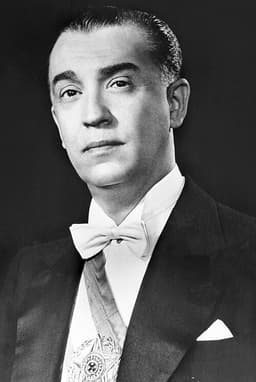
Juscelino Kubitschek
Politician · Modern
56.3Total

Sangay Ngedup
Politician · Modern
51.9Total
Basic Information
Born
1902
1953
Died
1976
—
Era
Modern
Modern
Nationality
Brazil
Bhutan
Occupation
Politician
Politician
Civilization
Western
Indian
Score Comparison
Military (10%)
50.0
41.2
Political (20%)
62.7
61.3
Influence (20%)
55.0
50.2
Legacy (20%)
52.0
41.7
Leadership (15%)
72.0
64.0
Strategy (15%)
43.9
60.0
TOTAL
56.3
51.9
Juscelino Kubitschek — Complete Timeline
1955 AD
Elected President of BrazilPolitical Action◆ Major
Juscelino Kubitschek was elected president of Brazil in 1955 as the candidate of the Social Democratic Party (PSD) and the Brazilian Labor Party (PTB). He assumed office on January 31, 1956, with a mandate for rapid development.
Brazilian PresidencyElectionDevelopment
Impact: nationalconstructive
1956 AD
Launched the 'Fifty Years in Five' Development PlanReform
Kubitschek launched the Plano de Metas (Goals Plan) in 1956, a comprehensive development program aiming to achieve fifty years of progress in five years. The plan focused on energy, transportation, industry, and agriculture, driving rapid economic growth.
Economic DevelopmentPlano de MetasBrazil
Impact: nationalconstructive
Expanded the Brazilian Automotive IndustryReform◆ Major
Kubitschek's government attracted foreign automakers such as Volkswagen, Ford, and General Motors to establish factories in Brazil. This policy created a domestic automotive industry, generating jobs and reducing imports.
IndustrializationAutomotiveBrazil
Impact: nationalconstructive
1959 AD
Faced the 1959 Military Revolt of AragarçasWar
In December 1959, a group of military officers led by Colonel Jo
Military RevoltPolitical InstabilityBrazil
Impact: nationaldestructive
1960 AD
Founded BrasíliaCultural
Kubitschek oversaw the construction of Bras
Urban PlanningBrasíliaModernization
Impact: nationalconstructive
Sangay Ngedup — Complete Timeline
1998 AD
Appointed as Minister of HealthPolitical Action
Sangay Ngedup was appointed Minister of Health of Bhutan in 1998. He pioneered health sector reforms, including the expansion of primary healthcare and the introduction of national health insurance.
HealthPublic Health
Impact: nationalconstructive
1999 AD
Elected as Prime Minister of BhutanPolitical Action◆ Major
Sangay Ngedup served as Prime Minister of Bhutan from 1999 to 2000. His term focused on health sector development and improving access to healthcare in rural areas.
Prime MinisterHealth
Impact: nationalconstructive
2000 AD
Introduced National Health Insurance SchemeReform
As Health Minister, Ngedup introduced a national health insurance scheme to provide universal coverage. The scheme reduced out-of-pocket expenses and improved access to healthcare for low-income families.
Health InsuranceUniversal Coverage
Impact: nationalconstructive
2005 AD
Second Term as Prime Minister of BhutanPolitical Action◆ Major
Ngedup served a second term as Prime Minister from 2005 to 2006. He continued health reforms and oversaw the implementation of the 9th Five-Year Plan, emphasizing social welfare.
Prime MinisterSocial Welfare
Impact: nationalconstructive
Expert Analysis
Origins
**Juscelino Kubitschek** was born on September 12, 1902, in Diamantina, Minas Gerais, Brazil. His father, João César de Oliveira, died when he was two, and he was raised by his mother, Júlia Kubitschek, a schoolteacher of Czech descent. He studied medicine at the Federal University of Minas Gerais, graduating in 1927, and later specialized in urology in Paris and Berlin. His early medical career included serving as a doctor in the Brazilian Army, but he soon entered politics, becoming mayor of Belo Horizonte in 1940.
**Sangay Ngedup** was born on July 1, 1953, in Nobgang, Punakha, Bhutan. He is a member of the royal family, being the brother of the Fourth King Jigme Singye Wangchuck and uncle to the current King. He was educated in Bhutan and later at the University of Delhi, where he studied medicine. He worked as a physician before entering politics, serving as the Minister of Health from 1998 to 2003 and later as Prime Minister.
Rise to Power
Kubitschek entered national politics as a federal deputy in 1945 and later served as governor of Minas Gerais from 1951 to 1955. His administration was noted for infrastructure projects, including the construction of the Pampulha district. In 1955, he ran for president as the candidate of the Social Democratic Party (PSD) and the Brazilian Labor Party (PTB), winning with 35.7% of the vote. He took office on January 31, 1956, amid political tensions, but quickly consolidated power through a coalition government.
Ngedup's rise was more gradual and rooted in his medical background. He was appointed Minister of Health in 1998, where he initiated major reforms. His success in health led to his appointment as Prime Minister in 1999, serving until 2000. He returned as Prime Minister from 2005 to 2006, following the resignation of his predecessor. His political influence was bolstered by his royal connections and his reputation as a health sector pioneer.
Leadership & Governance
Kubitschek's leadership was defined by his ambitious development plan, "Fifty Years in Five" (Plano de Metas), launched in 1956. The plan focused on five sectors: energy, transportation, industry, agriculture, and education. He attracted foreign automakers like Volkswagen and Ford, creating a national automotive industry. His most iconic achievement was the construction of Brasília, built in 41 months and inaugurated on April 21, 1960. He governed with a pragmatic style, balancing political alliances and using state intervention to drive growth. His political score of 62.7 reflects his ability to manage a coalition and push through reforms.
Ngedup's governance focused on health sector development. As Health Minister, he introduced a national health insurance scheme to provide universal coverage, reducing out-of-pocket expenses. He expanded primary healthcare in rural areas and improved maternal and child health. As Prime Minister, he oversaw the 9th Five-Year Plan (2002-2007), which emphasized health, education, and poverty reduction. His leadership score of 64.0 is slightly higher than Kubitschek's 72.0, but his political score of 61.3 is comparable. However, his influence was limited by Bhutan's small population and gradual democratization.
Triumph & Tragedy
Kubitschek's greatest triumph was the construction of Brasília, which symbolized Brazil's modernization and opened the interior for development. His economic policies led to an average GDP growth of 8% per year from 1956 to 1961. However, his spending caused inflation to rise from 12% in 1955 to 30% by 1960, and the national debt increased. He also faced a military revolt in 1959 (the Revolt of Aragarças), which he suppressed but which highlighted growing military discontent. His failure to address political instability contributed to the 1964 military coup that ousted his successor.
Ngedup's triumph was the introduction of the National Health Insurance Scheme, which achieved near-universal coverage in Bhutan. His health reforms reduced infant mortality from 60 per 1,000 live births in 1998 to 40 by 2006. However, his terms as Prime Minister were short and his power limited by the monarchy. He was unable to sustain political momentum after his second term, and his influence waned. His legacy score of 41.7 is lower than Kubitschek's 52.0, reflecting the smaller scale of his impact.
Character & Destiny
Kubitschek was known for his optimism, energy, and determination. He famously said, "The only thing I fear is the lack of imagination." His character drove him to undertake grand projects, but his impatience with fiscal discipline led to economic imbalances. He was a skilled mediator but underestimated the military's growing discontent. His destiny was to be a transformative figure whose legacy was overshadowed by the subsequent authoritarian regime.
Ngedup is described as a quiet, dedicated public servant. His medical background gave him a pragmatic approach to policy. He was less politically ambitious than Kubitschek, preferring to work behind the scenes. His destiny was to be a key figure in Bhutan's modernization, but his impact was constrained by the country's political structure and small size.
Legacy
Kubitschek's legacy is monumental: Brasília is now a UNESCO World Heritage site and the seat of Brazil's government. His development plan laid the foundation for Brazil's industrial growth. However, his economic policies also sowed the seeds of inflation and debt. He is remembered as a visionary who modernized Brazil, with a legacy score of 52.0.
Ngedup's legacy is in health: his insurance scheme became a model for other developing countries. Bhutan's health indicators improved significantly under his tenure. However, his political legacy is limited, as Bhutan's transition to democracy after 2008 was led by others. His legacy score of 41.7 reflects a narrower but meaningful impact.
Conclusion
While both leaders drove modernization in their countries, Kubitschek had a greater impact due to the scale and transformative nature of his achievements. He scored 72.0 in leadership compared to Ngedup's 64.0, and his total score of 56.3 exceeds Ngedup's 51.9 by 4.4 points. Kubitschek's construction of Brasília and his "Fifty Years in Five" plan reshaped Brazil's geography and economy, affecting millions. Ngedup's health reforms were important but affected a smaller population and were less transformative. Therefore, Juscelino Kubitschek had a greater historical impact.
Rankings
🥇
Juscelino KubitschekLeader
Mil: 50.0Pol: 62.7Inf: 55.0
56.3
🥈
Sangay Ngedup
Mil: 41.2Pol: 61.3Inf: 50.2
51.9
+4.4 behind
How This Comparison Works
Algorithm
Each figure is scored on 6 dimensions (0—100 scale) based on structured historical data: Military (10%), Political (20%), Influence (20%), Legacy (20%), Leadership (15%), Strategy (15%). The weighted total produces the final ranking.
Data Sources
Scores are computed from structured sub-indicators in the database. Scale factors adjust for era (Ancient ×0.85, Modern ×1.0) and civilization size (Eastern ×1.05, Other ×0.80) to account for differences in population and military scale.
Maximum 3 Figures
Comparisons are limited to 2—3 figures to ensure readability and statistical meaningfulness.
Error Margins
±5 points per dimension — Sub-scores are derived from historical records with inherent uncertainty. Two figures within 5 points on a dimension should be considered roughly equivalent in that area.
Total Score Accuracy
±3 points overall — The weighted combination of 6 dimensions produces a total score with approximately ±3 points of uncertainty. Differences of less than 3 points are not statistically significant— the figures are effectively tied.
Known Limitations
- Historical records are incomplete and uneven across civilizations
- Figures from oral-tradition societies may be underrepresented
- Occupation labels can misclassify multi-role figures
- Scores measure capability and impact, not moral character
- Quantitative scoring is a comparison tool, not absolute truth
Capability Radar
Military (10%) — Battles & Warfare
Battles
27
41
Win Rate
35
48
Expansion
32
50
Political (20%) — Governance & Reform
Reform
85
55
Diplomacy
70
40
Economy
80
35
Influence (20%) — Cultural & Global Reach
Cultural
65
25
Global
55
15
Legacy (20%) — Historical Impact
Historical
70
30
Longevity
60
20
Leadership (15%) — Power & Stability
Tenure
65
30
Stability
60
45
Strategy (15%) — Tactics & Innovation
Strategy
40
53
Tactics
42
56
Reform
46
56
Similar Comparisons
Comments & Discussion
No comments yet. Be the first to share your thoughts!