Loading...
Camille Chamoun vs Juscelino Kubitschek
Juscelino Kubitschek leads by 4.9 pts · 2 figures compared
…
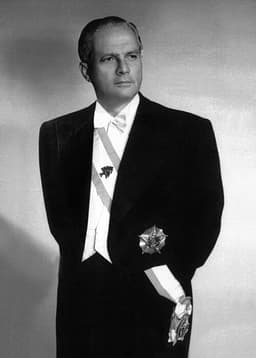
Camille Chamoun
Politician · Modern
51.4Total
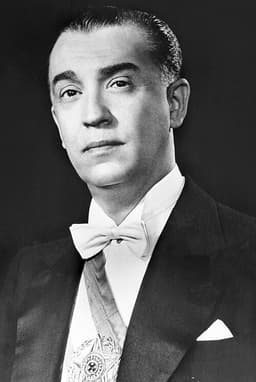
Juscelino Kubitschek
Politician · Modern
56.3Total
Basic Information
Born
1900
1902
Died
1987
1976
Era
Modern
Modern
Nationality
Lebanon
Brazil
Occupation
Politician
Politician
Civilization
Middle Eastern
Western
Score Comparison
Military (10%)
39.4
50.0
Political (20%)
61.3
62.7
Influence (20%)
53.3
55.0
Legacy (20%)
45.0
52.0
Leadership (15%)
65.0
72.0
Strategy (15%)
39.6
43.9
TOTAL
51.4
56.3
Camille Chamoun — Complete Timeline
1952 AD
Elected President of LebanonPolitical Action◆ Major
Camille Chamoun was elected President of Lebanon on September 23, 1952, succeeding Bechara El Khoury. His election marked a shift in Lebanese politics, and he served a six-year term until 1958.
PresidencyElectionLebanon
Impact: national
1958 AD
1958 Lebanon crisis and U.S. interventionWar◆ Major
President Chamoun faced a major political crisis when Muslim factions rebelled against his pro-Western policies and alleged attempts to amend the constitution for a second term. The U.S. intervened by landing Marines in Beirut to stabilize the government.
Civil WarU.S. InterventionPolitical Crisis
Impact: regionaldestructive
Refused to resign during the 1958 crisisPolitical Action
Chamoun refused to resign despite widespread opposition and the formation of a rebel government in Tripoli. He remained in power until the end of his term in September 1958, when he handed over to Fuad Chehab.
ResistancePolitical StalemateTransition
Impact: national
Founded the National Liberal PartyPolitical Action
After leaving the presidency, Chamoun founded the National Liberal Party (NLP) in 1958. The party became a major political force representing Maronite Christian interests and played a role in the Lebanese Civil War.
Political PartyMaronitePost-presidency
Impact: national
1975 AD
Role in the Lebanese Civil WarWar◆ Major
Chamoun's National Liberal Party and its militia, the Tigers, fought in the Lebanese Civil War as part of the Christian Lebanese Front. He opposed the Taif Agreement and remained a polarizing figure until his death in 1987.
Civil WarMilitiaChristian Faction
Impact: nationaldestructive
Juscelino Kubitschek — Complete Timeline
1955 AD
Elected President of BrazilPolitical Action◆ Major
Juscelino Kubitschek was elected president of Brazil in 1955 as the candidate of the Social Democratic Party (PSD) and the Brazilian Labor Party (PTB). He assumed office on January 31, 1956, with a mandate for rapid development.
Brazilian PresidencyElectionDevelopment
Impact: nationalconstructive
1956 AD
Launched the 'Fifty Years in Five' Development PlanReform
Kubitschek launched the Plano de Metas (Goals Plan) in 1956, a comprehensive development program aiming to achieve fifty years of progress in five years. The plan focused on energy, transportation, industry, and agriculture, driving rapid economic growth.
Economic DevelopmentPlano de MetasBrazil
Impact: nationalconstructive
Expanded the Brazilian Automotive IndustryReform◆ Major
Kubitschek's government attracted foreign automakers such as Volkswagen, Ford, and General Motors to establish factories in Brazil. This policy created a domestic automotive industry, generating jobs and reducing imports.
IndustrializationAutomotiveBrazil
Impact: nationalconstructive
1959 AD
Faced the 1959 Military Revolt of AragarçasWar
In December 1959, a group of military officers led by Colonel Jo
Military RevoltPolitical InstabilityBrazil
Impact: nationaldestructive
1960 AD
Founded BrasíliaCultural
Kubitschek oversaw the construction of Bras
Urban PlanningBrasíliaModernization
Impact: nationalconstructive
Expert Analysis
Origins
Camille Chamoun was born on April 3, 1900, into a prominent Maronite Christian family in Deir el-Qamar, Lebanon. He studied law at the Saint Joseph University in Beirut and began his political career early, serving in the Lebanese parliament from 1934. His family background and religious affiliation shaped his pro-Western orientation.
Juscelino Kubitschek de Oliveira was born on September 12, 1902, in Diamantina, Brazil, to a modest family. His father died when he was young, and he was raised by his mother, a schoolteacher. He studied medicine at the Federal University of Minas Gerais, becoming a physician. His humble origins influenced his focus on development and social progress.
Rise to Power
Chamoun rose through Lebanese politics as a diplomat and minister. He became Minister of Interior in 1943, then Minister of Finance. In 1952, he was elected President of Lebanon, succeeding Bechara El Khoury, amid a political crisis. His victory was supported by the Maronite establishment and pro-Western factions. However, his tenure was marked by growing sectarian tensions.
Kubitschek entered politics as a federal deputy and later mayor of Belo Horizonte. He gained national prominence as governor of Minas Gerais (1951-1955), where he implemented development projects. In 1955, he was elected President of Brazil as the candidate of a coalition between the Social Democratic Party (PSD) and the Brazilian Labor Party (PTB), defeating the conservative candidate. His election faced opposition from the military, but he assumed office in 1956.
Leadership & Governance
Chamoun's leadership style was confrontational and centralizing. He sought to strengthen the presidency and align Lebanon with the West, particularly the United States. He refused to amend the constitution to allow his reelection, but his pro-Western stance alienated Muslim factions, leading to the 1958 crisis. His governance score is 65.0, reflecting his ability to hold power but lacking inclusive strategies.
Kubitschek's governance was visionary and developmental. He launched the 'Fifty Years in Five' plan (Plano de Metas) in 1956, targeting energy, transportation, industry, and agriculture. He oversaw the construction of Brasília, completed in 41 months, moving the capital inland to promote interior development. His leadership score of 72.0 indicates high effectiveness in mobilizing resources and inspiring progress. He attracted foreign automakers like Volkswagen and Ford, boosting industrialization.
Triumph & Tragedy
Chamoun's greatest success was surviving the 1958 crisis with U.S. military intervention, maintaining his presidency until the end of his term. However, his refusal to resign and reliance on foreign intervention deepened sectarian divides, contributing to the Lebanese Civil War later. His failure to build consensus left a fragile legacy.
Kubitschek's triumph was the successful implementation of his development plan and the construction of Brasília, symbolizing modernization. However, his policies led to high inflation and external debt. He faced the 1959 Revolt of Aragarças, a military rebellion, which he suppressed. His economic imbalances set the stage for the 1964 military coup, though he was not directly to blame.
Character & Destiny
Chamoun was determined and stubborn, unwilling to compromise during the 1958 crisis. His pro-Western bias and Maronite identity made him a polarizing figure. Historians view him as a capable administrator but a divisive leader who failed to unite Lebanon's sects.
Kubitschek was optimistic and charismatic, known for his energy and vision. He was pragmatic, forming broad coalitions to push his agenda. His legacy is tied to the rapid modernization of Brazil, though his economic policies were criticized. He scored 43.9 in strategy, indicating less emphasis on long-term economic stability.
Legacy
Chamoun's legacy is mixed. He is remembered for his role in the 1958 crisis and founding the National Liberal Party, which influenced Lebanese politics. However, his actions exacerbated sectarian tensions, and his total score of 51.4 reflects moderate impact.
Kubitschek's legacy is more positive. He is celebrated as the builder of Brasília and a champion of development. His 'Fifty Years in Five' plan transformed Brazil's infrastructure and industry. His total score of 56.3 is higher, and his influence endures in Brazil's identity as a modern nation.
Conclusion
Juscelino Kubitschek had greater impact than Camille Chamoun. Kubitschek's development policies and construction of Brasília fundamentally transformed Brazil, leaving a lasting physical and economic legacy. Chamoun, while significant in Lebanese history, failed to prevent civil strife and his influence is more localized. Kubitschek's total score of 56.3 vs Chamoun's 51.4 underscores this. Kubitschek's vision and execution outshine Chamoun's crisis management.
Rankings
🥇
Juscelino KubitschekLeader
Mil: 50.0Pol: 62.7Inf: 55.0
56.3
🥈
Camille Chamoun
Mil: 39.4Pol: 61.3Inf: 53.3
51.4
+4.9 behind
How This Comparison Works
Algorithm
Each figure is scored on 6 dimensions (0—100 scale) based on structured historical data: Military (10%), Political (20%), Influence (20%), Legacy (20%), Leadership (15%), Strategy (15%). The weighted total produces the final ranking.
Data Sources
Scores are computed from structured sub-indicators in the database. Scale factors adjust for era (Ancient ×0.85, Modern ×1.0) and civilization size (Eastern ×1.05, Other ×0.80) to account for differences in population and military scale.
Maximum 3 Figures
Comparisons are limited to 2—3 figures to ensure readability and statistical meaningfulness.
Error Margins
±5 points per dimension — Sub-scores are derived from historical records with inherent uncertainty. Two figures within 5 points on a dimension should be considered roughly equivalent in that area.
Total Score Accuracy
±3 points overall — The weighted combination of 6 dimensions produces a total score with approximately ±3 points of uncertainty. Differences of less than 3 points are not statistically significant— the figures are effectively tied.
Known Limitations
- Historical records are incomplete and uneven across civilizations
- Figures from oral-tradition societies may be underrepresented
- Occupation labels can misclassify multi-role figures
- Scores measure capability and impact, not moral character
- Quantitative scoring is a comparison tool, not absolute truth
Capability Radar
Military (10%) — Battles & Warfare
Battles
23
27
Win Rate
25
35
Expansion
25
32
Political (20%) — Governance & Reform
Reform
40
85
Diplomacy
55
70
Economy
35
80
Influence (20%) — Cultural & Global Reach
Cultural
30
65
Global
30
55
Legacy (20%) — Historical Impact
Historical
40
70
Longevity
30
60
Leadership (15%) — Power & Stability
Tenure
60
65
Stability
20
60
Strategy (15%) — Tactics & Innovation
Strategy
31
40
Tactics
35
42
Reform
38
46
Similar Comparisons
Comments & Discussion
No comments yet. Be the first to share your thoughts!