Loading...
Kakuei Tanaka vs Mehmed Emin Rauf Pasha
Kakuei Tanaka leads by 3.9 pts · 2 figures compared
…

Kakuei Tanaka
Politician · Modern
53.8Total
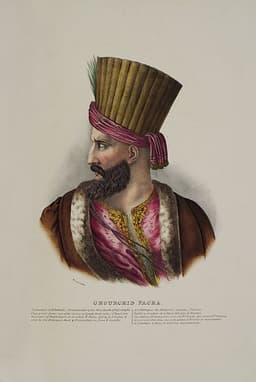
Mehmed Emin Rauf Pasha
Politician · Modern
49.9Total
Basic Information
Born
1918
1780
Died
1993
1859
Era
Modern
Modern
Nationality
Japan
Ottoman Empire
Occupation
Politician
Politician
Civilization
Eastern
Middle Eastern
Score Comparison
Military (10%)
12.5
36.6
Political (20%)
78.0
68.0
Influence (20%)
55.0
49.4
Legacy (20%)
55.0
41.7
Leadership (15%)
72.0
53.2
Strategy (15%)
25.0
53.0
TOTAL
53.8
49.9
Kakuei Tanaka — Complete Timeline
1972 AD
The 'Plan for Remodeling the Japanese Archipelago'Reform◆ Major
Tanaka published a book and policy blueprint titled 'Building a New Japan: A Plan for Remodeling the Japanese Archipelago', which proposed massive public works projects, including a nationwide high-speed rail network and industrial relocation. The plan aimed to decentralize industry and reduce regional disparities, but contributed to land speculation and inflation.
Economic PolicyInfrastructureRegional Development
Impact: nationalconstructive
Normalization of Diplomatic Relations with ChinaPolitical Action
As prime minister, Kakuei Tanaka visited Beijing in September 1972 and signed a joint communiqu
DiplomacyChinaNormalization
Impact: globalconstructive
1973 AD
The Japan Sea Oil Crisis and the 'Tanaka Doctrine'Political Action
Following the 1973 oil crisis, Tanaka promoted a 'comprehensive security' policy that emphasized resource diplomacy and economic cooperation with oil-producing nations. He also proposed the 'Tanaka Doctrine' for a more independent Japanese foreign policy, though its implementation was limited by domestic and international constraints.
Energy PolicyForeign PolicyOil Crisis
Impact: national
1976 AD
Arrest and Conviction in the Lockheed Bribery ScandalPolitical Action◆ Major
In July 1976, former Prime Minister Kakuei Tanaka was arrested on charges of accepting bribes from Lockheed Corporation to facilitate the sale of aircraft to All Nippon Airways. He was convicted in 1983 and sentenced to four years in prison, though he remained politically influential while appealing the verdict.
CorruptionScandalLegal Case
Impact: nationaldestructive
Mehmed Emin Rauf Pasha — Complete Timeline
1839 AD
Tanzimat Reforms ImplementationReform◆ Major
Mehmed Emin Rauf Pasha served as grand vizier during the early Tanzimat period, implementing reforms that modernized the Ottoman legal and administrative systems. His tenure saw the proclamation of the Edict of G
TanzimatReformModernization
Impact: nationalconstructive
1853 AD
Crimean War DiplomacyPolitical Action◆ Major
During the Crimean War, Mehmed Emin Rauf Pasha managed Ottoman diplomacy, balancing relations with Britain and France against Russia. His efforts helped secure allied support, though the war exposed Ottoman military weaknesses.
Crimean WarDiplomacyAlliance
Impact: global
1859 AD
Five-Time Grand VizierPolitical Action◆ Major
Mehmed Emin Rauf Pasha served as grand vizier five times between 1833 and 1859, a record for the Tanzimat era. His repeated appointments reflected his political skill and the volatile nature of Ottoman politics.
AppointmentPolitical LongevityTanzimat
Impact: national
Expert Analysis
Origins
Kakuei Tanaka was born on May 4, 1918, in Nishiyama, Niigata Prefecture, Japan, into a poor farming family. His father was a cattle dealer, and Tanaka left school at age 12 to work. He later founded a construction company, Tanaka Civil Engineering, which grew prosperous during the postwar boom. Mehmed Emin Rauf Pasha was born in 1780 in Istanbul, Ottoman Empire, into a bureaucratic family. His father was a statesman, and Rauf Pasha received a traditional education in Islamic law and administration. He entered the civil service young, serving in various posts before rising to grand vizier.
Rise to Power
Tanaka entered politics in 1947, winning a seat in the Diet. His rise was meteoric: he served as Minister of Posts and Telecommunications in 1957, Minister of Finance in 1962, and Minister of International Trade and Industry in 1971. His key turning point was becoming Prime Minister in July 1972, after a power struggle within the Liberal Democratic Party (LDP). Rauf Pasha's rise was slower. He served as ambassador to Britain and as governor of various provinces. He first became grand vizier in 1833, appointed by Sultan Mahmud II to implement Tanzimat reforms. His ability to navigate Ottoman court politics allowed him to hold the office five times between 1833 and 1859.
Leadership & Governance
Tanaka's leadership was pragmatic and populist. He focused on infrastructure, publishing 'Building a New Japan' in 1972, which proposed a plan to remodel the Japanese archipelago through public works. He normalized relations with China in September 1972, a bold move that shifted Japan's foreign policy. However, his governance was marred by corruption: the Lockheed bribery scandal led to his arrest in 1976. Rauf Pasha oversaw the implementation of Tanzimat reforms, including the 1839 Hatt-ı Şerif of Gülhane, which guaranteed rights to subjects. He managed Ottoman diplomacy during the Crimean War, securing alliances with Britain and France. His leadership was cautious, preserving the empire's stability amid decline.
Triumph & Tragedy
Tanaka's greatest triumph was the normalization of diplomatic relations with China, a strategic move that opened economic ties and reduced Cold War tensions. His greatest failure was the Lockheed scandal, which revealed deep corruption in Japanese politics and led to his imprisonment. He scored 78.0 in political skill but only 12.5 in military matters. Rauf Pasha's triumph was his role in the Tanzimat reforms, which modernized the Ottoman legal system and bureaucracy. He also successfully managed Crimean War diplomacy, keeping the empire aligned with European powers. His failure was his inability to prevent the empire's continued decline; his repeated tenures reflected political instability rather than success. He scored 68.0 in political skill and 53.0 in strategy.
Character & Destiny
Tanaka was ambitious and shrewd, with a common touch that appealed to rural voters. But his willingness to use money for influence led to his downfall. His character—bold and risk-taking—allowed him to normalize China relations but also invited corruption. Rauf Pasha was cautious and adaptable, surviving multiple sultans and political upheavals. His destiny was to serve as a stabilizing force during the Tanzimat, but his caution limited his impact. Historians note his loyalty to the sultan and his skill in balancing factions.
Legacy
Tanaka's legacy is mixed: he is remembered for normalizing China relations and for the 'Tanaka Doctrine' of comprehensive security, but also for the Lockheed scandal that tarnished Japanese politics. His infrastructure plans influenced later Japanese development. Rauf Pasha is remembered as a key figure in the Tanzimat, a reform period that laid groundwork for modern Turkey. However, his repeated appointments highlight the empire's dysfunction. His total score is 49.9 versus Tanaka's 53.8.
Conclusion
Kakuei Tanaka had greater impact. His normalization of China relations reshaped East Asian geopolitics, while his political skills scored 78.0 against Rauf Pasha's 68.0. Rauf Pasha's reforms were significant but incremental within a declining empire. Tanaka's actions had lasting global consequences, making him the more consequential figure.
Rankings
🥇
Kakuei TanakaLeader
Mil: 12.5Pol: 78.0Inf: 55.0
53.8
🥈
Mehmed Emin Rauf Pasha
Mil: 36.6Pol: 68.0Inf: 49.4
49.9
+3.9 behind
How This Comparison Works
Algorithm
Each figure is scored on 6 dimensions (0—100 scale) based on structured historical data: Military (10%), Political (20%), Influence (20%), Legacy (20%), Leadership (15%), Strategy (15%). The weighted total produces the final ranking.
Data Sources
Scores are computed from structured sub-indicators in the database. Scale factors adjust for era (Ancient ×0.85, Modern ×1.0) and civilization size (Eastern ×1.05, Other ×0.80) to account for differences in population and military scale.
Maximum 3 Figures
Comparisons are limited to 2—3 figures to ensure readability and statistical meaningfulness.
Error Margins
±5 points per dimension — Sub-scores are derived from historical records with inherent uncertainty. Two figures within 5 points on a dimension should be considered roughly equivalent in that area.
Total Score Accuracy
±3 points overall — The weighted combination of 6 dimensions produces a total score with approximately ±3 points of uncertainty. Differences of less than 3 points are not statistically significant— the figures are effectively tied.
Known Limitations
- Historical records are incomplete and uneven across civilizations
- Figures from oral-tradition societies may be underrepresented
- Occupation labels can misclassify multi-role figures
- Scores measure capability and impact, not moral character
- Quantitative scoring is a comparison tool, not absolute truth
Capability Radar
Military (10%) — Battles & Warfare
Battles
13
5
Win Rate
19
5
Expansion
21
5
Political (20%) — Governance & Reform
Reform
70
55
Diplomacy
85
50
Economy
75
45
Influence (20%) — Cultural & Global Reach
Cultural
40
20
Global
65
15
Legacy (20%) — Historical Impact
Historical
70
30
Longevity
60
20
Leadership (15%) — Power & Stability
Tenure
65
60
Stability
55
40
Strategy (15%) — Tactics & Innovation
Strategy
25
5
Tactics
29
5
Reform
27
10
Similar Comparisons
Comments & Discussion
No comments yet. Be the first to share your thoughts!