Loading...
Kaleb of Aksum vs Septimius Severus
Septimius Severus leads by 11.5 pts · 2 figures compared
…

Kaleb of Aksum
Emperor · Ancient
56.3Total
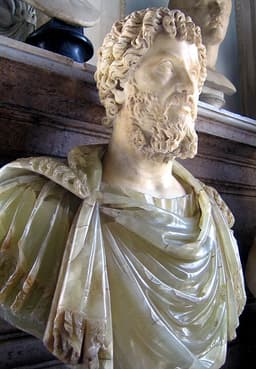
Septimius Severus
Emperor · Ancient
67.8Total
Basic Information
Born
-500
145
Died
—
211
Era
Ancient
Ancient
Nationality
Ethiopia
Roman Empire
Occupation
Emperor
Emperor
Civilization
Other
Western
Score Comparison
Military (10%)
72.5
85.0
Political (20%)
54.7
70.0
Influence (20%)
51.8
68.0
Legacy (20%)
43.3
55.0
Leadership (15%)
74.0
72.0
Strategy (15%)
60.0
72.0
TOTAL
56.3
67.8
Kaleb of Aksum — Complete Timeline
525 AD
Invaded Himyar to protect ChristiansWar◆ Major
Kaleb of Aksum launched a military expedition across the Red Sea to invade the Himyarite Kingdom in Yemen. The campaign was in response to the persecution of Christians by the Jewish Himyarite king Dhu Nuwas. Kaleb defeated Dhu Nuwas and installed a Christian ruler.
Military CampaignReligious WarHimyarChristianity
Impact: regional
Corresponded with Byzantine Emperor Justin IPolitical Action
Kaleb exchanged letters with Byzantine Emperor Justin I, coordinating efforts to protect Christians in Arabia. This diplomatic alliance strengthened Aksum's ties with the Byzantine world.
DiplomacyByzantine AllianceChristian Solidarity
Impact: regionalconstructive
527 AD
Established Aksumite hegemony over South ArabiaPolitical Action◆ Major
Following the invasion, Kaleb placed a Christian viceroy in Himyar, effectively making it an Aksumite client state. This extended Aksumite control over key Red Sea trade routes for several decades.
HegemonyClient StateSouth ArabiaTrade
Impact: regional
540 AD
Retired to a monasteryPolitical Action
After his military campaigns, Kaleb abdicated the throne and retired to a monastery, according to Ethiopian tradition. This act of religious devotion became a model for later Ethiopian kings.
AbdicationMonasticismReligious Devotion
Impact: nationalconstructive
Septimius Severus — Complete Timeline
193 AD
Reforms of the Praetorian GuardReform◆ Major
Septimius Severus disbanded the existing Praetorian Guard, which had assassinated his predecessor Pertinax, and replaced it with loyal soldiers from his own Danubian legions. This reform militarized the guard and increased imperial control.
Praetorian GuardReformMilitary
Impact: nationalconstructive
Foundation of the Severan DynastyPolitical Action
Septimius Severus, proclaimed emperor by his troops in Pannonia, marched on Rome and secured recognition from the Senate. He defeated rivals Didius Julianus, Pescennius Niger, and Clodius Albinus, establishing the Severan dynasty that ruled until 235.
DynastyCivil WarAccession
Impact: global
196 AD
Siege of ByzantiumWar
Septimius Severus besieged and captured Byzantium after a three-year siege, as the city had supported his rival Pescennius Niger. Severus destroyed the city's walls and reduced its status, but later rebuilt it, foreshadowing its future importance.
SiegeByzantiumCivil War
Impact: regionaldestructive
197 AD
Battle of LugdunumWar
Septimius Severus defeated his rival Clodius Albinus at Lugdunum (modern Lyon) in a massive battle. This victory secured Severus's control over the entire Roman Empire and eliminated the last major challenger to his rule.
Civil WarBattleVictory
Impact: global
208 AD
Campaigns in Britain and Construction of Hadrian's WallWar◆ Major
Septimius Severus led a major campaign into Caledonia (Scotland) to subdue rebellious tribes. He repaired and strengthened Hadrian's Wall, and died at York in 211. The campaign achieved limited success and was costly in lives.
BritainCampaignFrontier
Impact: regional
Expert Analysis
Origins
**Kaleb of Aksum** (born c. 520 AD) was the son of King Tazena of the Aksumite Empire, a powerful kingdom in modern-day Ethiopia and Eritrea. Little is known of his early life, but he was raised in the Christian faith, which became central to his identity. Aksum was a major trading hub connecting Africa, Arabia, and the Mediterranean.
**Septimius Severus** (born 11 April 145 AD) was born in Leptis Magna, a Roman province in modern Libya. He came from a wealthy equestrian family of Punic and Berber descent. Educated in rhetoric and law, he entered the Roman Senate and rose through the cursus honorum. His African heritage was notable, but he fully embraced Roman culture.
Rise to Power
Kaleb ascended to the throne around 520 AD as the king of Aksum. His major challenge came from the Himyarite Kingdom in South Arabia, where a Jewish ruler, Dhu Nuwas, persecuted Christians. Kaleb saw himself as a protector of the faith and launched a naval campaign across the Red Sea. In 525 AD, his forces defeated Dhu Nuwas, and Kaleb established a Christian viceroy in Himyar, extending Aksumite hegemony.
Septimius Severus rose amid the chaos of the Year of the Five Emperors (193 AD). After the murder of Pertinax, Severus was proclaimed emperor by his legions in Pannonia. He marched on Rome, securing recognition from the Senate. He then defeated rivals Pescennius Niger in the East and Clodius Albinus in Gaul. The Battle of Lugdunum (February 197 AD) was decisive: Severus killed Albinus and secured control over the entire empire. His military score of 85.0 reflects his skill in civil wars.
Leadership & Governance
Kaleb ruled as a Christian monarch, blending religious authority with political power. He corresponded with Byzantine Emperor Justin I to coordinate protection of Christians. After his victory, he installed a Christian regime in Himyar, but his governance relied on local proxies rather than direct administration. His political score of 54.7 indicates limited institutional reform.
Septimius Severus centralized power and reformed the military. He disbanded the Praetorian Guard and replaced it with loyal legionaries from his Danubian armies. He increased the number of legions and raised soldiers' pay, securing their loyalty. He also built triumphal arches and infrastructure. His political score of 70.0 reflects shrewd management of the state.
Triumph & Tragedy
Kaleb's greatest triumph was the invasion of Himyar, which saved Christians from persecution and extended Aksumite influence. However, his control over South Arabia was short-lived; after his retirement, the region soon reverted. His abdication to a monastery, while pious, left his empire without strong leadership.
Septimius Severus's triumphs include the defeat of rivals, the foundation of the Severan dynasty, and the successful campaign in Britain where he strengthened Hadrian's Wall. However, his reign saw the destruction of Byzantium after a three-year siege (196-199 AD), weakening a key city. His reliance on military force increased the army's political role, contributing to later instability. He died in 211 AD in York, leaving a mixed legacy.
Character & Destiny
Kaleb was driven by religious conviction. His willingness to abdicate shows a man prioritizing faith over power. This limited his long-term impact, as his achievements did not endure.
Septimius Severus was pragmatic and ruthless. He famously told his sons: "Be harmonious, enrich the soldiers, and scorn all other men." His focus on military loyalty secured his reign but undermined the Senate and traditional institutions. His African background was often remarked upon, but he used it to project strength.
Legacy
Kaleb is venerated as a saint in the Ethiopian Orthodox Church. His campaign is remembered as a defense of Christianity. However, his influence score of 51.8 reflects the limited duration of his conquests. Aksum declined after his reign.
Septimius Severus's legacy is more substantial. He founded the Severan dynasty, which ruled until 235 AD. His military reforms shaped the late Roman army. The Severan Tondo and Arch of Severus in Rome commemorate him. His legacy score of 55.0 is modest but higher than Kaleb's 43.3.
Conclusion
Septimius Severus had greater impact. His total score of 67.8 versus Kaleb's 56.3 reflects broader influence on the Roman Empire, which shaped Western history for centuries. Kaleb's achievements, while significant, were regional and temporary. Severus's reforms and dynasty had lasting effects on governance and military structure. Thus, Septimius Severus is the more consequential figure.
Rankings
🥇
Septimius SeverusLeader
Mil: 85.0Pol: 70.0Inf: 68.0
67.8
🥈
Kaleb of Aksum
Mil: 72.5Pol: 54.7Inf: 51.8
56.3
+11.5 behind
How This Comparison Works
Algorithm
Each figure is scored on 6 dimensions (0—100 scale) based on structured historical data: Military (10%), Political (20%), Influence (20%), Legacy (20%), Leadership (15%), Strategy (15%). The weighted total produces the final ranking.
Data Sources
Scores are computed from structured sub-indicators in the database. Scale factors adjust for era (Ancient ×0.85, Modern ×1.0) and civilization size (Eastern ×1.05, Other ×0.80) to account for differences in population and military scale.
Maximum 3 Figures
Comparisons are limited to 2—3 figures to ensure readability and statistical meaningfulness.
Error Margins
±5 points per dimension — Sub-scores are derived from historical records with inherent uncertainty. Two figures within 5 points on a dimension should be considered roughly equivalent in that area.
Total Score Accuracy
±3 points overall — The weighted combination of 6 dimensions produces a total score with approximately ±3 points of uncertainty. Differences of less than 3 points are not statistically significant— the figures are effectively tied.
Known Limitations
- Historical records are incomplete and uneven across civilizations
- Figures from oral-tradition societies may be underrepresented
- Occupation labels can misclassify multi-role figures
- Scores measure capability and impact, not moral character
- Quantitative scoring is a comparison tool, not absolute truth
Capability Radar
Military (10%) — Battles & Warfare
Battles
55
85
Win Rate
60
80
Expansion
55
80
Political (20%) — Governance & Reform
Reform
40
85
Diplomacy
55
70
Economy
45
75
Influence (20%) — Cultural & Global Reach
Cultural
40
60
Global
30
65
Legacy (20%) — Historical Impact
Historical
45
70
Longevity
35
60
Leadership (15%) — Power & Stability
Tenure
60
80
Stability
50
65
Strategy (15%) — Tactics & Innovation
Strategy
55
85
Tactics
50
75
Reform
30
90
Similar Comparisons
Comments & Discussion
No comments yet. Be the first to share your thoughts!