Loading...
This comparison has not been analyzed yet.
One-time AI generation (~1 minute). Scores and timeline are already available below.
Kamehameha I vs Naser al-Din Shah
Kamehameha I leads by 13.3 pts · 2 figures compared
…
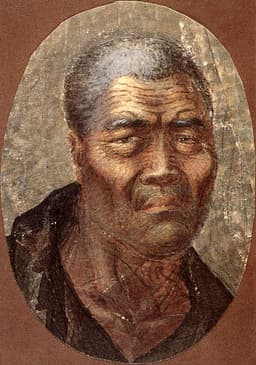
Kamehameha I
Emperor · Modern
59.9Total

Naser al-Din Shah
Emperor · Modern
46.6Total
Basic Information
Born
1758
1831
Died
1819
1896
Era
Modern
Modern
Nationality
Hawaii
Persia
Occupation
Emperor
Emperor
Civilization
Other
Middle Eastern
Score Comparison
Military (10%)
60.0
21.2
Political (20%)
59.3
45.1
Influence (20%)
60.0
51.8
Legacy (20%)
49.2
42.5
Leadership (15%)
85.0
68.0
Strategy (15%)
50.0
39.6
TOTAL
59.9
46.6
Kamehameha I — Complete Timeline
1778 AD
Opened Hawaii to foreign tradePolitical Action◆ Major
Following the arrival of Captain James Cook in 1778, Kamehameha I engaged with European explorers and traders. He acquired firearms and ships, which he used to conquer and unify the islands, while also establishing trade relations with the West.
HawaiiTradeEuropean Contact
Impact: regional
1797 AD
Implemented the Law of the Splintered PaddleReform◆ Major
After a near-fatal incident where he was struck by a paddle, Kamehameha I enacted a law protecting civilians during wartime. The law stated that women, children, and the elderly should not be harmed in conflicts, reflecting a humanitarian code.
HawaiiLawHuman Rights
Impact: regionalconstructive
1804 AD
Established the Kingdom of Hawaii's capital at HonoluluPolitical Action◆ Major
Kamehameha I moved his court to Honolulu on O'ahu, establishing it as the political and economic center of the unified Hawaiian Kingdom. This decision shaped Hawaii's development as a central port for trade.
HawaiiCapitalUrbanization
Impact: regionalconstructive
1810 AD
Unified the Hawaiian IslandsWar
Kamehameha I completed the unification of the Hawaiian Islands after a series of battles, including the Battle of Nu'uanu in 1795 and the peaceful cession of Kaua'i in 1810. He established the Kingdom of Hawaii as a single political entity.
HawaiiUnificationKingdom
Impact: regionalconstructive
Naser al-Din Shah — Complete Timeline
1852 AD
Suppressed the Babi UprisingPolitical Action◆ Major
Naser al-Din Shah ordered the suppression of the Babi movement after an assassination attempt on his life. Thousands of Babis were executed, and the movement was driven underground. This persecution strengthened the Babi community's resolve and later contributed to the emergence of the Baha'i faith.
Religious PersecutionBabi MovementSuppression
Impact: nationaldestructive
1857 AD
Signed the Treaty of Paris (1857)War◆ Major
Naser al-Din Shah signed the Treaty of Paris with Britain, ending the Anglo-Persian War (1856-1857). Persia renounced its claim to Herat and recognized Afghan independence, marking the end of Persian influence in Afghanistan and a significant diplomatic defeat.
TreatyTerritorial LossAnglo-Persian War
Impact: regionaltragic
1872 AD
Granted the Reuter ConcessionPolitical Action◆ Major
Naser al-Din Shah granted a comprehensive concession to Baron Julius de Reuter, giving him control over Persian railways, mines, banks, and other economic assets for 70 years. Widespread opposition forced its cancellation within a year, but it set a precedent for foreign economic influence in Persia.
ConcessionForeign InfluenceEconomic Policy
Impact: nationaldestructive
1873 AD
Traveled to EuropeCultural
Naser al-Din Shah became the first Persian monarch to visit Europe, traveling to Russia, Germany, Belgium, France, and England. His travels exposed him to Western technology and governance, and he wrote detailed travelogues that influenced Persian modernization efforts.
TravelModernizationWestern Influence
Impact: nationalconstructive
1896 AD
Assassinated by Mirza Reza KermaniPolitical Action
Naser al-Din Shah was assassinated by Mirza Reza Kermani, a follower of Jamal al-Din al-Afghani, while visiting the Shah Abdol-Azim Shrine. His death ended the longest reign of any Qajar monarch (48 years) and marked a turning point in Persian politics, leading to increased constitutionalist agitation.
AssassinationPolitical ViolenceConstitutional Movement
Impact: nationaltragic
This comparison has not been analyzed yet.
One-time AI generation (~1 minute). Scores and timeline are already available below.
Rankings
🥇
Kamehameha ILeader
Mil: 60.0Pol: 59.3Inf: 60.0
59.9
🥈
Naser al-Din Shah
Mil: 21.2Pol: 45.1Inf: 51.8
46.6
+13.3 behind
How This Comparison Works
Algorithm
Each figure is scored on 6 dimensions (0—100 scale) based on structured historical data: Military (10%), Political (20%), Influence (20%), Legacy (20%), Leadership (15%), Strategy (15%). The weighted total produces the final ranking.
Data Sources
Scores are computed from structured sub-indicators in the database. Scale factors adjust for era (Ancient ×0.85, Modern ×1.0) and civilization size (Eastern ×1.05, Other ×0.80) to account for differences in population and military scale.
Maximum 3 Figures
Comparisons are limited to 2—3 figures to ensure readability and statistical meaningfulness.
Error Margins
±5 points per dimension — Sub-scores are derived from historical records with inherent uncertainty. Two figures within 5 points on a dimension should be considered roughly equivalent in that area.
Total Score Accuracy
±3 points overall — The weighted combination of 6 dimensions produces a total score with approximately ±3 points of uncertainty. Differences of less than 3 points are not statistically significant— the figures are effectively tied.
Known Limitations
- Historical records are incomplete and uneven across civilizations
- Figures from oral-tradition societies may be underrepresented
- Occupation labels can misclassify multi-role figures
- Scores measure capability and impact, not moral character
- Quantitative scoring is a comparison tool, not absolute truth
Capability Radar
Military (10%) — Battles & Warfare
Battles
45
15
Win Rate
70
10
Expansion
55
5
Political (20%) — Governance & Reform
Reform
65
30
Diplomacy
60
40
Economy
55
25
Influence (20%) — Cultural & Global Reach
Cultural
55
30
Global
45
20
Legacy (20%) — Historical Impact
Historical
55
35
Longevity
50
30
Leadership (15%) — Power & Stability
Tenure
60
85
Stability
60
20
Strategy (15%) — Tactics & Innovation
Strategy
65
10
Tactics
60
10
Reform
55
20
Similar Comparisons
Comments & Discussion
No comments yet. Be the first to share your thoughts!