Loading...
This comparison has not been analyzed yet.
One-time AI generation (~1 minute). Scores and timeline are already available below.
Karadjordje Petrovic vs Vladimir Lenin
Vladimir Lenin leads by 22.6 pts · 2 figures compared
…

Karadjordje Petrovic
Revolutionary · Modern
48.6Total
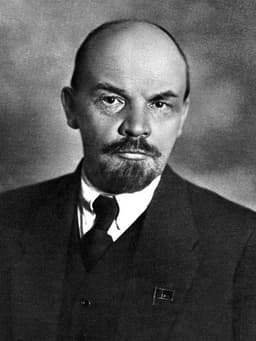
Vladimir Lenin
Revolutionary · Modern
71.2Total
Basic Information
Born
1762
1870
Died
1817
1924
Era
Modern
Modern
Nationality
Serbia
Russia
Occupation
Revolutionary
Revolutionary
Civilization
Western
Western
Score Comparison
Military (10%)
50.0
30.0
Political (20%)
35.1
78.0
Influence (20%)
53.3
82.0
Legacy (20%)
45.8
72.0
Leadership (15%)
50.7
80.0
Strategy (15%)
60.0
60.0
TOTAL
48.6
71.2
Karadjordje Petrovic — Complete Timeline
1804 AD
Election as leader of the First Serbian UprisingPolitical Action
Karadjordje Petrovi
Uprising leadershipIndependence struggleRebel unification
Impact: regionalconstructive
1805 AD
Establishment of the Governing Council (Praviteljstvujušči Sovjet)Reform
Karadjordje established a Governing Council to administer the liberated territories. This body functioned as a provisional government, handling taxation, justice, and military logistics. While Karadjordje held ultimate authority, the council represented an early attempt at state-building. Its creation laid foundations for modern Serbian administrative institutions.
State-buildingProvisional governmentAdministration
Impact: nationalconstructive
1806 AD
Capture of Belgrade (1806)War◆ Major
Karadjordje's forces captured Belgrade from the Ottoman garrison after a prolonged siege. The fall of the city was a major victory for the Serbian rebels, giving them control over the strategic fortress and administrative center. This success boosted rebel morale and forced the Ottomans to negotiate, leading to temporary Serbian autonomy.
Siege of BelgradeMilitary victoryAutonomy
Impact: regionalconstructive
1813 AD
Defeat and exile after the Ottoman reconquestWar◆ Major
The Ottoman Empire launched a massive counteroffensive that overwhelmed the Serbian rebels. Karadjordje's forces were defeated, and he fled to Austria, then to Russia. The uprising collapsed, and Ottoman reprisals followed. This defeat ended the first phase of Serbian independence efforts and forced Karadjordje into exile for four years.
Military defeatExileOttoman reconquest
Impact: regionaltragic
1817 AD
Assassination by Miloš Obrenović's agentsPolitical Action◆ Major
Karadjordje was assassinated on the orders of Milo
AssassinationDynastic rivalryObrenović
Impact: nationaltragic
Vladimir Lenin — Complete Timeline
1903 AD
Founding of the Bolshevik PartyPolitical Action
At the Second Congress of the Russian Social Democratic Labour Party in London, Lenin led a split that created the Bolshevik faction. The Bolsheviks advocated for a disciplined vanguard party of professional revolutionaries, a key element of Lenin's political strategy.
Political PartyRevolutionIdeology
Impact: global
1917 AD
April ThesesPolitical Action◆ Major
Lenin returned to Russia from exile and published the April Theses, calling for the overthrow of the Provisional Government, transfer of power to the soviets, and an end to World War I. This document set the Bolshevik agenda for the coming revolution.
RevolutionIdeologyPolitical Strategy
Impact: national
October RevolutionPolitical Action
Lenin led the Bolshevik seizure of power in Petrograd, capturing key government buildings and the Winter Palace. The revolution overthrew the Provisional Government and established the world's first socialist state, the Russian Soviet Federative Socialist Republic.
RevolutionCoupCommunism
Impact: global
1918 AD
Treaty of Brest-LitovskPolitical Action◆ Major
Lenin signed a separate peace treaty with the Central Powers, ceding vast territories including Ukraine, Belarus, and the Baltic states. The treaty ended Russia's involvement in World War I but caused significant territorial losses and internal opposition.
TreatyWorld War ITerritorial Loss
Impact: globaldestructive
1921 AD
New Economic Policy (NEP)Reform◆ Major
Lenin introduced the NEP, allowing limited private enterprise and market mechanisms to revive the war-torn Soviet economy. The policy replaced War Communism, permitting small-scale capitalism while the state retained control of major industries.
Economic ReformPolicyRecovery
Impact: nationalconstructive
1922 AD
Establishment of the Soviet UnionPolitical Action
Lenin oversaw the creation of the Union of Soviet Socialist Republics (USSR), a federation of Soviet republics. The new state consolidated Bolshevik control over much of the former Russian Empire and became a model for communist states worldwide.
State FormationCommunismFederation
Impact: global
This comparison has not been analyzed yet.
One-time AI generation (~1 minute). Scores and timeline are already available below.
Rankings
🥇
Vladimir LeninLeader
Mil: 30.0Pol: 78.0Inf: 82.0
71.2
🥈
Karadjordje Petrovic
Mil: 50.0Pol: 35.1Inf: 53.3
48.6
+22.6 behind
How This Comparison Works
Algorithm
Each figure is scored on 6 dimensions (0—100 scale) based on structured historical data: Military (10%), Political (20%), Influence (20%), Legacy (20%), Leadership (15%), Strategy (15%). The weighted total produces the final ranking.
Data Sources
Scores are computed from structured sub-indicators in the database. Scale factors adjust for era (Ancient ×0.85, Modern ×1.0) and civilization size (Eastern ×1.05, Other ×0.80) to account for differences in population and military scale.
Maximum 3 Figures
Comparisons are limited to 2—3 figures to ensure readability and statistical meaningfulness.
Error Margins
±5 points per dimension — Sub-scores are derived from historical records with inherent uncertainty. Two figures within 5 points on a dimension should be considered roughly equivalent in that area.
Total Score Accuracy
±3 points overall — The weighted combination of 6 dimensions produces a total score with approximately ±3 points of uncertainty. Differences of less than 3 points are not statistically significant— the figures are effectively tied.
Known Limitations
- Historical records are incomplete and uneven across civilizations
- Figures from oral-tradition societies may be underrepresented
- Occupation labels can misclassify multi-role figures
- Scores measure capability and impact, not moral character
- Quantitative scoring is a comparison tool, not absolute truth
Capability Radar
Military (10%) — Battles & Warfare
Battles
55
20
Win Rate
60
35
Expansion
45
70
Political (20%) — Governance & Reform
Reform
40
95
Diplomacy
35
75
Economy
30
60
Influence (20%) — Cultural & Global Reach
Cultural
50
80
Global
40
90
Legacy (20%) — Historical Impact
Historical
55
95
Longevity
50
85
Leadership (15%) — Power & Stability
Tenure
45
55
Stability
25
40
Strategy (15%) — Tactics & Innovation
Strategy
55
55
Tactics
50
30
Reform
40
85
Similar Comparisons
Comments & Discussion
No comments yet. Be the first to share your thoughts!