Loading...
Kedus Harbe vs Philip V of France
Philip V of France leads by 7.7 pts · 2 figures compared
…
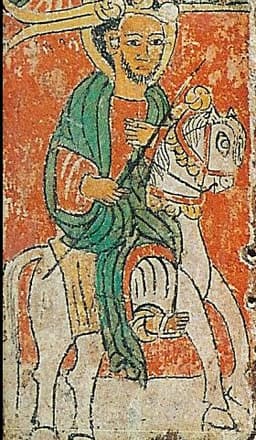
Kedus Harbe
Emperor · Medieval
39.5Total
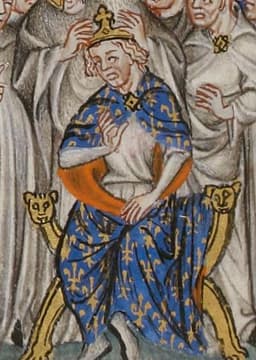
Philip V of France
Emperor · Medieval
47.2Total
Basic Information
Born
1100
1293
Died
1150
1322
Era
Medieval
Medieval
Nationality
Ethiopia
France
Occupation
Emperor
Emperor
Civilization
Other
Western
Score Comparison
Military (10%)
21.2
21.2
Political (20%)
26.4
45.0
Influence (20%)
50.2
53.3
Legacy (20%)
40.8
45.0
Leadership (15%)
45.0
68.0
Strategy (15%)
39.6
35.7
TOTAL
39.5
47.2
Kedus Harbe — Complete Timeline
1120 AD
Commissioned church constructionCultural
Kedus Harbe oversaw the building of multiple churches in the Zagwe domain, continuing the dynasty's tradition of rock-hewn architecture. His patronage of the Ethiopian Orthodox Church strengthened religious institutions and promoted Christian worship.
Church buildingReligious patronageZagwe period
Impact: regionalconstructive
Philip V of France — Complete Timeline
1318 AD
Ordinance of 1318Reform◆ Major
Philip V issued an ordinance reorganizing the royal administration, centralizing financial and judicial functions. He established a more efficient system of tax collection and justice, strengthening the monarchy's control over the kingdom.
AdministrationReformCapetian
Impact: nationalconstructive
1321 AD
Suppression of the Leper ConspiracyPolitical Action
Philip V ordered the persecution of lepers accused of poisoning wells in a supposed conspiracy with Jews and Muslims. Many lepers were burned at the stake, and their property was confiscated, reflecting social panic and royal exploitation.
PersecutionConspiracyCapetian
Impact: nationaldestructive
Expert Analysis
Origins
Kedus Harbe was a 12th-century emperor of the Zagwe dynasty in Ethiopia, known for his patronage of rock-hewn churches. Little is known about his early life, but he was part of a lineage that claimed descent from Moses. The Zagwe period marked a shift in power from the Aksumite tradition to a new center in Lasta. Harbe's reign focused on religious construction, continuing the work of his predecessors.
Philip V of France, born around 1293, was the second son of Philip IV and Joan I of Navarre. He was known as 'Philip the Tall' due to his height. Educated in the royal court, he was exposed to administrative reforms and conflicts with the papacy. His father's centralization policies shaped his later governance.
Rise to Power
Kedus Harbe ascended to the Zagwe throne after his brother Lalibela, who is credited with building the famous rock-hewn churches of Lalibela. Harbe continued this architectural tradition, commissioning multiple churches. His power was limited by the decentralized nature of the Zagwe kingdom, where regional lords held significant autonomy.
Philip V became king in 1316 after the death of his brother Louis X and the brief reign of Louis's posthumous son John I. Philip asserted his claim over his niece Joan, using Salic law to exclude women from succession. This set a precedent for future French successions. He faced opposition from nobles but secured his position through negotiation and concessions.
Leadership & Governance
Kedus Harbe's leadership was centered on religious patronage. He sponsored church construction, which solidified the Zagwe dynasty's legitimacy and promoted Christianity in the region. His governance was typical of medieval Ethiopian monarchs, with power shared among regional rulers and the clergy. He scored 45.0 in leadership, reflecting a modest but focused reign.
Philip V, scoring 68.0 in leadership, was a centralizer. He issued the Ordinance of 1318, reorganizing royal finances and justice, creating a more efficient bureaucracy. He also suppressed the Leper Conspiracy in 1321, ordering the persecution of lepers accused of poisoning wells, a brutal act that reflected his authoritarian streak. His political score of 45.0 indicates effective but controversial rule.
Triumph & Tragedy
Kedus Harbe's triumph was his contribution to Ethiopia's religious heritage through church building. However, his legacy is overshadowed by his brother Lalibela. His failure was the lack of political consolidation, leaving the Zagwe dynasty vulnerable to the eventual rise of the Solomonic dynasty. His low military score of 21.2 suggests limited martial achievements.
Philip V's triumph was the administrative reform that strengthened the French monarchy. His suppression of the Leper Conspiracy, while successful in quashing a perceived threat, was a tragedy of injustice, leading to hundreds of deaths. His short reign (1316-1322) prevented deeper reforms. He died without a male heir, leading to the end of the Capetian line.
Character & Destiny
Kedus Harbe was a pious ruler focused on spiritual legacy. His character shaped his fate: by prioritizing churches over military expansion, he ensured the Zagwe dynasty's cultural impact but left it militarily weak. Historical assessments view him as a minor figure in Ethiopian history.
Philip V was pragmatic and ambitious, using law and administration to centralize power. His character drove him to assert authority, but his harshness in the Leper Conspiracy tarnished his reputation. He is remembered as a capable but not great king, with his reforms laying groundwork for later French absolutism.
Legacy
Kedus Harbe's legacy is tied to Ethiopian Orthodox Christianity. The churches he commissioned remain pilgrimage sites. However, his influence scores 50.2, reflecting limited global impact. The Zagwe dynasty's architectural tradition influenced later Ethiopian art.
Philip V's legacy is more tangible: his ordinances shaped French administration, and his use of Salic law influenced European succession. He scored 45.0 in legacy. His centralization policies were a step toward the absolute monarchy of Louis XIV.
Conclusion
Philip V had greater impact due to his administrative reforms that influenced the development of the French state, which became a major European power. His political and leadership scores (45.0 and 68.0) surpass Kedus Harbe's (26.4 and 45.0). While Harbe's religious contributions are culturally significant, Philip's institutional changes had broader historical consequences. Philip V wins with a total score of 47.2 against Harbe's 39.5.
Rankings
🥇
Philip V of FranceLeader
Mil: 21.2Pol: 45.0Inf: 53.3
47.2
🥈
Kedus Harbe
Mil: 21.2Pol: 26.4Inf: 50.2
39.5
+7.7 behind
How This Comparison Works
Algorithm
Each figure is scored on 6 dimensions (0—100 scale) based on structured historical data: Military (10%), Political (20%), Influence (20%), Legacy (20%), Leadership (15%), Strategy (15%). The weighted total produces the final ranking.
Data Sources
Scores are computed from structured sub-indicators in the database. Scale factors adjust for era (Ancient ×0.85, Modern ×1.0) and civilization size (Eastern ×1.05, Other ×0.80) to account for differences in population and military scale.
Maximum 3 Figures
Comparisons are limited to 2—3 figures to ensure readability and statistical meaningfulness.
Error Margins
±5 points per dimension — Sub-scores are derived from historical records with inherent uncertainty. Two figures within 5 points on a dimension should be considered roughly equivalent in that area.
Total Score Accuracy
±3 points overall — The weighted combination of 6 dimensions produces a total score with approximately ±3 points of uncertainty. Differences of less than 3 points are not statistically significant— the figures are effectively tied.
Known Limitations
- Historical records are incomplete and uneven across civilizations
- Figures from oral-tradition societies may be underrepresented
- Occupation labels can misclassify multi-role figures
- Scores measure capability and impact, not moral character
- Quantitative scoring is a comparison tool, not absolute truth
Capability Radar
Military (10%) — Battles & Warfare
Battles
10
10
Win Rate
10
10
Expansion
10
10
Political (20%) — Governance & Reform
Reform
20
70
Diplomacy
20
60
Economy
20
65
Influence (20%) — Cultural & Global Reach
Cultural
30
30
Global
10
20
Legacy (20%) — Historical Impact
Historical
25
40
Longevity
20
30
Leadership (15%) — Power & Stability
Tenure
30
60
Stability
25
65
Strategy (15%) — Tactics & Innovation
Strategy
10
15
Tactics
10
10
Reform
5
20
Similar Comparisons
Comments & Discussion
No comments yet. Be the first to share your thoughts!