Loading...
Khalid ibn al-Walid vs Muqali
Muqali leads by 1.5 pts · 2 figures compared
…

Khalid ibn al-Walid
General · Medieval
59.8Total
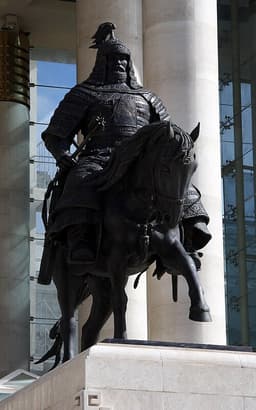
Muqali
General · Medieval
61.3Total
Basic Information
Born
592
1170
Died
642
1223
Era
Medieval
Medieval
Nationality
Rashidun Caliphate
Mongol Empire
Occupation
General
General
Civilization
Middle Eastern
Eastern
Score Comparison
Military (10%)
88.0
65.0
Political (20%)
40.8
68.0
Influence (20%)
58.3
58.0
Legacy (20%)
52.0
49.2
Leadership (15%)
61.1
70.4
Strategy (15%)
81.2
72.0
TOTAL
59.8
61.3
Khalid ibn al-Walid — Complete Timeline
629 AD
Battle of Mu'tahWar◆ Major
Khalid ibn al-Walid took command of the Muslim army after the deaths of three previous commanders at Mu'tah. He successfully withdrew the army from a much larger Byzantine force, earning the title 'Sword of Allah' from Muhammad for his tactical skill.
Byzantine WarBattleEarly Islam
Impact: regional
632 AD
Battle of YamamaWar◆ Major
Khalid led Muslim forces against the false prophet Musaylima at Yamama during the Ridda Wars. The battle was fierce, with heavy casualties on both sides, but ended in a decisive Muslim victory, crushing the rebellion in central Arabia.
Ridda WarsBattleYamama
Impact: regional
634 AD
Conquest of DamascusWar◆ Major
Khalid ibn al-Walid led the Muslim siege of Damascus, capturing the city after a six-month campaign. The surrender terms allowed residents to pay tribute and retain their churches, setting a precedent for future conquests.
Islamic ConquestSiegeDamascus
Impact: regional
636 AD
Battle of YarmoukWar
Khalid ibn al-Walid commanded the Muslim army against a large Byzantine force at the Yarmouk River. His tactical genius led to a decisive victory, resulting in the Muslim conquest of Syria and the permanent withdrawal of Byzantine power from the region.
Islamic ConquestBattleByzantine Empire
Impact: global
638 AD
Dismissal by Caliph UmarPolitical Action◆ Major
Caliph Umar dismissed Khalid ibn al-Walid from his command, despite his military successes, to prevent excessive reliance on a single general and to assert caliphal authority. Khalid accepted the decision without protest and continued to serve as a soldier.
DismissalCommandRashidun
Impact: regional
Muqali — Complete Timeline
1211 AD
Campaign in Northern ChinaWar◆ Major
Muqali was a key commander in Genghis Khan's invasion of the Jin Dynasty. He led forces in the capture of numerous cities and fortresses in northern China, including the victory at the Battle of Yehuling in 1211, which broke Jin resistance.
Jin DynastyYehulingNorthern China
Impact: regional
1212 AD
Conquest of ManchuriaWar
Muqali led a campaign to subdue the Khitan and Jurchen tribes in Manchuria. He defeated the rebel Khitan leader Yel
ManchuriaKhitanJurchen
Impact: regional
1215 AD
Siege of ZhongduWar◆ Major
Muqali participated in the Mongol siege of Zhongdu (modern Beijing), the capital of the Jin Dynasty. The city fell after a prolonged siege, leading to the massacre of its inhabitants and the effective collapse of Jin authority in northern China.
ZhongduBeijingSiege
Impact: regionaldestructive
1217 AD
Appointment as Viceroy of ChinaPolitical Action◆ Major
Genghis Khan appointed Muqali as viceroy (guo-wang) of all conquered territories in China, granting him command of the Mongol forces in the region. This made Muqali the de facto ruler of Mongol-occupied northern China.
ViceroyChinaGenghis Khan
Impact: regionalconstructive
Expert Analysis
Origins
Khalid ibn al-Walid (c. 592-642) was born into the Quraysh tribe in Mecca, a merchant elite that initially opposed Muhammad. His father was a prominent leader, and Khalid was a skilled horseman and warrior. He converted to Islam in 629, after the Treaty of Hudaybiyyah. Muqali (1170-1223) was a Jalayir Mongol, born into a tribal confederation that served Genghis Khan's father. Orphaned early, he was given to Genghis as a servant but rose through loyalty and bravery. Unlike Khalid, Muqali had no formal military education; his skills were honed in the steppe warfare of the Mongol Empire.
Rise to Power
Khalid's rise began at the Battle of Mu'tah (629), where after three Muslim commanders were killed, he took command and executed a tactical withdrawal, saving the army. This earned him the title "Sword of Allah" from Muhammad. He then led the Ridda Wars (632-633) against apostate tribes, crushing Musaylima at Yamama with 1,200 Muslim dead. His strategic brilliance peaked at Yarmouk (636), where he outmaneuvered a Byzantine force of 40,000-100,000 with a 25,000-strong army, using feigned retreats and cavalry charges. Muqali's rise came through Genghis Khan's unification of Mongolia. He was one of the "four hounds" of Genghis, entrusted with the 1206 campaign against the Jin Dynasty. In 1211, he led the invasion of China, capturing numerous cities. By 1217, Genghis appointed him viceroy (guo-wang) of all conquered Chinese territories, granting him command of 20,000 troops and administrative authority. This was a rare honor, as Genghis typically kept military and civil power separate.
Leadership & Governance
Khalid was a brilliant tactician but a poor administrator. His dismissal by Caliph Umar in 638 stemmed from concerns over his unchecked power and the adulation he received from troops. Umar feared a cult of personality, so he removed Khalid despite his successes. Khalid's governance was indirect; he focused on military campaigns, leaving civil matters to others. In contrast, Muqali was both a general and a governor. As viceroy, he established a hybrid administration, using Chinese officials to collect taxes while maintaining Mongol military control. He pacified Manchuria (1216) by defeating the Khitan rebel Yelü Liuge, and then besieged Zhongdu (1215), the Jin capital, which fell after a year-long siege. Muqali's leadership score of 70.4 reflects his ability to delegate and build local alliances, while Khalid's 61.1 shows his more autocratic style.
Triumph & Tragedy
Khalid's greatest triumph was Yarmouk, which secured Syria for Islam. He also conquered Damascus (634) through a negotiated surrender. His tragedy was his dismissal; despite an undefeated record, he was stripped of command and died in obscurity in 642. He reportedly said, "I fought for the glory of Islam, not for Umar." Muqali's triumph was the conquest of northern China; he captured over 30 cities and laid the foundation for Mongol rule. His tragedy was his death in 1223 during a campaign, just as the Jin were on the brink of collapse. He never saw the final conquest, which occurred in 1234. Muqali's military score of 65.0 is lower than Khalid's 88.0, but his political score of 68.0 exceeds Khalid's 40.8, reflecting his dual role.
Character & Destiny
Khalid was audacious and aggressive, often taking risks that paid off. At Yarmouk, he executed a night attack and a feigned retreat, maneuvers that could have failed. His character led to conflict with Umar, who valued collective leadership over individual glory. Muqali was methodical and loyal, never challenging Genghis's authority. He was known for his justice and ability to win over Chinese subjects. His destiny was to be a builder of empire, not a rebel. Historians assess Khalid as one of the greatest tactical commanders of all time, while Muqali is seen as a capable but not exceptional general, overshadowed by Genghis and Subutai.
Legacy
Khalid's legacy is the swift expansion of the Islamic Caliphate; his campaigns doubled its territory. He is revered in Islamic history as a martyr and military genius. His tactics are studied in military academies. Muqali's legacy is the Mongol conquest of China; his administrative policies influenced the Yuan Dynasty. However, his personal fame is limited, as he is often eclipsed by Subutai. In terms of impact, Khalid's military score of 88.0 versus Muqali's 65.0 shows his tactical superiority. Muqali's total score of 61.3 edges Khalid's 59.8 due to political and leadership scores, but Khalid's legacy and influence (52.0 vs 49.2) are higher.
Conclusion
While Muqali was a competent governor and general, Khalid ibn al-Walid was the superior military commander. Khalid's undefeated record and his role in the Islamic conquests are unmatched. Muqali's political skills cannot compensate for his lower military achievements. Taking a clear stance, Khalid had greater impact on world history: the Islamic Caliphate's expansion shaped the Middle East and beyond, while Muqali's work was part of a larger Mongol machine. Score-wise, Khalid's military score (88.0) is 23 points higher than Muqali's, and his influence (58.3 vs 58.0) is slightly higher. Therefore, Khalid is the greater general.
Rankings
🥇
MuqaliLeader
Mil: 65.0Pol: 68.0Inf: 58.0
61.3
🥈
Khalid ibn al-Walid
Mil: 88.0Pol: 40.8Inf: 58.3
59.8
+1.5 behind
How This Comparison Works
Algorithm
Each figure is scored on 6 dimensions (0—100 scale) based on structured historical data: Military (10%), Political (20%), Influence (20%), Legacy (20%), Leadership (15%), Strategy (15%). The weighted total produces the final ranking.
Data Sources
Scores are computed from structured sub-indicators in the database. Scale factors adjust for era (Ancient ×0.85, Modern ×1.0) and civilization size (Eastern ×1.05, Other ×0.80) to account for differences in population and military scale.
Maximum 3 Figures
Comparisons are limited to 2—3 figures to ensure readability and statistical meaningfulness.
Error Margins
±5 points per dimension — Sub-scores are derived from historical records with inherent uncertainty. Two figures within 5 points on a dimension should be considered roughly equivalent in that area.
Total Score Accuracy
±3 points overall — The weighted combination of 6 dimensions produces a total score with approximately ±3 points of uncertainty. Differences of less than 3 points are not statistically significant— the figures are effectively tied.
Known Limitations
- Historical records are incomplete and uneven across civilizations
- Figures from oral-tradition societies may be underrepresented
- Occupation labels can misclassify multi-role figures
- Scores measure capability and impact, not moral character
- Quantitative scoring is a comparison tool, not absolute truth
Capability Radar
Military (10%) — Battles & Warfare
Battles
95
75
Win Rate
100
80
Expansion
90
85
Political (20%) — Governance & Reform
Reform
30
65
Diplomacy
60
72
Economy
35
60
Influence (20%) — Cultural & Global Reach
Cultural
75
55
Global
75
55
Legacy (20%) — Historical Impact
Historical
85
65
Longevity
80
50
Leadership (15%) — Power & Stability
Tenure
40
70
Stability
45
68
Strategy (15%) — Tactics & Innovation
Strategy
92
82
Tactics
98
78
Reform
70
60
Similar Comparisons
Comments & Discussion
No comments yet. Be the first to share your thoughts!