Loading...
Khengarji III of Kutch vs Louis II of Hungary
Khengarji III of Kutch leads by 17.2 pts · 2 figures compared
…

Khengarji III of Kutch
Emperor · Modern
53.0Total
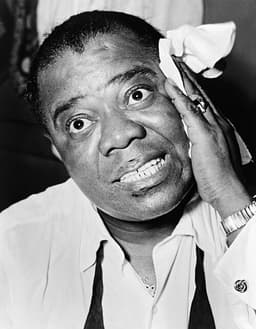
Louis II of Hungary
Emperor · Modern
35.8Total
Basic Information
Born
1866
1506
Died
1942
1526
Era
Modern
Modern
Nationality
India
Hungary
Occupation
Emperor
Emperor
Civilization
Indian
Western
Score Comparison
Military (10%)
21.2
10.2
Political (20%)
72.0
27.9
Influence (20%)
53.3
47.1
Legacy (20%)
45.0
36.7
Leadership (15%)
75.0
38.1
Strategy (15%)
42.3
39.6
TOTAL
53.0
35.8
Khengarji III of Kutch — Complete Timeline
1875 AD
Accession as Maharao of KutchPolitical Action◆ Major
Khengarji III became Maharao of Kutch at age nine after the death of his father Pragmulji II. A regency council governed until he came of age in 1884. His reign of 66 years was the longest in Kutch's history.
AccessionKutchMaharao
Impact: regional
1879 AD
Construction of Prag Mahal PalaceCultural◆ Major
Khengarji III completed the construction of the Prag Mahal Palace in Bhuj, started by his father. The Italian Gothic-style palace became a symbol of Kutch's prosperity and his patronage of architecture.
ArchitecturePrag MahalBhuj
Impact: regionalconstructive
1900 AD
Development of Bhuj cityReform◆ Major
Khengarji III oversaw the modernization of Bhuj, including the construction of roads, hospitals, schools, and a railway line. He also established a water supply system and improved sanitation, transforming the city into a modern urban center.
Urban DevelopmentBhujModernization
Impact: regionalconstructive
1914 AD
Support to British during World War IWar◆ Major
Khengarji III contributed troops and funds to the British war effort during World War I. He provided a hospital ship and financial donations, earning a knighthood and the title of Knight Grand Commander of the Order of the Indian Empire.
World War IBritish SupportKutch
Impact: global
1920 AD
Establishment of Kutch MuseumCultural
Khengarji III established the Kutch Museum in Bhuj, one of the oldest museums in Gujarat. The museum housed artifacts related to Kutch's history, culture, and natural history, promoting education and heritage preservation.
MuseumHeritageKutch
Impact: regionalconstructive
1942 AD
Death after 66-year reignOther◆ Major
Khengarji III died in 1942 after a 66-year reign, the longest in Kutch's history. He was succeeded by his son Vijayaraji. His reign saw Kutch's transformation into a modern princely state with significant infrastructure and cultural development.
DeathLong ReignKutch
Impact: regional
Louis II of Hungary — Complete Timeline
1526 AD
Battle of MohacsWar
Louis II led the Hungarian army against the Ottoman forces of Suleiman the Magnificent at Mohacs. The battle ended in a catastrophic Hungarian defeat, with Louis II killed and much of the Hungarian nobility wiped out.
BattleDefeatOttoman Victory
Impact: regionaltragic
Death at MohacsOther◆ Major
Louis II died during the Battle of Mohacs, either killed in action or drowned while fleeing. His death without an heir led to a succession crisis and the division of Hungary between the Habsburgs and the Ottomans.
DeathSuccession Crisis
Impact: regionaltragic
Expert Analysis
Origins
Khengarji III was born on 23 August 1850 in Bhuj, Kutch, to Maharao Pragmulji II. He belonged to the Jadeja Rajput dynasty. His early education was supervised by British tutors, and he ascended the throne at age nine after his father's death in 1875. A regency council governed until he came of age in 1884. Louis II was born on 1 July 1506 in Buda, Hungary, to King Vladislaus II of Hungary and Anne de Foix. He was the only son and heir to the thrones of Hungary and Bohemia. His early years were marked by political instability and the influence of the Hungarian nobility. He was crowned King of Hungary in 1508 at age two and King of Bohemia in 1509.
Rise to Power
Khengarji III's rise was automatic as the eldest surviving son. His early reign was handled by a regency led by his uncle and British officials. He assumed full powers in 1884 at age 34. His authority was consolidated through loyalty to the British Raj, which granted him considerable autonomy within Kutch. Louis II inherited the throne as a child, his rule dominated by magnates like John Zápolya and the Habsburgs. His marriage to Mary of Austria in 1522 tied him to the Habsburg dynasty. His power was limited by internal divisions and the Ottoman threat. The turning point was the Battle of Mohacs on 29 August 1526, where he led a poorly organized army against Suleiman the Magnificent.
Leadership & Governance
Khengarji III was a reformist modernizer. He built infrastructure: roads, hospitals, schools, and a railway connecting Bhuj to the rest of India. He completed the Prag Mahal Palace in 1879, an Italian Gothic-style structure symbolizing Kutch's prosperity. He established a waterworks system and encouraged trade. His leadership score of 75.0 reflects his effective administration. Louis II, with a leadership score of 38.1, was largely passive. He failed to unite the Hungarian nobility or secure adequate military resources. His governance was hindered by factionalism and his own inexperience. He relied on advisers but made no significant reforms.
Triumph & Tragedy
Khengarji III's greatest triumph was his 66-year reign, the longest in Kutch's history. He successfully navigated British suzerainty while maintaining princely authority. His support for the British in World War I (contributing troops, a hospital ship, and funds) earned him a 21-gun salute and the title of "His Highness." His modernization of Bhuj brought lasting benefits. His failure was the lack of political independence; Kutch remained a princely state under British control. Louis II's tragedy was his death at Mohacs, aged 20. The battle resulted in the loss of over 20,000 Hungarian soldiers and the death of the king. His failure to secure an heir led to a succession crisis, allowing the Habsburgs to claim Hungary and Bohemia. His triumph was negligible; his only notable act was attempting to resist the Ottoman advance.
Character & Destiny
Khengarji III was pragmatic and diplomatic, adept at balancing tradition with modernity. He maintained good relations with the British while preserving Kutch's cultural identity. His character shaped a stable, prosperous reign. Louis II was young and inexperienced, described as brave but rash. His decision to engage the Ottomans at Mohacs despite inadequate forces was reckless. His character, influenced by court factions, led to a fatal outcome. Historical assessments view him as a victim of circumstances rather than a capable ruler.
Legacy
Khengarji III's legacy is visible in Bhuj's architecture and infrastructure. The Prag Mahal and other buildings remain landmarks. His reign set a precedent for princely states under British rule. He scored 45.0 in legacy, reflecting his lasting impact on Kutch. Louis II's legacy is the Battle of Mohacs, which ended independent Hungary for centuries. His death precipitated Habsburg rule and the partition of Hungary. His legacy score of 36.7 acknowledges the historical significance of his defeat. Khengarji's influence is localized, Louis's is regional.
Conclusion
Khengarji III had greater impact. His total score of 53.0 versus Louis II's 35.8 reflects superior leadership and political acumen. While Louis II's death shaped Central European history, Khengarji's long reign transformed Kutch from a feudal state into a modernized principality. The 17.2-point gap underscores Khengarji's effectiveness. Louis II's failure to defend his kingdom contrasts sharply with Khengarji's successful management of external pressures. Thus, Khengarji III of Kutch is the more significant ruler.
Rankings
🥇
Khengarji III of KutchLeader
Mil: 21.2Pol: 72.0Inf: 53.3
53.0
🥈
Louis II of Hungary
Mil: 10.2Pol: 27.9Inf: 47.1
35.8
+17.2 behind
How This Comparison Works
Algorithm
Each figure is scored on 6 dimensions (0—100 scale) based on structured historical data: Military (10%), Political (20%), Influence (20%), Legacy (20%), Leadership (15%), Strategy (15%). The weighted total produces the final ranking.
Data Sources
Scores are computed from structured sub-indicators in the database. Scale factors adjust for era (Ancient ×0.85, Modern ×1.0) and civilization size (Eastern ×1.05, Other ×0.80) to account for differences in population and military scale.
Maximum 3 Figures
Comparisons are limited to 2—3 figures to ensure readability and statistical meaningfulness.
Error Margins
±5 points per dimension — Sub-scores are derived from historical records with inherent uncertainty. Two figures within 5 points on a dimension should be considered roughly equivalent in that area.
Total Score Accuracy
±3 points overall — The weighted combination of 6 dimensions produces a total score with approximately ±3 points of uncertainty. Differences of less than 3 points are not statistically significant— the figures are effectively tied.
Known Limitations
- Historical records are incomplete and uneven across civilizations
- Figures from oral-tradition societies may be underrepresented
- Occupation labels can misclassify multi-role figures
- Scores measure capability and impact, not moral character
- Quantitative scoring is a comparison tool, not absolute truth
Capability Radar
Military (10%) — Battles & Warfare
Battles
10
15
Win Rate
10
5
Expansion
10
5
Political (20%) — Governance & Reform
Reform
60
10
Diplomacy
60
15
Economy
55
10
Influence (20%) — Cultural & Global Reach
Cultural
40
10
Global
20
10
Legacy (20%) — Historical Impact
Historical
40
20
Longevity
40
10
Leadership (15%) — Power & Stability
Tenure
95
20
Stability
70
5
Strategy (15%) — Tactics & Innovation
Strategy
10
10
Tactics
10
10
Reform
15
5
Similar Comparisons
Comments & Discussion
No comments yet. Be the first to share your thoughts!