Loading...
Deria Hassan vs Louis II of Hungary
Deria Hassan leads by 11.2 pts · 2 figures compared
…

Deria Hassan
Emperor · Modern
47.0Total
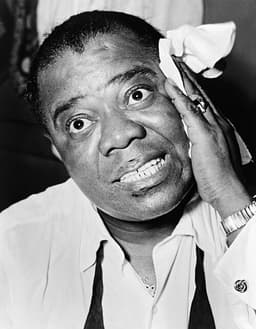
Louis II of Hungary
Emperor · Modern
35.8Total
Basic Information
Born
1830
1506
Died
1884
1526
Era
Modern
Modern
Nationality
Somalia
Hungary
Occupation
Emperor
Emperor
Civilization
Other
Western
Score Comparison
Military (10%)
50.0
10.2
Political (20%)
37.9
27.9
Influence (20%)
52.5
47.1
Legacy (20%)
43.3
36.7
Leadership (15%)
65.7
38.1
Strategy (15%)
25.0
39.6
TOTAL
47.0
35.8
Deria Hassan — Complete Timeline
1880 AD
Resistance to British ExpansionWar
Deria Hassan led military resistance against British colonial encroachment into Isaaq territory, engaging in skirmishes and diplomatic efforts to preserve the sultanate's independence before ultimately accepting protectorate status.
ResistanceColonial ConflictIsaaq
1884 AD
Signing of the British Protectorate TreatyPolitical Action◆ Major
Deria Hassan, as the last sultan of the Isaaq Sultanate, signed a treaty with the British Empire establishing a protectorate over the region. This ended Isaaq sovereignty and integrated the territory into British Somaliland.
ColonialismTreatyBritish Somaliland
Impact: regionaltragic
Louis II of Hungary — Complete Timeline
1526 AD
Battle of MohacsWar
Louis II led the Hungarian army against the Ottoman forces of Suleiman the Magnificent at Mohacs. The battle ended in a catastrophic Hungarian defeat, with Louis II killed and much of the Hungarian nobility wiped out.
BattleDefeatOttoman Victory
Impact: regionaltragic
Death at MohacsOther◆ Major
Louis II died during the Battle of Mohacs, either killed in action or drowned while fleeing. His death without an heir led to a succession crisis and the division of Hungary between the Habsburgs and the Ottomans.
DeathSuccession Crisis
Impact: regionaltragic
Expert Analysis
Origins
Deria Hassan was born around 1840 into the ruling family of the Isaaq Sultanate in present-day Somalia. He became the last sultan of the Isaaq, a position he inherited through lineage. His early life was shaped by the clan-based society and the increasing presence of European colonial powers along the Horn of Africa. Little is documented about his formal education, but he gained experience in tribal diplomacy and military leadership from a young age.
Louis II of Hungary was born on July 1, 1506, in Buda, Hungary, to King Vladislaus II of Hungary and Anne of Foix-Candale. He was a member of the Jagiellonian dynasty. His early life was marked by political instability and the looming threat of the Ottoman Empire. He was crowned King of Hungary and Bohemia as a child in 1508 and 1509 respectively, with regents governing until he came of age. His education was overseen by humanist scholars, but he lacked military training.
Rise to Power
Deria Hassan became sultan of the Isaaq Sultanate in the late 19th century, at a time when British colonial interests were expanding in the region. His rise was traditional, based on hereditary succession and the support of Isaaq clan elders. His key challenge was balancing internal tribal politics with external pressures from the British, who sought to establish a protectorate to secure trade routes and counter other European powers.
Louis II became king of Hungary and Bohemia at the age of two after his father's death in 1516. His reign was dominated by regents and nobles, including the powerful John Zápolya. He came of age in 1521 but had limited authority. His rise was not due to personal achievement but to dynastic succession. He faced immediate threats from the Ottoman Empire, which had conquered Belgrade in 1521, and from internal factions among the Hungarian nobility.
Leadership & Governance
Deria Hassan's leadership was characterized by attempts to preserve Isaaq sovereignty while negotiating with the British. He signed the British Protectorate Treaty in 1884, which established British control over the region but also guaranteed certain rights to the Isaaq. His governance style was consultative, relying on clan councils. He scored 65.7 in leadership, reflecting his ability to maintain unity among the Isaaq despite colonial pressure. However, his political score of 37.9 indicates limited success in long-term strategic maneuvering.
Louis II's leadership was weak and indecisive. He had a leadership score of 38.1, reflecting his inability to control his nobles or prepare for the Ottoman threat. He failed to implement necessary military reforms and relied on outdated feudal levies. His governance was marked by factionalism and financial troubles. He scored 27.9 in political skill, as he could not consolidate power or forge effective alliances. His strategy score of 39.6 shows some awareness but poor execution, especially in the disastrous Battle of Mohacs.
Triumph & Tragedy
Deria Hassan's greatest success was maintaining the Isaaq Sultanate's existence through diplomacy and resistance. He successfully navigated British demands while preserving some autonomy for his people. However, his signature on the protectorate treaty is also his greatest failure, as it marked the end of Isaaq sovereignty. He died around 1885, and his legacy is mixed: he is remembered as a leader who tried to protect his people but ultimately could not prevent colonization.
Louis II's only notable triumph was his coronation and survival as king until his early death. His tragedy was the Battle of Mohacs on August 29, 1526, where he led his army of about 25,000 men against Suleiman the Magnificent's 50,000-strong Ottoman force. The Hungarian army was destroyed, and Louis died, either killed in battle or drowned while fleeing. His death without an heir led to a succession crisis and the partition of Hungary between the Ottomans and the Habsburgs. He scored 10.2 in military, reflecting his catastrophic leadership at Mohacs.
Character & Destiny
Deria Hassan was pragmatic and cautious, prioritizing the survival of his people over heroic resistance. His character was shaped by the realities of a small state facing a global empire. He chose negotiation over total war, which preserved lives but cost independence. His destiny was to be the last sultan, a figure of transition between independence and colonial rule.
Louis II was young, inexperienced, and indecisive. He was described as pious but weak-willed, unable to assert authority over his nobles. His character led him to make fatal errors: he ignored warnings about the Ottoman advance and rushed into battle without proper preparation. His destiny was sealed at Mohacs, where his death symbolized the end of an independent Hungary.
Legacy
Deria Hassan's legacy is primarily as a historical figure in Somali history. He is remembered as the last sultan of the Isaaq, and his treaty with the British is a key event in the region's colonial history. His influence score of 52.5 reflects his lasting recognition among Somalis, but his impact on global history is limited. The Isaaq Sultanate ended with him, and the region became part of British Somaliland.
Louis II's legacy is more significant in European history. His death at Mohacs led to the end of the Kingdom of Hungary as an independent state and the start of Habsburg and Ottoman domination. The battle is a national trauma in Hungary, remembered as a catastrophe. His legacy score of 36.7 acknowledges his role in a pivotal historical moment, but his personal influence is low due to his ineffectiveness.
Conclusion
Deria Hassan had a greater overall impact than Louis II of Hungary. While Louis II's death triggered major geopolitical changes, his personal agency was minimal; he was a victim of circumstances. Deria Hassan, with a total score of 47.0 compared to Louis II's 35.8, actively shaped the fate of his people through diplomacy and resistance. His leadership and political skills were higher, and his legacy as a symbol of Somali resistance endures. Louis II's failure at Mohacs was a turning point, but it was not his achievement—it was his failure. Therefore, Deria Hassan is the more significant figure in terms of personal impact and historical agency.
Rankings
🥇
Deria HassanLeader
Mil: 50.0Pol: 37.9Inf: 52.5
47.0
🥈
Louis II of Hungary
Mil: 10.2Pol: 27.9Inf: 47.1
35.8
+11.2 behind
How This Comparison Works
Algorithm
Each figure is scored on 6 dimensions (0—100 scale) based on structured historical data: Military (10%), Political (20%), Influence (20%), Legacy (20%), Leadership (15%), Strategy (15%). The weighted total produces the final ranking.
Data Sources
Scores are computed from structured sub-indicators in the database. Scale factors adjust for era (Ancient ×0.85, Modern ×1.0) and civilization size (Eastern ×1.05, Other ×0.80) to account for differences in population and military scale.
Maximum 3 Figures
Comparisons are limited to 2—3 figures to ensure readability and statistical meaningfulness.
Error Margins
±5 points per dimension — Sub-scores are derived from historical records with inherent uncertainty. Two figures within 5 points on a dimension should be considered roughly equivalent in that area.
Total Score Accuracy
±3 points overall — The weighted combination of 6 dimensions produces a total score with approximately ±3 points of uncertainty. Differences of less than 3 points are not statistically significant— the figures are effectively tied.
Known Limitations
- Historical records are incomplete and uneven across civilizations
- Figures from oral-tradition societies may be underrepresented
- Occupation labels can misclassify multi-role figures
- Scores measure capability and impact, not moral character
- Quantitative scoring is a comparison tool, not absolute truth
Capability Radar
Military (10%) — Battles & Warfare
Battles
20
15
Win Rate
25
5
Expansion
15
5
Political (20%) — Governance & Reform
Reform
20
10
Diplomacy
30
15
Economy
20
10
Influence (20%) — Cultural & Global Reach
Cultural
30
10
Global
15
10
Legacy (20%) — Historical Impact
Historical
35
20
Longevity
25
10
Leadership (15%) — Power & Stability
Tenure
40
20
Stability
25
5
Strategy (15%) — Tactics & Innovation
Strategy
20
10
Tactics
20
10
Reform
10
5
Similar Comparisons
Comments & Discussion
No comments yet. Be the first to share your thoughts!