Loading...
Khufu vs Orodes II of Parthia
Khufu leads by 3.1 pts · 2 figures compared
…

Khufu
Emperor · Ancient
62.7Total
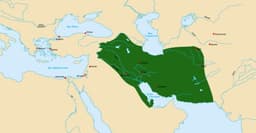
Orodes II of Parthia
Emperor · Ancient
59.6Total
Basic Information
Born
-2589
-70
Died
-2566
-38
Era
Ancient
Ancient
Nationality
Egypt
Parthian Empire
Occupation
Emperor
Emperor
Civilization
Middle Eastern
Middle Eastern
Score Comparison
Military (10%)
50.0
78.0
Political (20%)
46.6
53.8
Influence (20%)
75.0
58.0
Legacy (20%)
70.0
50.0
Leadership (15%)
72.0
66.0
Strategy (15%)
36.8
68.1
TOTAL
62.7
59.6
Orodes II of Parthia — Complete Timeline
54 BC
Murder of Mithridates IIIPolitical Action
Orodes II ordered the murder of his brother Mithridates III, who had contested the throne. This act consolidated Orodes' power but deepened the dynastic strife within the Arsacid family.
FratricideDynastic StruggleConsolidation
Impact: nationaldestructive
53 BC
Battle of CarrhaeWar
Orodes II's general Surena defeated the Roman army under Marcus Licinius Crassus at Carrhae. Crassus was killed, and the Parthians captured the Roman legionary standards, marking one of Rome's worst military disasters.
Roman-Parthian WarsMajor VictoryCrassus
Impact: global
52 BC
Execution of SurenaPolitical Action◆ Major
Orodes II executed his general Surena shortly after the victory at Carrhae, fearing his growing popularity and power. This act eliminated a key military leader and weakened Parthia's military capacity.
ExecutionPolitical PurgeSurena
Impact: nationaldestructive
51 BC
Invasion of ArmeniaWar
Orodes II invaded Armenia to install his son Pacorus I on the Armenian throne. This campaign expanded Parthian influence into the Caucasus but also provoked Roman retaliation.
Armenian CampaignExpansionPacorus I
Impact: regional
38 BC
Death of Pacorus I and Orodes' GriefWar◆ Major
Orodes II's son and heir Pacorus I was killed in battle against Roman forces at Gindarus. Orodes, devastated by the loss, abdicated the throne in favor of his son Phraates IV and died shortly after.
Battle DeathSuccession CrisisAbdication
Impact: nationaltragic
Expert Analysis
Origins
Khufu (c. 2589-2566 BCE), also known as Cheops, was the second pharaoh of the Fourth Dynasty of Egypt. He was born into a royal family, the son of Pharaoh Sneferu and Queen Hetepheres I. His reign is known almost solely through his monumental building projects, particularly the Great Pyramid of Giza. Little else is recorded about his early life or personal background, as few contemporary documents survive.
Orodes II (r. 57-37 BCE) was a king of the Parthian Empire, part of the Arsacid dynasty. He came to power amid civil war, having murdered his brother Mithridates III to claim the throne. His early life is obscure, but he was likely trained in military and governance, typical for Parthian royalty. His reign was marked by conflict with Rome and internal strife.
Rise to Power
Khufu ascended to the throne after his father Sneferu, who had built three pyramids. Khufu's rise was likely smooth, as the Fourth Dynasty was stable. He is believed to have reigned for about 23 years. His major achievement was commissioning the Great Pyramid, a project that required immense resources and labor, demonstrating his absolute control over Egypt.
Orodes II came to power through fratricide, killing his brother Mithridates III around 57 BCE. He then faced challenges from other claimants and from the Roman Republic. His greatest military victory came in 53 BCE at the Battle of Carrhae, where his general Surena defeated the Roman army under Marcus Licinius Crassus. This victory solidified Orodes' position as a major threat to Rome.
Leadership & Governance
Khufu's leadership style was autocratic and focused on monumental construction. He mobilized the entire Egyptian economy to build the Great Pyramid, which required a workforce of thousands. His governance was typical of Egyptian pharaohs: centralized, divine kingship with a bureaucracy to manage resources. There is no evidence of military campaigns or diplomatic initiatives; his reign was inward-looking.
Orodes II governed a feudal-like empire where powerful nobles like Surena commanded their own armies. He was a shrewd politician, but his leadership was marred by paranoia. After Carrhae, he executed his victorious general Surena, fearing his popularity. This act weakened his military capabilities. He also murdered his brother to secure power, showing a ruthless streak. His governance relied on managing noble factions, which he did poorly.
Triumph & Tragedy
Khufu's greatest triumph was the completion of the Great Pyramid, the only surviving Wonder of the Ancient World. It stands 146 meters tall, built from over 2 million stone blocks, each weighing 2.5 tons on average. This project demonstrated unprecedented engineering and organizational skill. However, his tragedy is the loss of his legacy beyond the pyramid. No tomb or artifacts of Khufu survive, and his reputation was later tarnished by Greek historians who portrayed him as a cruel tyrant who forced his people into slavery.
Orodes II's triumph was the Battle of Carrhae, where his general Surena annihilated a Roman army of 40,000, killing Crassus. This victory humiliated Rome and secured Parthian prestige. His tragedy was the death of his son and heir Pacorus I in 38 BCE at the Battle of Gindarus. Devastated, Orodes abdicated and died shortly after. His reign ended in grief and internal chaos, undoing much of his earlier success.
Character & Destiny
Khufu is often depicted as a distant, god-like figure. His decision to build the Great Pyramid may have been driven by religious motivations to ensure his afterlife. His character is inferred from his monument: ambitious, organized, and demanding. The pyramid's precision suggests a meticulous ruler. However, his lack of military or political achievements outside building leaves him as a one-dimensional figure in history.
Orodes II was cunning and ruthless, but also emotionally fragile. He ordered the murder of his brother and executed his best general, showing paranoia. Yet, he was devastated by his son's death, indicating deep familial attachment. His character led to his downfall: by eliminating Surena, he lost his best military asset; by grieving excessively, he abandoned his throne. His destiny was shaped by his inability to balance power and emotion.
Legacy
Khufu's legacy is monumental and enduring. The Great Pyramid has inspired awe for millennia and is a symbol of ancient Egyptian civilization. It has influenced architecture, engineering, and popular culture. Khufu's name is synonymous with pyramid-building. However, his personal legacy is minimal; he is remembered more as a builder than a leader. His score of 70.0 in legacy reflects this.
Orodes II's legacy is more complex. He is remembered for defeating Rome at Carrhae, a turning point in Roman-Parthian relations. However, his execution of Surena and the loss of his son meant his dynasty's momentum was lost. The Parthian Empire continued but declined later. His legacy score of 50.0 indicates his impact was significant but short-lived. He is a cautionary tale of self-destructive leadership.
Conclusion
Khufu and Orodes II represent two different forms of power: one built stone, the other built a military reputation. Khufu's total score of 62.7 edges out Orodes II's 59.6, but the gap is narrow. However, in terms of lasting impact, Khufu is clearly superior. The Great Pyramid has stood for over 4,500 years and is a global icon. Orodes II's victory at Carrhae, while impressive, faded in significance as Rome eventually dominated the region. Khufu's influence on architecture and culture is immense, while Orodes II's legacy is largely confined to military history. Therefore, Khufu had greater impact.
Rankings
🥇
KhufuLeader
Mil: 50.0Pol: 46.6Inf: 75.0
62.7
🥈
Orodes II of Parthia
Mil: 78.0Pol: 53.8Inf: 58.0
59.6
+3.1 behind
How This Comparison Works
Algorithm
Each figure is scored on 6 dimensions (0—100 scale) based on structured historical data: Military (10%), Political (20%), Influence (20%), Legacy (20%), Leadership (15%), Strategy (15%). The weighted total produces the final ranking.
Data Sources
Scores are computed from structured sub-indicators in the database. Scale factors adjust for era (Ancient ×0.85, Modern ×1.0) and civilization size (Eastern ×1.05, Other ×0.80) to account for differences in population and military scale.
Maximum 3 Figures
Comparisons are limited to 2—3 figures to ensure readability and statistical meaningfulness.
Error Margins
±5 points per dimension — Sub-scores are derived from historical records with inherent uncertainty. Two figures within 5 points on a dimension should be considered roughly equivalent in that area.
Total Score Accuracy
±3 points overall — The weighted combination of 6 dimensions produces a total score with approximately ±3 points of uncertainty. Differences of less than 3 points are not statistically significant— the figures are effectively tied.
Known Limitations
- Historical records are incomplete and uneven across civilizations
- Figures from oral-tradition societies may be underrepresented
- Occupation labels can misclassify multi-role figures
- Scores measure capability and impact, not moral character
- Quantitative scoring is a comparison tool, not absolute truth
Capability Radar
Military (10%) — Battles & Warfare
Battles
10
75
Win Rate
10
80
Expansion
15
70
Political (20%) — Governance & Reform
Reform
30
55
Diplomacy
30
75
Economy
70
60
Influence (20%) — Cultural & Global Reach
Cultural
95
50
Global
95
60
Legacy (20%) — Historical Impact
Historical
95
65
Longevity
95
55
Leadership (15%) — Power & Stability
Tenure
60
70
Stability
70
65
Strategy (15%) — Tactics & Innovation
Strategy
10
80
Tactics
10
85
Reform
10
60
Similar Comparisons
Comments & Discussion
No comments yet. Be the first to share your thoughts!