Loading...
Khufu vs Rugila
Khufu leads by 9.0 pts · 2 figures compared
…

Khufu
Emperor · Ancient
62.7Total
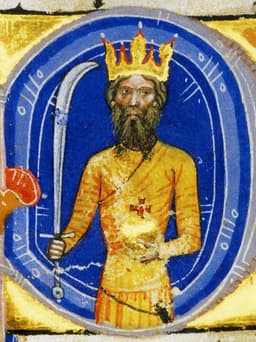
Rugila
Emperor · Ancient
53.7Total
Basic Information
Born
-2589
370
Died
-2566
434
Era
Ancient
Ancient
Nationality
Egypt
Hunnic Empire
Occupation
Emperor
Emperor
Civilization
Middle Eastern
Western
Score Comparison
Military (10%)
50.0
52.5
Political (20%)
46.6
61.3
Influence (20%)
75.0
51.0
Legacy (20%)
70.0
44.2
Leadership (15%)
72.0
65.0
Strategy (15%)
36.8
57.5
TOTAL
62.7
53.7
Rugila — Complete Timeline
432 AD
Unification of the HunsPolitical Action
Rugila consolidated various Hun tribes under his sole leadership, creating a unified and powerful confederation. This unification laid the foundation for the Hunnic Empire that would later threaten both the Eastern and Western Roman Empires.
HunsUnificationConfederation
Impact: regionalconstructive
433 AD
Negotiations with RomePolitical Action
Rugila engaged in diplomatic negotiations with the Eastern Roman Empire, demanding the return of Hun defectors and an annual tribute. These talks set a precedent for Hun-Roman relations, combining military threats with diplomatic demands.
HunsEastern Roman EmpireDiplomacyNegotiation
Impact: regional
434 AD
Raid on ThraceWar◆ Major
Rugila led a Hun army into the Roman province of Thrace, demanding increased tribute and the return of Hun refugees. This raid demonstrated Hun military power and forced the Eastern Roman Empire to negotiate under threat of invasion.
HunsEastern Roman EmpireRaidThrace
Impact: regionaldestructive
Death during campaignOther◆ Major
Rugila died suddenly while preparing for a major campaign against the Eastern Roman Empire, reportedly struck by lightning. His death led to the succession of his nephews Bleda and Attila, who inherited his unified Hun forces.
HunsDeathSuccession
Impact: regional
Expert Analysis
Origins
Khufu, born around 2589 BCE in Egypt, was the second pharaoh of the Fourth Dynasty. His father was Pharaoh Sneferu, who pioneered pyramid construction, and his mother was Queen Hetepheres I. Khufu inherited a stable, prosperous kingdom with established administrative structures. Little is known of his early life, but he was likely educated in statecraft and religious rituals.
Rugila, also known as Rua, was born around the late 4th century CE among the Huns, a nomadic confederation from the Eurasian steppes. He was the uncle of Attila and Bleda. His early life is obscure, but he rose through tribal leadership, likely in a context of constant warfare and shifting alliances. The Huns lacked written records, so knowledge comes from Roman sources.
Rise to Power
Khufu ascended to the throne around 2589 BCE, succeeding his father Sneferu. Egypt was already a centralized state with a strong bureaucracy. Khufu's rise was smooth, reflecting stable dynastic succession. He immediately began monumental projects, including his pyramid, which required immense resources and labor organization.
Rugila's rise was more violent. He emerged as a chieftain among the Huns during a period of fragmentation. By the 420s CE, he began consolidating tribes through warfare and diplomacy. Around 432 CE, he had unified the Huns under his sole rule, creating a confederation that threatened both Eastern and Western Roman Empires. His turning point was the unification, which gave him the leverage to demand tribute from Constantinople.
Leadership & Governance
Khufu's leadership was autocratic and focused on monumental construction. He centralized power in Memphis and used the state apparatus to mobilize labor for the Great Pyramid. His governance relied on a strong bureaucracy, with officials like Hemiunu, the vizier, overseeing projects. Khufu's regime was stable but left no significant legal or administrative reforms.
Rugila's leadership was charismatic and military-oriented. He governed through a council of Hun nobles and maintained unity by distributing plunder. He engaged in diplomacy with Rome, demanding tribute and the return of defectors. His strategy was to combine raids with negotiations, extracting concessions without full-scale war. Unlike Khufu, Rugila's rule was more fluid and dependent on personal authority.
Triumph & Tragedy
Khufu's greatest success was the construction of the Great Pyramid of Giza, standing 146 meters tall, composed of over 2 million stone blocks. It remains the only surviving Wonder of the Ancient World. His failure lies in the lack of other recorded achievements; his reign saw no major military campaigns or territorial expansion. Additionally, later traditions (e.g., Herodotus) portrayed him as a tyrant who oppressed his people, though this is disputed.
Rugila's triumph was unifying the Huns and forcing the Eastern Roman Empire to pay annual tribute of 350 pounds of gold (around 432 CE). He demonstrated Hun military capability by raiding Thrace. His tragedy was his sudden death in 434 CE while preparing a campaign against Constantinople, reportedly struck by lightning. This left his federation to his nephews Attila and Bleda, who later expanded it. Rugila's early death prevented him from achieving his full potential.
Character & Destiny
Khufu is depicted in Egyptian sources as a traditional pharaoh, but Greek historians like Herodotus (5th century BCE) describe him as a cruel builder who forced labor and closed temples. Modern evidence suggests his pyramid was built by paid workers, not slaves. His character remains enigmatic; his obsession with his tomb shaped his legacy.
Rugila was a pragmatic leader, using both war and diplomacy. Roman sources like Priscus portray him as a shrewd negotiator. His death by lightning was seen as divine judgment by Romans. His destiny was to lay the groundwork for Attila, but he lacked the longevity to capitalize on his achievements.
Legacy
Khufu's legacy is immense: the Great Pyramid is a symbol of ancient Egypt's power and engineering. It influenced later pyramid construction and remains a cultural icon. His score of 75.0 in Influence and 70.0 in Legacy reflects this. However, his political and military scores (46.6 and 50.0) show limited impact beyond architecture.
Rugila's legacy is overshadowed by Attila, but he created the unified Hun state that Attila inherited. His diplomatic precedent of demanding tribute set a pattern for later Hun-Roman relations. His scores are lower: Influence 51.0, Legacy 44.2, reflecting his relative obscurity. Yet his political score (61.3) surpasses Khufu's, indicating effective state-building.
Conclusion
Khufu had greater overall impact, as shown by his total score of 62.7 vs Rugila's 53.7. The Great Pyramid endures as a global monument, while Rugila's unification was a precursor to Attila's raids. Khufu's architectural and cultural legacy outlasts Rugila's political achievements. However, Rugila's role in shaping the Hun confederation was crucial for later events. Nevertheless, Khufu's concrete, lasting achievement gives him the edge.
Rankings
🥇
KhufuLeader
Mil: 50.0Pol: 46.6Inf: 75.0
62.7
🥈
Rugila
Mil: 52.5Pol: 61.3Inf: 51.0
53.7
+9.0 behind
How This Comparison Works
Algorithm
Each figure is scored on 6 dimensions (0—100 scale) based on structured historical data: Military (10%), Political (20%), Influence (20%), Legacy (20%), Leadership (15%), Strategy (15%). The weighted total produces the final ranking.
Data Sources
Scores are computed from structured sub-indicators in the database. Scale factors adjust for era (Ancient ×0.85, Modern ×1.0) and civilization size (Eastern ×1.05, Other ×0.80) to account for differences in population and military scale.
Maximum 3 Figures
Comparisons are limited to 2—3 figures to ensure readability and statistical meaningfulness.
Error Margins
±5 points per dimension — Sub-scores are derived from historical records with inherent uncertainty. Two figures within 5 points on a dimension should be considered roughly equivalent in that area.
Total Score Accuracy
±3 points overall — The weighted combination of 6 dimensions produces a total score with approximately ±3 points of uncertainty. Differences of less than 3 points are not statistically significant— the figures are effectively tied.
Known Limitations
- Historical records are incomplete and uneven across civilizations
- Figures from oral-tradition societies may be underrepresented
- Occupation labels can misclassify multi-role figures
- Scores measure capability and impact, not moral character
- Quantitative scoring is a comparison tool, not absolute truth
Capability Radar
Military (10%) — Battles & Warfare
Battles
10
45
Win Rate
10
50
Expansion
15
60
Political (20%) — Governance & Reform
Reform
30
45
Diplomacy
30
50
Economy
70
35
Influence (20%) — Cultural & Global Reach
Cultural
95
30
Global
95
35
Legacy (20%) — Historical Impact
Historical
95
45
Longevity
95
40
Leadership (15%) — Power & Stability
Tenure
60
40
Stability
70
40
Strategy (15%) — Tactics & Innovation
Strategy
10
50
Tactics
10
40
Reform
10
55
Similar Comparisons
Comments & Discussion
No comments yet. Be the first to share your thoughts!