Loading...
Kim Campbell vs Ri Su-yong
Kim Campbell leads by 6.0 pts · 2 figures compared
…
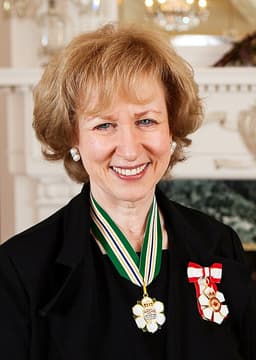
Kim Campbell
Politician · Modern
41.1Total

Ri Su-yong
Politician · Modern
35.1Total
Basic Information
Born
1947
1940
Died
—
—
Era
Modern
Modern
Nationality
Canada
North Korea
Occupation
Politician
Politician
Civilization
Western
Eastern
Score Comparison
Military (10%)
49.1
20.7
Political (20%)
27.9
25.0
Influence (20%)
50.2
47.1
Legacy (20%)
40.0
36.7
Leadership (15%)
34.6
38.1
Strategy (15%)
42.4
26.4
TOTAL
41.1
35.1
Kim Campbell — Complete Timeline
1990 AD
Appointed Minister of National DefencePolitical Action
Campbell was appointed Minister of National Defence by Prime Minister Brian Mulroney in 1990. She was the first woman to hold this portfolio in Canada. During her tenure, she oversaw Canadian forces during the Gulf War and the Oka Crisis.
Defence MinisterFirst WomanGulf War
Impact: national
1993 AD
Became Prime Minister of CanadaPolitical Action◆ Major
Kim Campbell was sworn in as the 19th Prime Minister of Canada on June 25, 1993, succeeding Brian Mulroney. She became the first and only woman to hold the office. Her tenure lasted only 132 days until the federal election in October.
Prime MinisterFirst WomanShort Tenure
Impact: national
1993 Canadian Federal Election DefeatPolitical Action◆ Major
In the October 25, 1993 federal election, Campbell's Progressive Conservative Party was reduced from a majority government to just two seats in the House of Commons. This was the worst defeat for a governing party at the federal level in Canadian history.
Election DefeatProgressive ConservativesPolitical Collapse
Impact: nationaldestructive
Ri Su-yong — Complete Timeline
1960 AD
Educated in SwitzerlandOther
Ri Su-yong was educated in Switzerland, a rare background for a North Korean official. This experience gave him exposure to Western culture and languages, which he later used in diplomatic engagements.
EducationSwitzerlandNorth Korea
Impact: national
2016 AD
Appointed Foreign MinisterPolitical Action◆ Major
Ri Su-yong was appointed Foreign Minister of North Korea, replacing Ri Yong-ho. He was responsible for North Korea's foreign policy during a period of heightened tensions over nuclear weapons and sanctions.
Political AppointmentNorth KoreaForeign Policy
Impact: global
Attended UN General AssemblyPolitical Action◆ Major
Ri Su-yong attended the United Nations General Assembly in New York, where he delivered a speech defending North Korea's nuclear program. This was a key diplomatic engagement amid international condemnation.
DiplomacyUnited NationsNorth KoreaNuclear Program
Impact: global
Expert Analysis
Origins
Kim Campbell was born on March 10, 1947, in Port Alberni, British Columbia, Canada. Her father, George Campbell, was a lawyer who died when she was 12, and her mother, Phyllis, was a teacher. Campbell studied political science at the University of British Columbia (BA 1969) and later earned a law degree from UBC in 1983. She also completed a doctorate in Soviet government at the London School of Economics but did not finish her thesis. Her early career included teaching political science and practicing law.
Ri Su-yong was born in 1957 in North Korea. His family background is not publicly detailed, but he is known to have studied at the University of Bern in Switzerland in the 1970s, a rare opportunity for a North Korean. He earned a degree in economics. This exposure to Western education shaped his diplomatic approach. He later joined the North Korean Foreign Ministry and rose through the ranks.
Rise to Power
Campbell entered politics in 1983 when she was elected to the Vancouver School Board. In 1988, she won a seat in the House of Commons as a Progressive Conservative. Prime Minister Brian Mulroney appointed her Minister of State for Indian and Northern Affairs in 1989, then Minister of Justice and Attorney General in 1990, where she introduced stricter gun control laws. In 1990, she became Canada's first female Minister of National Defence. When Mulroney resigned in 1993, Campbell won the party leadership and became Prime Minister on June 25, 1993.
Ri Su-yong's rise is less documented. He served as North Korea's ambassador to Switzerland from 2003 to 2006, then to the United Nations in Geneva. He was appointed Vice Minister of Foreign Affairs in 2010. In April 2016, he was named Foreign Minister, replacing Ri Yong-ho. His tenure coincided with heightened tensions over North Korea's nuclear program.
Leadership & Governance
Campbell's governance was constrained by her short term (132 days). She focused on economic issues, including the North American Free Trade Agreement (NAFTA) and deficit reduction. She also advocated for women's rights and multiculturalism. However, her leadership was marked by campaign missteps, including controversial comments and a lack of clear vision. Her political score of 27.9 reflects her inability to rally support.
Ri Su-yong's governance was characterized by staunch defense of North Korea's nuclear program. He attended the UN General Assembly in 2016 and 2017, delivering speeches that blamed the US for tensions. He also pursued diplomatic contacts with Russia and China. His leadership score of 38.1 is higher than Campbell's 34.6, but his influence was limited by North Korea's isolation.
Triumph & Tragedy
Campbell's triumph was breaking the gender barrier as Canada's first female Prime Minister. She also successfully passed gun control legislation as Justice Minister. Her tragedy was the 1993 election, where the Progressive Conservatives lost all but two seats, the worst defeat for a governing party in Canadian history. Her political career ended abruptly.
Ri Su-yong's triumph was maintaining North Korea's diplomatic stance during a critical period. He successfully defended his country's position at the UN. His tragedy is the lack of tangible progress in denuclearization. He was replaced as Foreign Minister in 2020, and his legacy is tied to a failed policy.
Character & Destiny
Campbell was intelligent and articulate but struggled with public perception. She was seen as aloof and made gaffes, such as joking about the election date. Her character led to a short-lived prime ministership. Her total score of 41.1 reflects a promising career cut short.
Ri Su-yong was disciplined and loyal to the Kim regime. His Western education gave him a unique perspective, but he was ultimately a cog in a repressive system. His influence score of 47.1 is close to Campbell's 50.2, but his legacy is overshadowed by North Korea's failures.
Legacy
Campbell's legacy is as a trailblazer for women in Canadian politics. She remains a symbol of the Progressive Conservative Party's collapse. Her legacy score of 40.0 is modest but enduring.
Ri Su-yong's legacy is minimal. He is remembered as a diplomat who failed to break North Korea's isolation. His legacy score of 36.7 is lower, reflecting limited impact.
Conclusion
Kim Campbell had a greater impact than Ri Su-yong. Her total score of 41.1 exceeds his 35.1 by 6.0 points. While both served brief tenures, Campbell's role as Canada's first female Prime Minister and her policy contributions in justice and defense outweigh Ri Su-yong's tenure as a mouthpiece for a failing regime. Campbell's legacy, though tainted by electoral defeat, continues to inspire. Ri Su-yong's legacy is tied to a regime that has brought suffering to its people.
Rankings
🥇
Kim CampbellLeader
Mil: 49.1Pol: 27.9Inf: 50.2
41.1
🥈
Ri Su-yong
Mil: 20.7Pol: 25.0Inf: 47.1
35.1
+6.0 behind
How This Comparison Works
Algorithm
Each figure is scored on 6 dimensions (0—100 scale) based on structured historical data: Military (10%), Political (20%), Influence (20%), Legacy (20%), Leadership (15%), Strategy (15%). The weighted total produces the final ranking.
Data Sources
Scores are computed from structured sub-indicators in the database. Scale factors adjust for era (Ancient ×0.85, Modern ×1.0) and civilization size (Eastern ×1.05, Other ×0.80) to account for differences in population and military scale.
Maximum 3 Figures
Comparisons are limited to 2—3 figures to ensure readability and statistical meaningfulness.
Error Margins
±5 points per dimension — Sub-scores are derived from historical records with inherent uncertainty. Two figures within 5 points on a dimension should be considered roughly equivalent in that area.
Total Score Accuracy
±3 points overall — The weighted combination of 6 dimensions produces a total score with approximately ±3 points of uncertainty. Differences of less than 3 points are not statistically significant— the figures are effectively tied.
Known Limitations
- Historical records are incomplete and uneven across civilizations
- Figures from oral-tradition societies may be underrepresented
- Occupation labels can misclassify multi-role figures
- Scores measure capability and impact, not moral character
- Quantitative scoring is a comparison tool, not absolute truth
Capability Radar
Military (10%) — Battles & Warfare
Battles
31
11
Win Rate
29
16
Expansion
37
17
Political (20%) — Governance & Reform
Reform
15
10
Diplomacy
20
20
Economy
15
10
Influence (20%) — Cultural & Global Reach
Cultural
15
5
Global
15
5
Legacy (20%) — Historical Impact
Historical
20
5
Longevity
10
5
Leadership (15%) — Power & Stability
Tenure
10
15
Stability
10
10
Strategy (15%) — Tactics & Innovation
Strategy
39
24
Tactics
42
28
Reform
42
29
Similar Comparisons
Comments & Discussion
No comments yet. Be the first to share your thoughts!