Loading...
H. H. Kung vs Kim Campbell
H. H. Kung leads by 5.2 pts · 2 figures compared
…

H. H. Kung
Politician · Modern
46.3Total
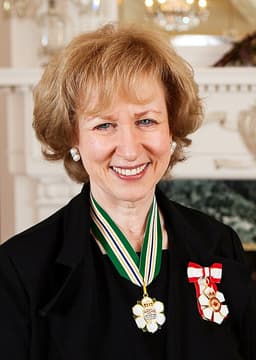
Kim Campbell
Politician · Modern
41.1Total
Basic Information
Born
1881
1947
Died
1967
—
Era
Modern
Modern
Nationality
China
Canada
Occupation
Politician
Politician
Civilization
Eastern
Western
Score Comparison
Military (10%)
11.3
49.1
Political (20%)
68.0
27.9
Influence (20%)
50.2
50.2
Legacy (20%)
40.0
40.0
Leadership (15%)
65.0
34.6
Strategy (15%)
26.3
42.4
TOTAL
46.3
41.1
H. H. Kung — Complete Timeline
1933 AD
Appointment as Finance MinisterPolitical Action◆ Major
H. H. Kung became Minister of Finance of the Republic of China. He implemented currency reform, including the nationalization of silver and the establishment of the fabi (legal tender) system, which stabilized China's economy during the war with Japan.
Republic of ChinaFinanceCurrency Reform
Impact: nationalconstructive
1936 AD
Negotiation of the Sino-American Silver AgreementPolitical Action◆ Major
Kung negotiated an agreement with the United States to purchase Chinese silver, providing China with foreign exchange reserves to back its new currency. This helped stabilize the Chinese economy during the Second Sino-Japanese War.
Republic of ChinaDiplomacyEconomy
Impact: nationalconstructive
Kim Campbell — Complete Timeline
1990 AD
Appointed Minister of National DefencePolitical Action
Campbell was appointed Minister of National Defence by Prime Minister Brian Mulroney in 1990. She was the first woman to hold this portfolio in Canada. During her tenure, she oversaw Canadian forces during the Gulf War and the Oka Crisis.
Defence MinisterFirst WomanGulf War
Impact: national
1993 AD
Became Prime Minister of CanadaPolitical Action◆ Major
Kim Campbell was sworn in as the 19th Prime Minister of Canada on June 25, 1993, succeeding Brian Mulroney. She became the first and only woman to hold the office. Her tenure lasted only 132 days until the federal election in October.
Prime MinisterFirst WomanShort Tenure
Impact: national
1993 Canadian Federal Election DefeatPolitical Action◆ Major
In the October 25, 1993 federal election, Campbell's Progressive Conservative Party was reduced from a majority government to just two seats in the House of Commons. This was the worst defeat for a governing party at the federal level in Canadian history.
Election DefeatProgressive ConservativesPolitical Collapse
Impact: nationaldestructive
Expert Analysis
Origins
**H. H. Kung** (1881-1967) was born into a wealthy banking family in Shanxi province, China. His family had deep roots in finance and commerce, which gave him access to elite education. He studied at Oberlin College and Yale University in the United States, earning a degree in economics. His marriage to Soong Ai-ling, eldest sister of Soong Mei-ling (wife of Chiang Kai-shek), connected him to the powerful Soong dynasty, which dominated Nationalist China's politics and finance.
**Kim Campbell** (born 1947) was born in Port Alberni, British Columbia, Canada, to a middle-class family. Her parents divorced when she was young, and she was raised by her mother. She studied political science at the University of British Columbia and later earned a law degree. Before entering politics, she taught political science at a community college. Her early career included work in law and public policy.
Rise to Power
**H. H. Kung** rose to prominence through his family connections and economic expertise. He became Minister of Finance in 1933 under Chiang Kai-shek's Nationalist government. His key achievement was the 1935 currency reform, which nationalized silver and established the fabi (legal tender), China's first fiat currency. He also negotiated the Sino-American Silver Agreement in 1936, securing U.S. purchases of Chinese silver to provide foreign exchange reserves.
**Kim Campbell** entered federal politics in 1988, winning a seat in the House of Commons as a Progressive Conservative. She quickly rose through the ranks, becoming Minister of State for Indian Affairs and Northern Development in 1989, Minister of Justice and Attorney General in 1990, and Minister of National Defence in 1990—the first woman to hold that portfolio. In 1993, she succeeded Brian Mulroney as Prime Minister after winning the party leadership. She served as Prime Minister from June 25 to November 4, 1993, a total of 132 days.
Leadership & Governance
**H. H. Kung** led China's financial policy during a period of war and instability. He centralized the banking system, issued government bonds, and managed wartime inflation. However, his policies were criticized for benefiting the wealthy elite and failing to control corruption. His governance score of 65.0 reflects his ability to implement reforms but also the limited reach of Nationalist control.
**Kim Campbell** inherited a deeply unpopular Progressive Conservative government after Mulroney's resignation. Her leadership was marked by a lack of clear direction and an inability to distance herself from Mulroney's legacy. She campaigned on tax reform and deficit reduction, but her party was swept aside in the 1993 election, winning only two seats. Her political score of 27.9 reflects her short tenure and electoral collapse.
Triumph & Tragedy
**H. H. Kung's** greatest success was the 1935 currency reform, which stabilized China's monetary system and provided a foundation for wartime finance. His greatest failure was the hyperinflation that followed, as the government printed money to fund the war against Japan, destroying the value of the fabi and impoverishing millions.
**Kim Campbell's** greatest success was breaking the gender barrier as Canada's first female prime minister. Her greatest failure was the 1993 election debacle, where her party's seat count dropped from 156 to 2, the worst defeat for a governing party in Canadian history. Her leadership score of 34.6 reflects this collapse.
Character & Destiny
**H. H. Kung** was cautious, conservative, and deeply embedded in the Nationalist elite. He prioritized stability and family interests, which limited his ability to address inequality. His character shaped the fate of China's currency: his reforms bought time but ultimately failed under the pressure of war.
**Kim Campbell** was intelligent and articulate but lacked the political ruthlessness needed to survive. She was seen as aloof and unable to connect with ordinary voters. Her destiny was sealed by the unpopular policies of the previous government and her inability to craft a compelling alternative.
Legacy
**H. H. Kung's** legacy is mixed: his currency reform was a milestone in Chinese financial history, but the subsequent hyperinflation discredited the Nationalist government. He is remembered as a capable but flawed technocrat. His influence score of 50.2 reflects his impact on China's economy.
**Kim Campbell's** legacy is primarily symbolic as the first female prime minister. However, her brief tenure and electoral rout overshadow her achievements. She remains a cautionary tale about the challenges of succeeding an unpopular leader. Her legacy score of 40.0 reflects this limited impact.
Conclusion
H. H. Kung had a greater impact on history than Kim Campbell. His financial policies shaped China's wartime economy and had lasting consequences for the nation's development. While Campbell broke a glass ceiling, her tenure was too short to effect meaningful change. Kung's total score of 46.3 exceeds Campbell's 41.1, reflecting his deeper influence on political and economic systems. The data supports a clear stance: Kung's reforms, however flawed, altered the trajectory of a major world power, whereas Campbell's brief leadership left little structural legacy.
Rankings
🥇
H. H. KungLeader
Mil: 11.3Pol: 68.0Inf: 50.2
46.3
🥈
Kim Campbell
Mil: 49.1Pol: 27.9Inf: 50.2
41.1
+5.2 behind
How This Comparison Works
Algorithm
Each figure is scored on 6 dimensions (0—100 scale) based on structured historical data: Military (10%), Political (20%), Influence (20%), Legacy (20%), Leadership (15%), Strategy (15%). The weighted total produces the final ranking.
Data Sources
Scores are computed from structured sub-indicators in the database. Scale factors adjust for era (Ancient ×0.85, Modern ×1.0) and civilization size (Eastern ×1.05, Other ×0.80) to account for differences in population and military scale.
Maximum 3 Figures
Comparisons are limited to 2—3 figures to ensure readability and statistical meaningfulness.
Error Margins
±5 points per dimension — Sub-scores are derived from historical records with inherent uncertainty. Two figures within 5 points on a dimension should be considered roughly equivalent in that area.
Total Score Accuracy
±3 points overall — The weighted combination of 6 dimensions produces a total score with approximately ±3 points of uncertainty. Differences of less than 3 points are not statistically significant— the figures are effectively tied.
Known Limitations
- Historical records are incomplete and uneven across civilizations
- Figures from oral-tradition societies may be underrepresented
- Occupation labels can misclassify multi-role figures
- Scores measure capability and impact, not moral character
- Quantitative scoring is a comparison tool, not absolute truth
Capability Radar
Military (10%) — Battles & Warfare
Battles
16
31
Win Rate
17
29
Expansion
20
37
Political (20%) — Governance & Reform
Reform
35
15
Diplomacy
30
20
Economy
45
15
Influence (20%) — Cultural & Global Reach
Cultural
15
15
Global
15
15
Legacy (20%) — Historical Impact
Historical
20
20
Longevity
10
10
Leadership (15%) — Power & Stability
Tenure
40
10
Stability
20
10
Strategy (15%) — Tactics & Innovation
Strategy
26
39
Tactics
26
42
Reform
29
42
Similar Comparisons
Comments & Discussion
No comments yet. Be the first to share your thoughts!