Loading...
This comparison has not been analyzed yet.
One-time AI generation (~1 minute). Scores and timeline are already available below.
Kim Yong-chol vs Shunroku Hata
Shunroku Hata leads by 10.5 pts · 2 figures compared
…

Kim Yong-chol
General · Modern
40.6Total
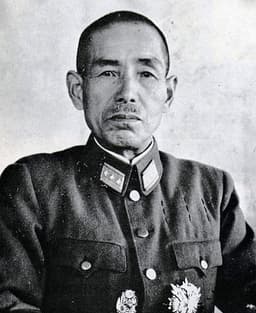
Shunroku Hata
General · Modern
51.1Total
Basic Information
Born
1946
1879
Died
—
1962
Era
Modern
Modern
Nationality
North Korea
Japan
Occupation
General
General
Civilization
Eastern
Eastern
Score Comparison
Military (10%)
10.2
47.5
Political (20%)
36.5
39.4
Influence (20%)
51.8
55.7
Legacy (20%)
38.3
43.3
Leadership (15%)
50.7
64.5
Strategy (15%)
39.6
60.0
TOTAL
40.6
51.1
Kim Yong-chol — Complete Timeline
2009 AD
Appointed Director of the Reconnaissance General BureauPolitical Action◆ Major
Kim Yong-chol was appointed Director of the Reconnaissance General Bureau (RGB), North Korea's primary intelligence agency. He oversaw espionage operations and cyber warfare, including the alleged Sony Pictures hack in 2014.
North KoreaIntelligenceCyber Warfare
Impact: global
2018 AD
Led North Korea's delegation to the 2018 Winter OlympicsPolitical Action◆ Major
Kim Yong-chol led the North Korean delegation to the 2018 Pyeongchang Winter Olympics, meeting with South Korean President Moon Jae-in. This was a key step in the inter-Korean rapprochement that led to the 2018 summit between Kim Jong-un and Moon.
North KoreaOlympicsDiplomacy
Impact: regionalconstructive
Negotiated with U.S. Secretary of State Mike PompeoPolitical Action◆ Major
Kim Yong-chol served as North Korea's chief negotiator in talks with U.S. Secretary of State Mike Pompeo. He traveled to Washington D.C. and New York to discuss denuclearization and the planned summit between Kim Jong-un and President Trump.
North KoreaUS DiplomacyDenuclearization
Impact: global
2019 AD
Attended the Hanoi Summit with President TrumpPolitical Action◆ Major
Kim Yong-chol accompanied Kim Jong-un to the second U.S.-North Korea summit in Hanoi, Vietnam. He was a key advisor during the talks, which ultimately collapsed without an agreement on denuclearization and sanctions relief.
North KoreaUS SummitHanoi
Impact: global
Shunroku Hata — Complete Timeline
1941 AD
Commanded the Japanese Expeditionary Army in ChinaWar◆ Major
Hata commanded the Japanese Expeditionary Army in China, overseeing operations against Chinese forces and the occupation of large areas. His command was responsible for the implementation of the Three Alls Policy (kill all, burn all, loot all) in some regions.
Second Sino-Japanese WarWorld War IIChina
Impact: regionaldestructive
1944 AD
Appointed Inspector General of Military TrainingPolitical Action
Hata was appointed Inspector General of Military Training, one of the highest positions in the Japanese Army. He was responsible for training and doctrine, but the position had limited operational influence as Japan faced military defeats.
Japanese ArmyWorld War IITraining
Impact: national
1948 AD
Sentenced to Life Imprisonment for War CrimesPolitical Action◆ Major
Hata was tried by the International Military Tribunal for the Far East for war crimes, including the Nanking Massacre and other atrocities. He was found guilty and sentenced to life imprisonment, but was paroled in 1955.
War Crimes TrialTokyo TribunalWorld War II
Impact: global
This comparison has not been analyzed yet.
One-time AI generation (~1 minute). Scores and timeline are already available below.
Rankings
🥇
Shunroku HataLeader
Mil: 47.5Pol: 39.4Inf: 55.7
51.1
🥈
Kim Yong-chol
Mil: 10.2Pol: 36.5Inf: 51.8
40.6
+10.5 behind
How This Comparison Works
Algorithm
Each figure is scored on 6 dimensions (0—100 scale) based on structured historical data: Military (10%), Political (20%), Influence (20%), Legacy (20%), Leadership (15%), Strategy (15%). The weighted total produces the final ranking.
Data Sources
Scores are computed from structured sub-indicators in the database. Scale factors adjust for era (Ancient ×0.85, Modern ×1.0) and civilization size (Eastern ×1.05, Other ×0.80) to account for differences in population and military scale.
Maximum 3 Figures
Comparisons are limited to 2—3 figures to ensure readability and statistical meaningfulness.
Error Margins
±5 points per dimension — Sub-scores are derived from historical records with inherent uncertainty. Two figures within 5 points on a dimension should be considered roughly equivalent in that area.
Total Score Accuracy
±3 points overall — The weighted combination of 6 dimensions produces a total score with approximately ±3 points of uncertainty. Differences of less than 3 points are not statistically significant— the figures are effectively tied.
Known Limitations
- Historical records are incomplete and uneven across civilizations
- Figures from oral-tradition societies may be underrepresented
- Occupation labels can misclassify multi-role figures
- Scores measure capability and impact, not moral character
- Quantitative scoring is a comparison tool, not absolute truth
Capability Radar
Military (10%) — Battles & Warfare
Battles
5
55
Win Rate
5
50
Expansion
5
40
Political (20%) — Governance & Reform
Reform
10
25
Diplomacy
50
30
Economy
5
20
Influence (20%) — Cultural & Global Reach
Cultural
10
20
Global
30
25
Legacy (20%) — Historical Impact
Historical
20
30
Longevity
10
20
Leadership (15%) — Power & Stability
Tenure
40
45
Stability
10
25
Strategy (15%) — Tactics & Innovation
Strategy
10
50
Tactics
10
45
Reform
5
30
Similar Comparisons
Comments & Discussion
No comments yet. Be the first to share your thoughts!