Loading...
This comparison has not been analyzed yet.
One-time AI generation (~1 minute). Scores and timeline are already available below.
Kim Yuk vs Vittorio Orlando
Kim Yuk leads by 1.9 pts · 2 figures compared
…

Kim Yuk
Politician · Modern
53.4Total
Vittorio Orlando
Politician · Modern
51.5Total
Basic Information
Born
1580
1860
Died
1658
1952
Era
Modern
Modern
Nationality
Korea
Italy
Occupation
Politician
Politician
Civilization
Eastern
Western
Score Comparison
Military (10%)
15.3
48.4
Political (20%)
72.0
46.6
Influence (20%)
54.9
54.9
Legacy (20%)
49.2
47.5
Leadership (15%)
77.2
65.7
Strategy (15%)
35.0
42.0
TOTAL
53.4
51.5
Kim Yuk — Complete Timeline
1614 AD
Compilation of the Jibong Yuseol (Topical Discourses of Jibong)Cultural
Kim Yuk compiled the Jibong Yuseol, an encyclopedia covering geography, customs, and practical knowledge. The work reflected his interest in practical learning (sirhak) and contributed to the intellectual movement of the late Joseon period.
EncyclopediaSirhakKnowledge
Impact: nationalconstructive
1630 AD
Service as Minister of Finance (Hojo Panseo)Political Action◆ Major
Kim Yuk served as Hojo Panseo (Minister of Finance), where he implemented fiscal reforms including the copper coinage and tax simplification. His policies helped stabilize the Joseon economy after the Manchu invasions.
GovernmentFinanceReform
Impact: nationalconstructive
1633 AD
Introduction of Copper Coinage (Sangpyeong Tongbo)Reform
Kim Yuk proposed and implemented the minting of the Sangpyeong Tongbo, the first standardized copper coinage in Joseon Korea. This reform aimed to stabilize the economy, facilitate trade, and replace barter and cloth currency.
Economic ReformCurrencyTrade
Impact: nationalconstructive
1635 AD
Promotion of the Daedong Law (Uniform Land Tax)Reform◆ Major
Kim Yuk advocated for the Daedongbeop, a tax reform that replaced multiple local tribute taxes with a single rice tax. This simplified the tax system and reduced corruption, though full implementation took decades.
Tax ReformGovernmentEconomy
Impact: nationalconstructive
Vittorio Orlando — Complete Timeline
1919 AD
Paris Peace ConferencePolitical Action◆ Major
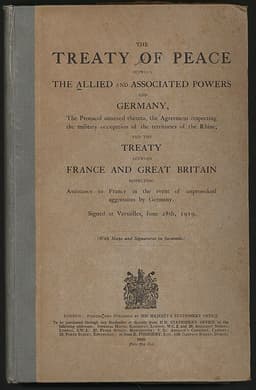
Orlando represented Italy at the Paris Peace Conference as prime minister. He demanded the fulfillment of the Treaty of London, including Fiume and Dalmatia. President Wilson opposed these claims, leading to Orlando's walkout and eventual resignation in June 1919.
World War ITreatyDiplomacy
Impact: global
Treaty of Saint-Germain-en-LayePolitical Action◆ Major
Orlando's successor signed the treaty that formally ended WWI with Austria. Italy gained Trentino, South Tyrol, and Istria, but not Fiume or Dalmatia. The perceived 'mutilated victory' fueled nationalist resentment and contributed to the rise of Fascism.
TreatyNationalismFiume
Impact: regionaldestructive
This comparison has not been analyzed yet.
One-time AI generation (~1 minute). Scores and timeline are already available below.
Rankings
🥇
Kim YukLeader
Mil: 15.3Pol: 72.0Inf: 54.9
53.4
🥈
Vittorio Orlando
Mil: 48.4Pol: 46.6Inf: 54.9
51.5
+1.9 behind
How This Comparison Works
Algorithm
Each figure is scored on 6 dimensions (0—100 scale) based on structured historical data: Military (10%), Political (20%), Influence (20%), Legacy (20%), Leadership (15%), Strategy (15%). The weighted total produces the final ranking.
Data Sources
Scores are computed from structured sub-indicators in the database. Scale factors adjust for era (Ancient ×0.85, Modern ×1.0) and civilization size (Eastern ×1.05, Other ×0.80) to account for differences in population and military scale.
Maximum 3 Figures
Comparisons are limited to 2—3 figures to ensure readability and statistical meaningfulness.
Error Margins
±5 points per dimension — Sub-scores are derived from historical records with inherent uncertainty. Two figures within 5 points on a dimension should be considered roughly equivalent in that area.
Total Score Accuracy
±3 points overall — The weighted combination of 6 dimensions produces a total score with approximately ±3 points of uncertainty. Differences of less than 3 points are not statistically significant— the figures are effectively tied.
Known Limitations
- Historical records are incomplete and uneven across civilizations
- Figures from oral-tradition societies may be underrepresented
- Occupation labels can misclassify multi-role figures
- Scores measure capability and impact, not moral character
- Quantitative scoring is a comparison tool, not absolute truth
Capability Radar
Military (10%) — Battles & Warfare
Battles
12
31
Win Rate
16
34
Expansion
22
33
Political (20%) — Governance & Reform
Reform
70
30
Diplomacy
50
55
Economy
75
30
Influence (20%) — Cultural & Global Reach
Cultural
40
20
Global
30
40
Legacy (20%) — Historical Impact
Historical
50
45
Longevity
45
30
Leadership (15%) — Power & Stability
Tenure
60
40
Stability
55
25
Strategy (15%) — Tactics & Innovation
Strategy
23
39
Tactics
24
41
Reform
31
42
Similar Comparisons
Comments & Discussion
No comments yet. Be the first to share your thoughts!