Loading...
Alassane Ouattara vs Vittorio Orlando
Alassane Ouattara leads by 1.2 pts · 2 figures compared
…
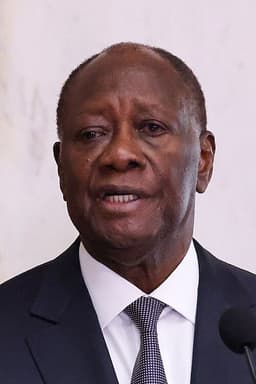
Alassane Ouattara
Politician · Modern
52.7Total
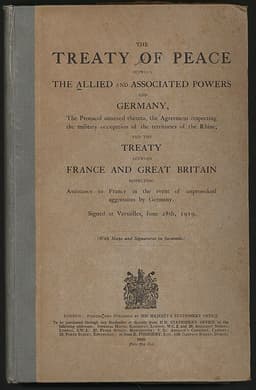
Vittorio Orlando
Politician · Modern
51.5Total
Basic Information
Born
1942
1860
Died
—
1952
Era
Modern
Modern
Nationality
Ivory Coast
Italy
Occupation
Politician
Politician
Civilization
Other
Western
Score Comparison
Military (10%)
23.0
48.4
Political (20%)
65.7
46.6
Influence (20%)
55.7
54.9
Legacy (20%)
45.8
47.5
Leadership (15%)
72.0
65.7
Strategy (15%)
43.9
42.0
TOTAL
52.7
51.5
Alassane Ouattara — Complete Timeline
1990 AD
Appointed Prime Minister of Ivory CoastPolitical Action◆ Major
Ouattara was appointed Prime Minister by President F
Prime MinisterEconomic ReformIvory Coast
Impact: nationalconstructive
2000 AD
Excluded from Presidential ElectionsPolitical Action◆ Major
Ouattara was barred from running for president due to a nationality law requiring both parents to be Ivorian. His exclusion fueled political tensions and contributed to the country's instability and civil war.
ExclusionNationality LawIvory Coast
Impact: nationaldestructive
2010 AD
Elected President of Ivory CoastPolitical Action
Ouattara won the presidential election against incumbent Laurent Gbagbo, but Gbagbo refused to step down. The disputed result led to a five-month civil war, ending with Ouattara assuming office after Gbagbo's arrest.
ElectionCivil WarIvory Coast
Impact: regionalconstructive
2015 AD
Re-elected President of Ivory CoastPolitical Action◆ Major
Ouattara won a second term with 83.7% of the vote in an election deemed peaceful and credible by observers. His victory reflected support for his economic recovery policies and post-war reconciliation efforts.
ElectionIvory CoastRe-election
Impact: nationalconstructive
2020 AD
Controversial Third Term BidPolitical Action◆ Major
Ouattara announced he would run for a third term after the death of his chosen successor, sparking opposition protests and violence. The election was boycotted by the opposition, and Ouattara won with 94% of the vote.
Third TermElectionIvory Coast
Impact: nationaldestructive
Vittorio Orlando — Complete Timeline
1919 AD
Paris Peace ConferencePolitical Action◆ Major
Orlando represented Italy at the Paris Peace Conference as prime minister. He demanded the fulfillment of the Treaty of London, including Fiume and Dalmatia. President Wilson opposed these claims, leading to Orlando's walkout and eventual resignation in June 1919.
World War ITreatyDiplomacy
Impact: global
Treaty of Saint-Germain-en-LayePolitical Action◆ Major
Orlando's successor signed the treaty that formally ended WWI with Austria. Italy gained Trentino, South Tyrol, and Istria, but not Fiume or Dalmatia. The perceived 'mutilated victory' fueled nationalist resentment and contributed to the rise of Fascism.
TreatyNationalismFiume
Impact: regionaldestructive
Expert Analysis
Origins
**Alassane Ouattara** was born on January 1, 1942, in Dimbokro, French Ivory Coast, into a wealthy Muslim family. His father was a planter and traditional chief. Ouattara earned a PhD in economics from the University of Pennsylvania and worked at the International Monetary Fund (IMF) from 1968 to 1988, rising to Director of the African Department. His technocratic background shaped his pragmatic, market-oriented approach.
**Vittorio Orlando** was born on May 19, 1860, in Palermo, Sicily, into a landowning family. He studied law at the University of Palermo and became a professor of constitutional law. Orlando entered politics in 1897 as a deputy and served in various ministerial roles, including Minister of Justice and Minister of the Interior. His expertise in law and constitutional matters defined his political career.
Rise to Power
Ouattara entered Ivorian politics in 1990 when President Félix Houphouët-Boigny appointed him Prime Minister, a position created for him. He implemented structural adjustment programs that stabilized the economy but also imposed austerity. In 1995, he was barred from running for president due to a nationality law requiring both parents to be Ivorian—his father was Ivorian, but his mother was from Burkina Faso. This exclusion fueled ethnic tensions. After years in exile, Ouattara returned and won the 2010 presidential election with 54.1% of the vote against incumbent Laurent Gbagbo, but Gbagbo refused to concede, sparking a five-month civil war that killed over 3,000 people.
Orlando rose to prominence as a constitutional lawyer and became Prime Minister of Italy in October 1917, after the Italian defeat at Caporetto. He rallied the nation and led Italy to victory in World War I. His greatest political moment came at the Paris Peace Conference in 1919, where he represented Italy alongside Foreign Minister Sidney Sonnino. Orlando demanded the fulfillment of the Treaty of London (1915), which promised Italy Trentino, South Tyrol, Istria, Dalmatia, and Fiume. However, US President Woodrow Wilson opposed these annexations, leading to a deadlock.
Leadership & Governance
Ouattara governed as a pro-business technocrat. As president, he prioritized economic growth, attracting foreign investment, and improving infrastructure. Ivory Coast's GDP grew at an average of 8% per year from 2012 to 2019. His administration built roads, bridges, and power plants. However, critics argue his policies benefited elites and exacerbated inequality. Politically, Ouattara centralized power and faced accusations of authoritarianism, especially during the 2020 election crisis when he ran for a controversial third term after his chosen successor died. Violence erupted, leaving 85 dead.
Orlando's leadership was marked by his legalistic and conciliatory style. As premier, he strengthened civilian control over the military and promoted national unity after Caporetto. At the peace conference, he was initially popular but proved ineffective in negotiations. His inability to secure Fiume and Dalmatia led to his resignation in June 1919. Orlando scored 65.7 in leadership, reflecting his wartime tenure, but only 42.0 in strategy, as he failed to navigate the diplomatic complexities.
Triumph & Tragedy
Ouattara's greatest success was stabilizing Ivory Coast after the 2010-2011 crisis and overseeing a decade of strong economic growth. He also achieved peace with neighboring countries. His tragedy is the 2020 election violence and the erosion of democratic norms. His third-term bid undermined the constitution and sparked protests. Additionally, the exclusion policy that barred him from running in 1995 remains a source of ethnic division.
Orlando's triumph was leading Italy to victory in WWI and representing it at the peace table. His tragedy was the 'mutilated victory'—Italy gained less than promised, and Orlando was vilified for failing to secure Fiume. The nationalist fury contributed to the rise of Fascism. Orlando later opposed Mussolini but retired from politics.
Character & Destiny
Ouattara is disciplined, patient, and calculating. His IMF background made him a reformer but also aloof from the masses. His destiny was shaped by the ethnic politics of Ivory Coast: born into privilege but denied the presidency due to his mother's origin. He overcame this but then repeated the cycle of exclusion by altering term limits.
Orlando was a skilled jurist and orator, but indecisive and overly legalistic. He believed in the power of treaties but was outmaneuvered by Wilson. His destiny was to be a war leader who failed at peace. Historians judge him as well-intentioned but ineffective.
Legacy
Ouattara's legacy is mixed. He is credited with economic revival and peace, but his third-term bid tarnished his democratic credentials. His economic policies set Ivory Coast on a growth trajectory, but inequality persists. He scored 45.8 in legacy, reflecting this ambiguity.
Orlando's legacy is that of a failed peacemaker. The 'mutilated victory' narrative fueled Italian nationalism and Fascism. However, his constitutional expertise influenced later Italian jurisprudence. His legacy score is 47.5.
Conclusion
Ouattara had a greater impact on his country than Orlando did on Italy. Ouattara's economic reforms transformed Ivory Coast's economy, and his political career shaped the nation's trajectory for decades. Orlando's failure at Versailles had profound consequences, but his influence was more reactive. Ouattara's total score of 52.7 vs Orlando's 51.5 reflects this. Ouattara's leadership (72.0) and political skill (65.7) outpaced Orlando's (65.7 and 46.6). While Orlando's legacy is tied to a single event, Ouattara's influence spans economics, politics, and governance. Thus, Alassane Ouattara is the more consequential figure.
Rankings
🥇
Alassane OuattaraLeader
Mil: 23.0Pol: 65.7Inf: 55.7
52.7
🥈
Vittorio Orlando
Mil: 48.4Pol: 46.6Inf: 54.9
51.5
+1.2 behind
How This Comparison Works
Algorithm
Each figure is scored on 6 dimensions (0—100 scale) based on structured historical data: Military (10%), Political (20%), Influence (20%), Legacy (20%), Leadership (15%), Strategy (15%). The weighted total produces the final ranking.
Data Sources
Scores are computed from structured sub-indicators in the database. Scale factors adjust for era (Ancient ×0.85, Modern ×1.0) and civilization size (Eastern ×1.05, Other ×0.80) to account for differences in population and military scale.
Maximum 3 Figures
Comparisons are limited to 2—3 figures to ensure readability and statistical meaningfulness.
Error Margins
±5 points per dimension — Sub-scores are derived from historical records with inherent uncertainty. Two figures within 5 points on a dimension should be considered roughly equivalent in that area.
Total Score Accuracy
±3 points overall — The weighted combination of 6 dimensions produces a total score with approximately ±3 points of uncertainty. Differences of less than 3 points are not statistically significant— the figures are effectively tied.
Known Limitations
- Historical records are incomplete and uneven across civilizations
- Figures from oral-tradition societies may be underrepresented
- Occupation labels can misclassify multi-role figures
- Scores measure capability and impact, not moral character
- Quantitative scoring is a comparison tool, not absolute truth
Capability Radar
Military (10%) — Battles & Warfare
Battles
20
31
Win Rate
23
34
Expansion
27
33
Political (20%) — Governance & Reform
Reform
70
30
Diplomacy
68
55
Economy
75
30
Influence (20%) — Cultural & Global Reach
Cultural
30
20
Global
45
40
Legacy (20%) — Historical Impact
Historical
40
45
Longevity
35
30
Leadership (15%) — Power & Stability
Tenure
65
40
Stability
55
25
Strategy (15%) — Tactics & Innovation
Strategy
30
39
Tactics
32
41
Reform
38
42
Similar Comparisons
Comments & Discussion
No comments yet. Be the first to share your thoughts!