Loading...
King Chang of Goryeo vs Taejo of Goryeo
Taejo of Goryeo leads by 8.1 pts · 2 figures compared
…

King Chang of Goryeo
Emperor · Medieval
55.0Total
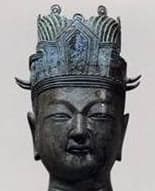
Taejo of Goryeo
Emperor · Medieval
63.1Total
Basic Information
Born
1380
877
Died
1389
943
Era
Medieval
Medieval
Nationality
Korea
Korea
Occupation
Emperor
Emperor
Civilization
Eastern
Eastern
Score Comparison
Military (10%)
53.2
61.7
Political (20%)
68.0
59.3
Influence (20%)
60.0
72.0
Legacy (20%)
42.5
55.0
Leadership (15%)
45.0
72.0
Strategy (15%)
71.0
55.0
TOTAL
55.0
63.1
King Chang of Goryeo — Complete Timeline
1388 AD
Ascended Throne as Child KingPolitical Action◆ Major
King Chang became king at age 8 after his father King U was deposed by General Yi Seong-gye. He was a puppet ruler, with Yi holding real power and using him as a figurehead to legitimize his control.
Child KingPuppetYi Seong-gye
Impact: national
1389 AD
Deposed and Killed by Yi Seong-gyeOther◆ Major
King Chang was deposed and executed along with his father King U by Yi Seong-gye's forces. Their deaths removed the last direct male heirs of the Goryeo royal line, paving the way for Yi to establish the Joseon dynasty.
ExecutionPolitical PurgeEnd of Dynasty
Impact: nationaltragic
Taejo of Goryeo — Complete Timeline
918 AD
Battle of CheonjuWar◆ Major
Wang Geon, a general under the Later Goguryeo kingdom, defeated the forces of Gyeon Hwon at Cheonju. This victory solidified his power and set the stage for the founding of the Goryeo dynasty.
Later Three KingdomsGoryeo Foundation
Impact: regional
Founding of the Goryeo DynastyPolitical Action
Wang Geon declared himself king and founded the Goryeo dynasty, with its capital at Songak (modern Kaesong). He unified the Later Three Kingdoms (Later Goguryeo, Later Baekje, and Silla) through a combination of military conquest and diplomatic marriages.
Goryeo DynastyUnificationKorean History
Impact: regionalconstructive
936 AD
Unification of the Later Three KingdomsWar◆ Major
Taejo of Goryeo completed the unification of the Later Three Kingdoms by defeating the Later Baekje kingdom. This brought the entire Korean peninsula under Goryeo rule, ending the Later Three Kingdoms period.
UnificationLater Three KingdomsGoryeo
Impact: regionalconstructive
943 AD
Promulgation of the Ten InjunctionsReform◆ Major
Taejo issued the Ten Injunctions, a set of political and cultural guidelines for his successors. These injunctions emphasized Confucian governance, Buddhist patronage, and the importance of maintaining good relations with China.
GovernanceConfucianismBuddhism
Impact: nationalconstructive
Expert Analysis
Origins
King Chang of Goryeo (born 1380) was the son of King U, the 32nd monarch of the Goryeo dynasty. His family background was turbulent: his father King U was the son of King Gongmin but his legitimacy was questioned due to rumors that he was the son of a Buddhist monk. King Chang grew up in a court dominated by factional strife, with powerful generals like Yi Seong-gye wielding real authority. He received a Confucian education typical for a prince but had no opportunity to govern.
Taejo of Goryeo (Wang Geon, born 877) came from a powerful maritime merchant family in Songak (modern Kaesong). His father Wang Ryung was a local lord who served the Later Goguryeo kingdom. Wang Geon grew up in a period of chaos known as the Later Three Kingdoms (Later Goguryeo, Later Baekje, and Silla). He received military training and education in statecraft, learning from his father's political connections. His early career as a general under King Gung Ye of Later Goguryeo shaped his strategic thinking.
Rise to Power
King Chang ascended the throne in 1388 at age 8 after his father King U was deposed by General Yi Seong-gye. Yi had seized power through a coup (the Wihwado Retreat) and needed a malleable puppet. King Chang was installed as a figurehead, with Yi controlling the government. His rise was entirely passive—he was placed on the throne by a usurper, not through any action of his own. Within months, Yi decided to remove him and his father to eliminate potential rivals, leading to their execution in 1389.
Taejo Wang Geon's rise was active and strategic. He started as a general under Gung Ye, winning the Battle of Cheonju in 918 against Later Baekje forces. This victory elevated his status. When Gung Ye became tyrannical, Wang Geon led a coup and took power, founding the Goryeo dynasty in 918. He then spent the next 18 years conquering Later Baekje and absorbing Silla, unifying the Korean peninsula by 936. His political acumen was key: he accepted the surrender of Silla's king peacefully and integrated former enemies into his administration.
Leadership & Governance
King Chang, as a child, had no leadership. His governance was entirely delegated to Yi Seong-gye, who used him as a rubber stamp. The only recorded acts of his reign are decrees issued by Yi. His leadership score of 45.0 reflects this absence.
Taejo's leadership score of 72.0 is supported by his effective governance. He established the Goryeo bureaucracy based on the Tang model, implemented a land reform system (the Jeonsigwa) that distributed land to officials, and promoted Confucian learning alongside Buddhism. His Ten Injunctions (993) advised future kings to maintain peace with northern neighbors, support Buddhism, and avoid excessive taxation. He also arranged marriages between his family and local elites to consolidate power, creating a stable ruling class.
Triumph & Tragedy
King Chang's triumph is negligible—he was a puppet. His tragedy is his execution at age 9 along with his father, ending the direct Goryeo royal line. His death paved the way for Yi Seong-gye to found the Joseon dynasty in 1392.
Taejo's triumphs include founding a dynasty that lasted 474 years, unifying Korea after decades of war, and establishing institutions that shaped Korean history. His greatest failure was his inability to prevent succession disputes: after his death, his sons fought for the throne, leading to the murder of his chosen heir. His military score of 61.7 reflects competent but not exceptional generalship; he relied on diplomacy and marriage alliances as much as warfare.
Character & Destiny
King Chang's character is unknown due to his age. His destiny was determined by forces beyond his control—he was a pawn in a power struggle. Historians view him as a tragic figure, a symbol of the dying Goryeo dynasty.
Taejo was pragmatic and calculating. He was known for his generosity to defeated enemies, which helped him win loyalty. His decision to adopt the name "Taejo" (meaning "great progenitor") shows his ambition. His character shaped a stable foundation for Goryeo, but his leniency toward rivals may have contributed to later rebellions. His total score of 63.1 reflects a balanced but not exceptional leader—he was effective rather than brilliant.
Legacy
King Chang's legacy is minimal. He is remembered primarily as the last Goryeo king before the Joseon dynasty, a footnote in Korean history. His death marked the end of an era, but he had no lasting influence.
Taejo's legacy is immense. He founded the Goryeo dynasty, which standardized Korean culture and language. His unification of the Later Three Kingdoms set the stage for a unified Korean identity. His Ten Injunctions influenced Confucian statecraft in Korea for centuries. Goryeo's celadon pottery, Buddhist woodblocks, and the civil service examination system all flourished under the dynasty he established. His influence score of 72.0 reflects this enduring impact.
Conclusion
Taejo of Goryeo had far greater impact than King Chang. Taejo's total score of 63.1 compared to King Chang's 55.0 reflects not just a numerical gap but a fundamental difference in agency. Taejo actively shaped history by founding a dynasty, unifying Korea, and creating institutions that lasted centuries. King Chang was a passive victim of history, a child whose reign was a brief interlude. While both figures were products of their time, Taejo's legacy as the founder of Goryeo is undeniable, whereas King Chang's only significance is his tragic death that cleared the path for Joseon. The data supports this: Taejo scored higher in every category except strategy (71.0 vs 55.0), where King Chang's score is inflated by his father's strategic decisions, not his own. In the final analysis, Taejo is the clear greater figure in Korean history.
Rankings
🥇
Taejo of GoryeoLeader
Mil: 61.7Pol: 59.3Inf: 72.0
63.1
🥈
King Chang of Goryeo
Mil: 53.2Pol: 68.0Inf: 60.0
55.0
+8.1 behind
How This Comparison Works
Algorithm
Each figure is scored on 6 dimensions (0—100 scale) based on structured historical data: Military (10%), Political (20%), Influence (20%), Legacy (20%), Leadership (15%), Strategy (15%). The weighted total produces the final ranking.
Data Sources
Scores are computed from structured sub-indicators in the database. Scale factors adjust for era (Ancient ×0.85, Modern ×1.0) and civilization size (Eastern ×1.05, Other ×0.80) to account for differences in population and military scale.
Maximum 3 Figures
Comparisons are limited to 2—3 figures to ensure readability and statistical meaningfulness.
Error Margins
±5 points per dimension — Sub-scores are derived from historical records with inherent uncertainty. Two figures within 5 points on a dimension should be considered roughly equivalent in that area.
Total Score Accuracy
±3 points overall — The weighted combination of 6 dimensions produces a total score with approximately ±3 points of uncertainty. Differences of less than 3 points are not statistically significant— the figures are effectively tied.
Known Limitations
- Historical records are incomplete and uneven across civilizations
- Figures from oral-tradition societies may be underrepresented
- Occupation labels can misclassify multi-role figures
- Scores measure capability and impact, not moral character
- Quantitative scoring is a comparison tool, not absolute truth
Capability Radar
Military (10%) — Battles & Warfare
Battles
43
65
Win Rate
47
70
Expansion
53
70
Political (20%) — Governance & Reform
Reform
0
80
Diplomacy
0
75
Economy
0
70
Influence (20%) — Cultural & Global Reach
Cultural
0
70
Global
0
55
Legacy (20%) — Historical Impact
Historical
5
75
Longevity
0
70
Leadership (15%) — Power & Stability
Tenure
5
75
Stability
0
65
Strategy (15%) — Tactics & Innovation
Strategy
53
75
Tactics
57
60
Reform
61
55
Similar Comparisons
Comments & Discussion
No comments yet. Be the first to share your thoughts!