Loading...
Nyatsimba Mutota vs Taejo of Goryeo
Taejo of Goryeo leads by 6.6 pts · 2 figures compared
…

Nyatsimba Mutota
Emperor · Medieval
56.5Total
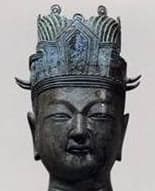
Taejo of Goryeo
Emperor · Medieval
63.1Total
Basic Information
Born
1400
877
Died
1450
943
Era
Medieval
Medieval
Nationality
Mozambique
Korea
Occupation
Emperor
Emperor
Civilization
Other
Eastern
Score Comparison
Military (10%)
72.5
61.7
Political (20%)
68.0
59.3
Influence (20%)
59.0
72.0
Legacy (20%)
50.0
55.0
Leadership (15%)
40.0
72.0
Strategy (15%)
57.5
55.0
TOTAL
56.5
63.1
Nyatsimba Mutota — Complete Timeline
1430 AD
Founding of the Mutapa EmpirePolitical Action
Nyatsimba Mutota led a migration north from Great Zimbabwe and founded the Mutapa Empire in the Zambezi valley. He established a new capital at Zvongombe and began territorial expansion.
Impact: regionalconstructive
1440 AD
Conquest of the TavaraWar◆ Major
Nyatsimba Mutota conquered the Tavara people in the Zambezi valley, incorporating their territory into the Mutapa Empire. This victory secured control over fertile agricultural lands and trade routes.
Impact: regional
1445 AD
Establishment of the Mwenemutapa TitlePolitical Action◆ Major
Nyatsimba Mutota adopted the title Mwenemutapa, meaning 'lord of the conquered lands,' formalizing the imperial structure. This title became hereditary and defined the ruler's authority over conquered peoples.
Impact: regionalconstructive
Taejo of Goryeo — Complete Timeline
918 AD
Battle of CheonjuWar◆ Major
Wang Geon, a general under the Later Goguryeo kingdom, defeated the forces of Gyeon Hwon at Cheonju. This victory solidified his power and set the stage for the founding of the Goryeo dynasty.
Later Three KingdomsGoryeo Foundation
Impact: regional
Founding of the Goryeo DynastyPolitical Action
Wang Geon declared himself king and founded the Goryeo dynasty, with its capital at Songak (modern Kaesong). He unified the Later Three Kingdoms (Later Goguryeo, Later Baekje, and Silla) through a combination of military conquest and diplomatic marriages.
Goryeo DynastyUnificationKorean History
Impact: regionalconstructive
936 AD
Unification of the Later Three KingdomsWar◆ Major
Taejo of Goryeo completed the unification of the Later Three Kingdoms by defeating the Later Baekje kingdom. This brought the entire Korean peninsula under Goryeo rule, ending the Later Three Kingdoms period.
UnificationLater Three KingdomsGoryeo
Impact: regionalconstructive
943 AD
Promulgation of the Ten InjunctionsReform◆ Major
Taejo issued the Ten Injunctions, a set of political and cultural guidelines for his successors. These injunctions emphasized Confucian governance, Buddhist patronage, and the importance of maintaining good relations with China.
GovernanceConfucianismBuddhism
Impact: nationalconstructive
Expert Analysis
Origins
Nyatsimba Mutota was born around the early 15th century into the ruling elite of Great Zimbabwe, a powerful trading state in southern Africa. He was likely a son of a king or a high-ranking noble, though specific details of his early life remain scarce. Mutota's formative years were shaped by the decline of Great Zimbabwe, which faced environmental and economic pressures. He led a migration northward into the Zambezi valley, seeking new resources and trade routes. In contrast, Taejo of Goryeo, born Wang Geon in 877 CE, was the son of a powerful local lord in Songak (modern Kaesong, Korea). His family had maritime trading connections, giving him early exposure to commerce and military strategy. Wang Geon grew up during the Later Three Kingdoms period, a time of fragmentation and warfare on the Korean peninsula. He received a Confucian education and military training, preparing him for leadership.
Rise to Power
Mutota's rise began with his departure from Great Zimbabwe around 1420 CE. He led a group of followers north, conquering the Tavara people and other groups in the Zambezi valley. By 1430, he had established a new capital at Zvongo and adopted the title Mwenemutapa ('lord of the conquered lands'), effectively founding the Mutapa Empire. His military campaigns secured control over gold-producing regions and trade routes to the Indian Ocean. Taejo's rise was more gradual and tied to the Later Three Kingdoms. He initially served as a general under the Later Goguryeo kingdom, winning the Battle of Cheonju in 926 CE against the Later Baekje forces. This victory earned him political influence. In 918 CE, his subordinates overthrew the Later Goguryeo king, and Wang Geon was proclaimed king, founding the Goryeo dynasty. He then spent years consolidating power and unifying the peninsula, finally defeating Later Baekje in 936 CE.
Leadership & Governance
Mutota's leadership was based on military expansion and tribute. He created a centralized state with governors appointed from the capital, extracting tribute from conquered peoples. His governance relied on personal authority and the Mwenemutapa title, which became hereditary. However, the empire lacked strong administrative institutions, leading to later fragmentation. Taejo, by contrast, implemented systematic governance. He promulgated the Ten Injunctions, a set of political guidelines emphasizing Confucian principles, Buddhist support, and caution against centralizing power too heavily. He integrated local elites into his administration, married into powerful families, and established a capital at Songak. Taejo's political score of 59.3 reflects his adept balancing of regional powers, while Mutota's political score of 68.0 indicates a more direct but less sustainable control.
Triumph & Tragedy
Mutota's greatest triumph was founding the Mutapa Empire, which dominated the Zambezi valley for centuries and became a major gold exporter. His tragedy was the empire's vulnerability to internal succession disputes and external pressures from the Portuguese, which emerged after his death. Mutota's military score of 72.5 shows his effectiveness in conquest, but his leadership score of 40.0 suggests weaknesses in long-term stability. Taejo's triumph was unifying the Later Three Kingdoms and establishing a dynasty that lasted 474 years. His Ten Injunctions provided a framework for stable governance. However, his tragedy included the eventual decline of Goryeo due to later aristocratic infighting and Mongol invasions, though these occurred long after his death. Taejo's leadership score of 72.0 underscores his ability to build enduring institutions.
Character & Destiny
Mutota was ambitious and expansionist, driven by the need to secure resources and legitimacy. His decision to migrate and conquer reflected a risk-taking personality. However, his reliance on personal rule meant the empire's fate was tied to his successors. Taejo was pragmatic and diplomatic, learning from the failures of earlier kingdoms. He incorporated diverse factions and promoted Confucian ideals to unify his realm. His character shaped a more resilient dynasty. Historical assessments often highlight Taejo's strategic patience, while Mutota is seen as a bold founder but less effective in creating lasting structures.
Legacy
Mutota's legacy is the Mutapa Empire, which persisted until the 19th century, but its later history was marked by decline and Portuguese interference. His title Mwenemutapa became synonymous with the empire. Taejo's legacy is the Goryeo dynasty, which set the foundation for Korean culture and governance, including the name 'Korea' derived from Goryeo. His Ten Injunctions influenced subsequent dynasties. In terms of influence, Taejo scores 72.0 compared to Mutota's 59.0, reflecting the broader and longer-lasting impact of his unification and administrative innovations.
Conclusion
Taejo of Goryeo had a greater impact than Nyatsimba Mutota, as reflected in his higher total score of 63.1 versus Mutota's 56.5. While Mutota founded a significant empire, Taejo's unification of Korea and establishment of a dynasty that shaped Korean identity for centuries demonstrates more enduring influence. Taejo's superior leadership (72.0 vs 40.0) and influence (72.0 vs 59.0) are decisive factors. Mutota's military prowess (72.5) and political acumen (68.0) are notable, but his empire's instability and lack of institutional legacy limit his overall impact. Therefore, Taejo stands as the more consequential founder.
Rankings
🥇
Taejo of GoryeoLeader
Mil: 61.7Pol: 59.3Inf: 72.0
63.1
🥈
Nyatsimba Mutota
Mil: 72.5Pol: 68.0Inf: 59.0
56.5
+6.6 behind
How This Comparison Works
Algorithm
Each figure is scored on 6 dimensions (0—100 scale) based on structured historical data: Military (10%), Political (20%), Influence (20%), Legacy (20%), Leadership (15%), Strategy (15%). The weighted total produces the final ranking.
Data Sources
Scores are computed from structured sub-indicators in the database. Scale factors adjust for era (Ancient ×0.85, Modern ×1.0) and civilization size (Eastern ×1.05, Other ×0.80) to account for differences in population and military scale.
Maximum 3 Figures
Comparisons are limited to 2—3 figures to ensure readability and statistical meaningfulness.
Error Margins
±5 points per dimension — Sub-scores are derived from historical records with inherent uncertainty. Two figures within 5 points on a dimension should be considered roughly equivalent in that area.
Total Score Accuracy
±3 points overall — The weighted combination of 6 dimensions produces a total score with approximately ±3 points of uncertainty. Differences of less than 3 points are not statistically significant— the figures are effectively tied.
Known Limitations
- Historical records are incomplete and uneven across civilizations
- Figures from oral-tradition societies may be underrepresented
- Occupation labels can misclassify multi-role figures
- Scores measure capability and impact, not moral character
- Quantitative scoring is a comparison tool, not absolute truth
Capability Radar
Military (10%) — Battles & Warfare
Battles
55
65
Win Rate
60
70
Expansion
65
70
Political (20%) — Governance & Reform
Reform
50
80
Diplomacy
55
75
Economy
50
70
Influence (20%) — Cultural & Global Reach
Cultural
45
70
Global
40
55
Legacy (20%) — Historical Impact
Historical
55
75
Longevity
50
70
Leadership (15%) — Power & Stability
Tenure
60
75
Stability
55
65
Strategy (15%) — Tactics & Innovation
Strategy
55
75
Tactics
50
60
Reform
40
55
Similar Comparisons
Comments & Discussion
No comments yet. Be the first to share your thoughts!