Loading...
King Cheng of Zhou vs Pepi II
Pepi II leads by 1.2 pts · 2 figures compared
…

King Cheng of Zhou
Emperor · Ancient
43.7Total
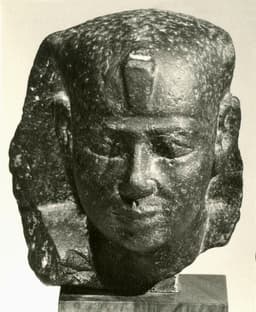
Pepi II
Emperor · Ancient
44.9Total
Basic Information
Born
-1050
-2284
Died
-1021
-2184
Era
Ancient
Ancient
Nationality
Zhou China
Egypt
Occupation
Emperor
Emperor
Civilization
Eastern
Middle Eastern
Score Comparison
Military (10%)
25.9
10.2
Political (20%)
40.8
32.1
Influence (20%)
48.6
45.5
Legacy (20%)
43.3
48.3
Leadership (15%)
55.3
74.0
Strategy (15%)
36.8
45.0
TOTAL
43.7
44.9
King Cheng of Zhou — Complete Timeline
1042 BC
Regency of the Duke of ZhouPolitical Action◆ Major
Upon the death of King Wu, the Duke of Zhou assumed regency for the young King Cheng. This regency consolidated Zhou rule, suppressed rebellions, and established the foundational institutions of the Zhou dynasty.
RegencyZhou DynastyConsolidation
Impact: nationalconstructive
1040 BC
Suppression of the Rebellion of the Three GuardsWar◆ Major
The Duke of Zhou led campaigns to crush the Rebellion of the Three Guards, a revolt by King Cheng's uncles and the Shang loyalist Wu Geng. The victory secured the Zhou dynasty's hold on the central plains.
RebellionMilitary CampaignZhou Dynasty
Impact: national
1035 BC
Completion of the Zhou Feudal SystemReform◆ Major
Under the Duke of Zhou's guidance, King Cheng oversaw the formalization of the fengjian system, granting lands and titles to relatives and allies. This created a hierarchical feudal structure that stabilized Zhou control over its expanding territory.
FeudalismPolitical ReformZhou Dynasty
Impact: nationalconstructive
Pepi II — Complete Timeline
2284 BC
Longest Reign in HistoryPolitical Action◆ Major
Pepi II ascended the throne as a child and ruled for 94 years, the longest verified reign of any monarch in history. His reign saw the consolidation of the Old Kingdom but also the rise of provincial power that contributed to its decline.
ReignLongevityOld Kingdom
Impact: regional
2184 BC
Collapse of the Old KingdomPolitical Action
Pepi II's death triggered the collapse of the Old Kingdom, as central authority weakened and provincial nomarchs gained independence. This led to the First Intermediate Period, a time of fragmentation and civil strife.
CollapseDeclineFirst Intermediate Period
Impact: regionaldestructive
Expert Analysis
Origins
**King Cheng of Zhou** (r. 1042–1021 BCE) was the son of King Wu, the founder of the Zhou dynasty. Born Ji Song, he ascended the throne as a child after his father's death. His early years were shaped by the regency of his uncle, the Duke of Zhou, who was a key figure in consolidating Zhou rule. King Cheng's background was steeped in the political turmoil following the conquest of the Shang dynasty, and his education was heavily influenced by Confucian ideals of governance, though Confucius lived centuries later.
**Pepi II** (r. 2278–2184 BCE) became pharaoh of Egypt's 6th Dynasty at the age of six, after the death of his half-brother Merenre I. His mother, Ankhesenpepi II, served as regent. Pepi II was born into a period of relative stability, but the seeds of decline were already present. His long reign of 94 years is the longest verified in history, but it ended with the collapse of the Old Kingdom. His early life was marked by the powerful influence of his mother and the priesthood of Ptah.
Rise to Power
King Cheng's rise was not of his own making. He inherited the throne at a young age, and the Duke of Zhou effectively ruled in his name. The Duke suppressed the Rebellion of the Three Guards (1042–1039 BCE), a revolt by King Cheng's uncles and Shang loyalists, securing the dynasty. King Cheng's formal ascension to independent rule came after the Duke of Zhou returned power, but his authority was always mediated by the feudal system he helped establish.
Pepi II's rise was similarly passive. He became pharaoh as a child, and his mother Ankhesenpepi II acted as regent. His early reign was marked by the influence of powerful officials like the vizier Djau. Pepi II's longevity meant he outlived many of his advisors, leading to a gradual shift in power to provincial nomarchs. His rise was not a conquest but a gradual assumption of authority as he aged, though he never fully controlled the growing decentralization.
Leadership & Governance
King Cheng's leadership was exercised through the feudal system (fengjian) formalized under his reign. He granted lands and titles to relatives and allies, creating a network of vassal states that owed loyalty to the Zhou king. This system, while stabilizing the realm, also sowed the seeds of future fragmentation. King Cheng's governance score of 40.8 reflects his limited direct control, as much policy was shaped by the Duke of Zhou. His military score of 25.9 indicates little personal involvement in campaigns.
Pepi II's leadership style was more passive. He ruled for 94 years, but his reign saw the gradual erosion of central authority. He relied on a bureaucracy and the priesthood, but his inability to curb the power of nomarchs led to the Old Kingdom's collapse. His political score of 32.1 and military score of 10.2 reflect his weak control. However, his leadership score of 74.0 is high, likely due to the sheer length of his reign, which provided stability in the short term. His strategy score of 45.0 suggests some planning, but it was insufficient to prevent decline.
Triumph & Tragedy
King Cheng's greatest triumph was the consolidation of the Zhou dynasty through the feudal system. The suppression of the Three Guards rebellion and the establishment of a stable administrative framework allowed the Zhou to rule for nearly 800 years. However, his tragedy was that his achievements were largely due to the Duke of Zhou; King Cheng himself is often overshadowed. His legacy score of 43.3 reflects this mixed record.
Pepi II's triumph is his record-breaking reign, which provided continuity and stability for nearly a century. However, his tragedy is monumental: his death triggered the collapse of the Old Kingdom, leading to the First Intermediate Period, a time of chaos and fragmentation. His influence score of 45.5 and legacy score of 48.3 are modest because his long reign ultimately ended in failure.
Character & Destiny
King Cheng is remembered as a dutiful king who followed the guidance of his uncle. He was not a dynamic leader but a symbol of Zhou legitimacy. His character was shaped by the Confucian ideal of a virtuous ruler, though historical records are sparse. His destiny was to be a transitional figure, bridging the conquest period to the stable feudal era.
Pepi II is often portrayed as a passive pharaoh who focused on maintaining power rather than actively governing. His long reign allowed him to become a symbol of stability, but his inability to adapt to changing circumstances sealed the Old Kingdom's fate. His character was likely one of caution and conservatism, leading to a tragic end.
Legacy
King Cheng's legacy is the Zhou feudal system, which influenced Chinese governance for centuries. The concept of the Mandate of Heaven, though developed earlier, was reinforced under his reign. His influence score of 48.6 reflects the long-term impact of the Zhou dynasty.
Pepi II's legacy is more negative. His reign is associated with the decline of the Old Kingdom and the rise of the First Intermediate Period. However, his record 94-year reign remains a historical curiosity. His legacy score of 48.3 is similar to King Cheng's, but for different reasons.
Conclusion
While Pepi II achieved the longest reign in history, his rule ultimately ended in disaster. King Cheng of Zhou, despite his low personal scores (total 43.7 vs Pepi II's 44.9), had a more lasting positive impact. The feudal system he formalized provided the framework for centuries of Chinese civilization. Pepi II's reign, though long, was a failure in governance. Therefore, King Cheng of Zhou had greater historical impact.
Rankings
🥇
Pepi IILeader
Mil: 10.2Pol: 32.1Inf: 45.5
44.9
🥈
King Cheng of Zhou
Mil: 25.9Pol: 40.8Inf: 48.6
43.7
+1.2 behind
How This Comparison Works
Algorithm
Each figure is scored on 6 dimensions (0—100 scale) based on structured historical data: Military (10%), Political (20%), Influence (20%), Legacy (20%), Leadership (15%), Strategy (15%). The weighted total produces the final ranking.
Data Sources
Scores are computed from structured sub-indicators in the database. Scale factors adjust for era (Ancient ×0.85, Modern ×1.0) and civilization size (Eastern ×1.05, Other ×0.80) to account for differences in population and military scale.
Maximum 3 Figures
Comparisons are limited to 2—3 figures to ensure readability and statistical meaningfulness.
Error Margins
±5 points per dimension — Sub-scores are derived from historical records with inherent uncertainty. Two figures within 5 points on a dimension should be considered roughly equivalent in that area.
Total Score Accuracy
±3 points overall — The weighted combination of 6 dimensions produces a total score with approximately ±3 points of uncertainty. Differences of less than 3 points are not statistically significant— the figures are effectively tied.
Known Limitations
- Historical records are incomplete and uneven across civilizations
- Figures from oral-tradition societies may be underrepresented
- Occupation labels can misclassify multi-role figures
- Scores measure capability and impact, not moral character
- Quantitative scoring is a comparison tool, not absolute truth
Capability Radar
Military (10%) — Battles & Warfare
Battles
10
5
Win Rate
10
5
Expansion
10
5
Political (20%) — Governance & Reform
Reform
40
10
Diplomacy
40
10
Economy
30
10
Influence (20%) — Cultural & Global Reach
Cultural
30
15
Global
20
15
Legacy (20%) — Historical Impact
Historical
40
20
Longevity
40
90
Leadership (15%) — Power & Stability
Tenure
30
95
Stability
40
15
Strategy (15%) — Tactics & Innovation
Strategy
10
5
Tactics
10
5
Reform
10
5
Similar Comparisons
Comments & Discussion
No comments yet. Be the first to share your thoughts!