Loading...
Ishbi-Erra vs Pepi II
Ishbi-Erra leads by 2.0 pts · 2 figures compared
…
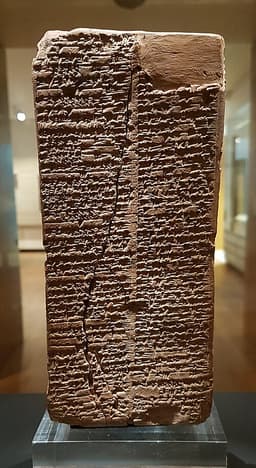
Ishbi-Erra
Emperor · Ancient
46.9Total
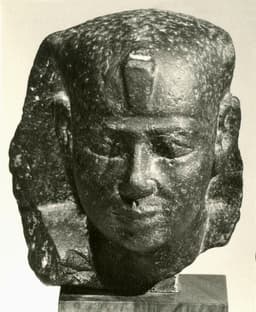
Pepi II
Emperor · Ancient
44.9Total
Basic Information
Born
-2017
-2284
Died
-1985
-2184
Era
Ancient
Ancient
Nationality
Isin
Egypt
Occupation
Emperor
Emperor
Civilization
Middle Eastern
Middle Eastern
Score Comparison
Military (10%)
25.0
10.2
Political (20%)
43.7
32.1
Influence (20%)
49.4
45.5
Legacy (20%)
40.8
48.3
Leadership (15%)
74.0
74.0
Strategy (15%)
41.7
45.0
TOTAL
46.9
44.9
Ishbi-Erra — Complete Timeline
2017 BC
Founded the First Dynasty of IsinPolitical Action◆ Major
Ishbi-Erra established the First Dynasty of Isin after the collapse of the Ur III empire. He seized control of Isin and gradually expanded his territory, becoming the dominant power in southern Mesopotamia and claiming the title 'King of Sumer and Akkad'.
DynastyIsinSumer
Impact: regional
2015 BC
Defeated the Elamites and expelled them from UrWar◆ Major
Ishbi-Erra led a military campaign against the Elamites who had occupied Ur after the fall of the Ur III dynasty. He defeated them and drove them out, restoring Sumerian control over the city and its important religious sites.
WarElamUr
Impact: regional
2010 BC
Consolidated control over Nippur and other Sumerian citiesPolitical Action
Ishbi-Erra extended his rule over key Sumerian cities including Nippur, the religious center of Mesopotamia. This consolidation allowed him to claim legitimacy as the successor to the Ur III kings and control trade routes.
ConsolidationNippurSumer
Impact: regional
Issued royal inscriptions and building projectsCultural
Ishbi-Erra commissioned royal inscriptions and building projects, including temples and fortifications in Isin and Ur. These works served to legitimize his rule and demonstrate his piety to the gods, following Sumerian traditions.
InscriptionsBuildingReligion
constructive
Pepi II — Complete Timeline
2284 BC
Longest Reign in HistoryPolitical Action◆ Major
Pepi II ascended the throne as a child and ruled for 94 years, the longest verified reign of any monarch in history. His reign saw the consolidation of the Old Kingdom but also the rise of provincial power that contributed to its decline.
ReignLongevityOld Kingdom
Impact: regional
2184 BC
Collapse of the Old KingdomPolitical Action
Pepi II's death triggered the collapse of the Old Kingdom, as central authority weakened and provincial nomarchs gained independence. This led to the First Intermediate Period, a time of fragmentation and civil strife.
CollapseDeclineFirst Intermediate Period
Impact: regionaldestructive
Expert Analysis
Origins
Ishbi-Erra, of Amorite origin, rose from obscure beginnings in the early 20th century BCE. He is believed to have been a high-ranking official under the Ur III dynasty, possibly a military commander stationed in Isin. His background reflects the fluid social structure of post-Akkadian Mesopotamia, where individuals of non-Sumerian stock could ascend to power. Pepi II, born around 2284 BCE, was the son of Pharaoh Merenre I and Queen Ankhesenmeryre II. He belonged to the 6th Dynasty of Egypt's Old Kingdom, a period of strong centralized rule. His family background placed him at the pinnacle of Egyptian society, with a divine kingship ideology backing his authority from birth.
Rise to Power
Ishbi-Erra's rise began after the collapse of the Ur III empire around 2004 BCE, when Elamites sacked Ur and carried off the last Ur king. He seized control of Isin, a city in southern Mesopotamia, and gradually expanded his territory. By 1996 BCE, he defeated the Elamites and expelled them from Ur, claiming the title "King of Sumer and Akkad." He then consolidated control over Nippur, the religious center, and other Sumerian cities, legitimizing his rule through royal inscriptions and building projects. His ascent was a calculated power grab during a period of chaos. Pepi II ascended the throne at approximately age six, following the death of his father Merenre I. His mother Ankhesenmeryre II served as regent, along with her brother Djau. The young pharaoh's reign began with strong central authority, but over the decades, the power of provincial nomarchs grew. His longevity meant he ruled from childhood to extreme old age, with the effective governance shifting to viziers and officials as he aged.
Leadership & Governance
Ishbi-Erra's leadership was characterized by military consolidation and administrative rebuilding. He focused on securing borders, restoring temples, and re-establishing trade routes. His building projects in Isin and Ur, including the construction of a new city wall for Isin, aimed to project stability and divine favor. Politically, he scored 43.7, reflecting his ability to create a stable dynasty from fractured states. Pepi II's governance was initially effective under his regents, but as he aged, central authority waned. He pursued traditional building projects and maintained diplomatic relations with Nubia, but the growing independence of nomarchs undermined royal power. His political score of 32.1 indicates a decline in effective governance over his long reign. Both leaders scored 74.0 in leadership, suggesting similar perceived authority, but Ishbi-Erra's proactive consolidation contrasts with Pepi II's passive decline.
Triumph & Tragedy
Ishbi-Erra's greatest triumph was founding the First Dynasty of Isin, which lasted over 200 years and preserved Sumerian culture after the Ur III collapse. He successfully expelled the Elamites and reasserted Mesopotamian control over Ur. However, his tragedy was that his dynasty eventually succumbed to internal strife and external pressures, with his successors unable to maintain his gains. Pepi II's triumph is his record 94-year reign, during which Egypt remained relatively stable for much of that time. His tragedy is that his death triggered the collapse of the Old Kingdom, leading to the First Intermediate Period. The prolonged reign resulted in a rigid bureaucracy and over-mighty nomarchs, causing fragmentation. Pepi II's military score of 10.2 reflects the lack of significant campaigns, while Ishbi-Erra's 25.0 indicates modest but effective military action.
Character & Destiny
Ishbi-Erra was a pragmatic and ambitious leader, likely exhibiting traits of resilience and strategic patience. His Amorite background may have given him a outsider's perspective, enabling him to navigate the post-Ur chaos effectively. His destiny was to restore order to a fractured land, but his dynasty's ultimate decline shows the limits of his foundation. Pepi II's character is harder to assess due to his long reign; he likely started as a figurehead and became a symbol of continuity. However, his inability to adapt to changing power dynamics led to the Old Kingdom's end. Historians often view him as a pharaoh whose longevity became a liability, as his reign saw the seeds of collapse sown.
Legacy
Ishbi-Erra's legacy is the Isin dynasty, which kept Sumerian traditions alive and influenced subsequent Babylonian culture. His rule set a precedent for Amorite kingship in Mesopotamia. He scored 40.8 in legacy, reflecting his role as a founder. Pepi II's legacy is more complex: his reign is the last gasp of the Old Kingdom, and his death marks a clear historical watershed. He scored 48.3 in legacy, higher due to the dramatic end of an era. However, his legacy is largely negative, as his reign's weaknesses led to collapse. Ishbi-Erra's legacy is more positive, as he built a new order.
Conclusion
Ishbi-Erra had a greater impact than Pepi II. Despite a lower influence score (49.4 vs 45.5 for Pepi II), Ishbi-Erra's total score of 46.9 exceeds Pepi II's 44.9. Ishbi-Erra founded a dynasty that preserved Mesopotamian civilization during a dark age, whereas Pepi II's reign, though long, ended in collapse. Ishbi-Erra's proactive consolidation contrasts with Pepi II's passive decline. While Pepi II's reign is historically significant for its length and the subsequent collapse, Ishbi-Erra's actions had a constructive impact that shaped the next centuries. The 2.0-point gap in total scores reflects this difference in effective leadership and legacy.
Rankings
🥇
Ishbi-ErraLeader
Mil: 25.0Pol: 43.7Inf: 49.4
46.9
🥈
Pepi II
Mil: 10.2Pol: 32.1Inf: 45.5
44.9
+2.0 behind
How This Comparison Works
Algorithm
Each figure is scored on 6 dimensions (0—100 scale) based on structured historical data: Military (10%), Political (20%), Influence (20%), Legacy (20%), Leadership (15%), Strategy (15%). The weighted total produces the final ranking.
Data Sources
Scores are computed from structured sub-indicators in the database. Scale factors adjust for era (Ancient ×0.85, Modern ×1.0) and civilization size (Eastern ×1.05, Other ×0.80) to account for differences in population and military scale.
Maximum 3 Figures
Comparisons are limited to 2—3 figures to ensure readability and statistical meaningfulness.
Error Margins
±5 points per dimension — Sub-scores are derived from historical records with inherent uncertainty. Two figures within 5 points on a dimension should be considered roughly equivalent in that area.
Total Score Accuracy
±3 points overall — The weighted combination of 6 dimensions produces a total score with approximately ±3 points of uncertainty. Differences of less than 3 points are not statistically significant— the figures are effectively tied.
Known Limitations
- Historical records are incomplete and uneven across civilizations
- Figures from oral-tradition societies may be underrepresented
- Occupation labels can misclassify multi-role figures
- Scores measure capability and impact, not moral character
- Quantitative scoring is a comparison tool, not absolute truth
Capability Radar
Military (10%) — Battles & Warfare
Battles
30
5
Win Rate
35
5
Expansion
40
5
Political (20%) — Governance & Reform
Reform
40
10
Diplomacy
45
10
Economy
35
10
Influence (20%) — Cultural & Global Reach
Cultural
20
15
Global
15
15
Legacy (20%) — Historical Impact
Historical
30
20
Longevity
25
90
Leadership (15%) — Power & Stability
Tenure
55
95
Stability
50
15
Strategy (15%) — Tactics & Innovation
Strategy
30
5
Tactics
25
5
Reform
20
5
Similar Comparisons
Comments & Discussion
No comments yet. Be the first to share your thoughts!