Loading...
This comparison has not been analyzed yet.
One-time AI generation (~1 minute). Scores and timeline are already available below.
King David vs Vologases I of Parthia
King David leads by 20.0 pts · 2 figures compared
…

King David
Emperor · Ancient
75.3Total
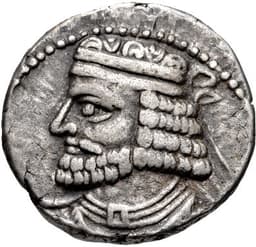
Vologases I of Parthia
Emperor · Ancient
55.3Total
Basic Information
Born
-1010
25
Died
-970
78
Era
Ancient
Ancient
Nationality
Israel
Parthian Empire
Occupation
Emperor
Emperor
Civilization
Middle Eastern
Middle Eastern
Score Comparison
Military (10%)
72.0
52.5
Political (20%)
72.0
68.0
Influence (20%)
88.0
52.5
Legacy (20%)
70.0
45.0
Leadership (15%)
72.0
68.0
Strategy (15%)
70.0
52.5
TOTAL
75.3
55.3
King David — Complete Timeline
1010 BC
Anointed as King of JudahPolitical Action◆ Major
After Saul's death, David was anointed king over the tribe of Judah at Hebron. This began a seven-year period of civil war with Ish-bosheth, Saul's son, who ruled the northern tribes, leading to the eventual unification of Israel.
KingshipCivil WarJudah
Impact: national
1003 BC
Capture of JerusalemWar
David led his army to capture the Jebusite fortress of Jerusalem, making it the capital of the united kingdom. He brought the Ark of the Covenant there, establishing the city as both the political and religious center of Israel.
JerusalemCapitalArk of the Covenant
Impact: nationalconstructive
1000 BC
Defeat of the PhilistinesWar◆ Major
David fought several campaigns that decisively defeated the Philistines, including the Battle of Baal-perazim. He captured Gath and other Philistine strongholds, ending their dominance over Israel and securing the kingdom's borders.
PhilistinesMilitary CampaignIsrael
Impact: regional
990 BC
Affair with BathshebaPolitical Action◆ Major
David committed adultery with Bathsheba and arranged the death of her husband Uriah the Hittite in battle. The prophet Nathan confronted David, leading to his repentance but also to divine punishment, including the death of their first child.
ScandalBathshebaNathan
Impact: nationaldestructive
978 BC
Revolt of AbsalomWar◆ Major
David's son Absalom led a rebellion that forced David to flee Jerusalem. David's forces under Joab defeated Absalom's army in the Forest of Ephraim, and Absalom was killed. David returned to Jerusalem but the kingdom was weakened.
RebellionCivil WarAbsalom
Impact: nationaltragic
Vologases I of Parthia — Complete Timeline
51 AD
Accession to Parthian ThronePolitical Action◆ Major
Vologases I became king of Parthia after the death of Gotarzes II. He was a member of the Arsacid dynasty and sought to stabilize the empire after years of civil war.
SuccessionDynastic RestorationStabilization
Impact: national
54 AD
Installation of Tiridates I as King of ArmeniaPolitical Action◆ Major
Vologases I installed his brother Tiridates I as king of Armenia, asserting Parthian influence over the region. This act directly challenged Roman authority and led to the Roman-Parthian War of 58-63.
Armenian QuestionDynastic PolicyRoman Challenge
Impact: regional
58 AD
War with Rome under CorbuloWar◆ Major
Vologases I fought a war against Roman forces led by Gnaeus Domitius Corbulo over control of Armenia. The conflict included sieges and battles, with both sides suffering heavy losses.
Roman-Parthian WarsCorbuloArmenian Campaign
Impact: regional
63 AD
Treaty of RhandeiaPolitical Action
Vologases I negotiated the Treaty of Rhandeia with Rome, which recognized Tiridates I as king of Armenia under Roman suzerainty. The treaty ended the war and established a compromise that lasted for decades.
DiplomacyPeace TreatyArmenian Settlement
Impact: regionalconstructive
70 AD
Suppression of Hyrcanian RebellionWar
Vologases I faced a rebellion in the eastern province of Hyrcania, which he suppressed with difficulty. The revolt weakened Parthian control over its eastern territories and diverted resources from the Roman frontier.
RebellionEastern CampaignInternal Conflict
Impact: national
This comparison has not been analyzed yet.
One-time AI generation (~1 minute). Scores and timeline are already available below.
Rankings
🥇
King DavidLeader
Mil: 72.0Pol: 72.0Inf: 88.0
75.3
🥈
Vologases I of Parthia
Mil: 52.5Pol: 68.0Inf: 52.5
55.3
+20.0 behind
How This Comparison Works
Algorithm
Each figure is scored on 6 dimensions (0—100 scale) based on structured historical data: Military (10%), Political (20%), Influence (20%), Legacy (20%), Leadership (15%), Strategy (15%). The weighted total produces the final ranking.
Data Sources
Scores are computed from structured sub-indicators in the database. Scale factors adjust for era (Ancient ×0.85, Modern ×1.0) and civilization size (Eastern ×1.05, Other ×0.80) to account for differences in population and military scale.
Maximum 3 Figures
Comparisons are limited to 2—3 figures to ensure readability and statistical meaningfulness.
Error Margins
±5 points per dimension — Sub-scores are derived from historical records with inherent uncertainty. Two figures within 5 points on a dimension should be considered roughly equivalent in that area.
Total Score Accuracy
±3 points overall — The weighted combination of 6 dimensions produces a total score with approximately ±3 points of uncertainty. Differences of less than 3 points are not statistically significant— the figures are effectively tied.
Known Limitations
- Historical records are incomplete and uneven across civilizations
- Figures from oral-tradition societies may be underrepresented
- Occupation labels can misclassify multi-role figures
- Scores measure capability and impact, not moral character
- Quantitative scoring is a comparison tool, not absolute truth
Capability Radar
Military (10%) — Battles & Warfare
Battles
75
60
Win Rate
85
55
Expansion
80
40
Political (20%) — Governance & Reform
Reform
80
45
Diplomacy
75
70
Economy
70
50
Influence (20%) — Cultural & Global Reach
Cultural
95
40
Global
90
35
Legacy (20%) — Historical Impact
Historical
95
50
Longevity
95
40
Leadership (15%) — Power & Stability
Tenure
85
70
Stability
65
55
Strategy (15%) — Tactics & Innovation
Strategy
85
60
Tactics
80
65
Reform
70
30
Similar Comparisons
Comments & Discussion
No comments yet. Be the first to share your thoughts!