Loading...
This comparison has not been analyzed yet.
One-time AI generation (~1 minute). Scores and timeline are already available below.
King Gongmin vs Wenceslaus IV
King Gongmin leads by 12.5 pts · 2 figures compared
…
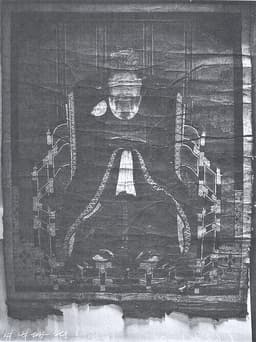
King Gongmin
Emperor · Medieval
57.3Total

Wenceslaus IV
Emperor · Medieval
44.8Total
Basic Information
Born
1330
1361
Died
1374
1419
Era
Medieval
Medieval
Nationality
Korea
Holy Roman Empire
Occupation
Emperor
Emperor
Civilization
Eastern
Western
Score Comparison
Military (10%)
46.7
25.9
Political (20%)
72.0
30.8
Influence (20%)
60.0
53.3
Legacy (20%)
50.0
45.8
Leadership (15%)
72.0
58.8
Strategy (15%)
35.0
39.6
TOTAL
57.3
44.8
King Gongmin — Complete Timeline
1356 AD
Reclamation of Northern TerritoriesWar◆ Major
Gongmin launched military campaigns to reclaim northern territories that had been ceded to the Yuan dynasty. Goryeo forces recaptured the Ssangseong and Dongnyeong regions, restoring the kingdom's traditional borders.
Territorial RecoveryMilitary CampaignExpansion
Impact: regionalconstructive
Expulsion of Mongol OfficialsPolitical Action
King Gongmin expelled Mongol officials and military personnel from Goryeo, ending the Yuan dynasty's direct control over the kingdom. He abolished the Mongol-style administrative offices and reasserted Goryeo's sovereignty.
IndependenceAnti-MongolSovereignty
Impact: nationalprogressive
1360 AD
Promotion of Anti-Mongol ReformsReform◆ Major
Gongmin implemented a series of reforms to eliminate Mongol influence, including restoring Korean names for government offices, reviving Confucian rituals, and promoting native Korean culture. These reforms strengthened national identity.
Cultural RevivalConfucian ReformNationalism
Impact: nationalprogressive
1365 AD
Assassination of Queen NogukOther◆ Major
Queen Noguk, Gongmin's Mongol wife and close advisor, died under mysterious circumstances, possibly by poisoning. Her death deeply affected Gongmin, leading to his increasing paranoia and erratic behavior in later years.
AssassinationRoyal FamilyPersonal Tragedy
Impact: nationaltragic
1374 AD
Assassination of King GongminPolitical Action◆ Major
King Gongmin was assassinated by his eunuchs and close aides, possibly with the involvement of pro-Mongol factions. His death ended the reform era and led to a period of political instability in Goryeo.
AssassinationRegicidePolitical Instability
Impact: nationaltragic
Wenceslaus IV — Complete Timeline
1394 AD
Imprisonment by the Bohemian NobilityPolitical Action
A league of Bohemian nobles, led by the House of Rosenberg, captured Wenceslaus IV and held him prisoner at Wildberg Castle. The nobles demanded greater political influence and the removal of his unpopular advisors. Wenceslaus was released after several months through the intervention of his half-brother Sigismund.
Noble RevoltImprisonmentBohemia
tragic
1400 AD
Deposition as King of the RomansPolitical Action◆ Major
The four Rhenish electors deposed Wenceslaus IV as King of the Romans, citing his incompetence, drunkenness, and failure to maintain peace in the Empire. They elected Rupert of the Palatinate as his successor. Wenceslaus refused to accept the deposition but retained the title of King of Bohemia.
DepositionImperial PoliticsElectors
Impact: regionaltragic
1412 AD
Conflict with Jan HusPolitical Action◆ Major
Wenceslaus IV supported the sale of indulgences by Pope John XXIII to fund a crusade. Jan Hus publicly condemned this practice, leading to a rift between the king and the reformer. Wenceslaus initially protected Hus but later withdrew support under pressure from the clergy.
Hussite MovementReligious ConflictIndulgences
Impact: regionaldestructive
1419 AD
Defenestration of Prague (1419)Political Action
A Hussite procession led by priest Jan
Hussite WarsDefenestrationRevolt
Impact: regionaldestructive
This comparison has not been analyzed yet.
One-time AI generation (~1 minute). Scores and timeline are already available below.
Rankings
🥇
King GongminLeader
Mil: 46.7Pol: 72.0Inf: 60.0
57.3
🥈
Wenceslaus IV
Mil: 25.9Pol: 30.8Inf: 53.3
44.8
+12.5 behind
How This Comparison Works
Algorithm
Each figure is scored on 6 dimensions (0—100 scale) based on structured historical data: Military (10%), Political (20%), Influence (20%), Legacy (20%), Leadership (15%), Strategy (15%). The weighted total produces the final ranking.
Data Sources
Scores are computed from structured sub-indicators in the database. Scale factors adjust for era (Ancient ×0.85, Modern ×1.0) and civilization size (Eastern ×1.05, Other ×0.80) to account for differences in population and military scale.
Maximum 3 Figures
Comparisons are limited to 2—3 figures to ensure readability and statistical meaningfulness.
Error Margins
±5 points per dimension — Sub-scores are derived from historical records with inherent uncertainty. Two figures within 5 points on a dimension should be considered roughly equivalent in that area.
Total Score Accuracy
±3 points overall — The weighted combination of 6 dimensions produces a total score with approximately ±3 points of uncertainty. Differences of less than 3 points are not statistically significant— the figures are effectively tied.
Known Limitations
- Historical records are incomplete and uneven across civilizations
- Figures from oral-tradition societies may be underrepresented
- Occupation labels can misclassify multi-role figures
- Scores measure capability and impact, not moral character
- Quantitative scoring is a comparison tool, not absolute truth
Capability Radar
Military (10%) — Battles & Warfare
Battles
35
20
Win Rate
40
15
Expansion
20
5
Political (20%) — Governance & Reform
Reform
70
30
Diplomacy
65
25
Economy
55
20
Influence (20%) — Cultural & Global Reach
Cultural
50
30
Global
30
20
Legacy (20%) — Historical Impact
Historical
55
40
Longevity
40
35
Leadership (15%) — Power & Stability
Tenure
60
60
Stability
40
15
Strategy (15%) — Tactics & Innovation
Strategy
25
10
Tactics
30
10
Reform
45
5
Similar Comparisons
Comments & Discussion
No comments yet. Be the first to share your thoughts!