Loading...
King Gongmin vs Napoleon Bonaparte
Napoleon Bonaparte leads by 13.6 pts · 2 figures compared
…
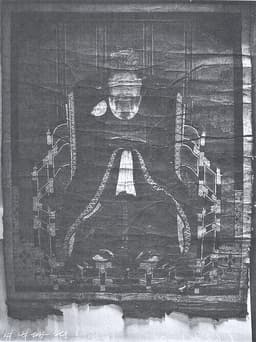
King Gongmin
Emperor · Medieval
57.3Total

Napoleon Bonaparte
General · Modern
70.9Total
Basic Information
Born
1330
1769
Died
1374
1821
Era
Medieval
Modern
Nationality
Korea
France
Occupation
Emperor
General
Civilization
Eastern
Western
Score Comparison
Military (10%)
46.7
94.0
Political (20%)
72.0
72.0
Influence (20%)
60.0
40.0
Legacy (20%)
50.0
80.0
Leadership (15%)
72.0
78.0
Strategy (15%)
35.0
90.0
TOTAL
57.3
70.9
King Gongmin — Complete Timeline
1356 AD
Reclamation of Northern TerritoriesWar◆ Major
Gongmin launched military campaigns to reclaim northern territories that had been ceded to the Yuan dynasty. Goryeo forces recaptured the Ssangseong and Dongnyeong regions, restoring the kingdom's traditional borders.
Territorial RecoveryMilitary CampaignExpansion
Impact: regionalconstructive
Expulsion of Mongol OfficialsPolitical Action
King Gongmin expelled Mongol officials and military personnel from Goryeo, ending the Yuan dynasty's direct control over the kingdom. He abolished the Mongol-style administrative offices and reasserted Goryeo's sovereignty.
IndependenceAnti-MongolSovereignty
Impact: nationalprogressive
1360 AD
Promotion of Anti-Mongol ReformsReform◆ Major
Gongmin implemented a series of reforms to eliminate Mongol influence, including restoring Korean names for government offices, reviving Confucian rituals, and promoting native Korean culture. These reforms strengthened national identity.
Cultural RevivalConfucian ReformNationalism
Impact: nationalprogressive
1365 AD
Assassination of Queen NogukOther◆ Major
Queen Noguk, Gongmin's Mongol wife and close advisor, died under mysterious circumstances, possibly by poisoning. Her death deeply affected Gongmin, leading to his increasing paranoia and erratic behavior in later years.
AssassinationRoyal FamilyPersonal Tragedy
Impact: nationaltragic
1374 AD
Assassination of King GongminPolitical Action◆ Major
King Gongmin was assassinated by his eunuchs and close aides, possibly with the involvement of pro-Mongol factions. His death ended the reform era and led to a period of political instability in Goryeo.
AssassinationRegicidePolitical Instability
Impact: nationaltragic
Napoleon Bonaparte — Complete Timeline
1799 AD
Coup of 18 BrumaireOther◆ Major
Napoleon Bonaparte, with support from his brother Lucien and key political figures, overthrew the Directory in a bloodless coup. He established the Consulate with himself as First Consul, effectively becoming the ruler of France. This event ended the French Revolution's most unstable period.
French RevolutionCoupRise to Power
Impact: regional
1804 AD
Promulgation of the Napoleonic CodeOther◆ Major
Napoleon enacted the Civil Code of the French, known as the Napoleonic Code, a comprehensive set of laws that replaced the fragmented feudal legal systems. The code established legal equality, protected property rights, and secularized law. It became the basis for legal systems in many European and world countries.
Legal ReformNapoleonic CodeCivil Law
Impact: globalconstructive
1805 AD
Battle of AusterlitzWar◆ Major
Napoleon's Grande Arm
Napoleonic WarsBattleDecisive Victory
Impact: global
1812 AD
Invasion of RussiaWar◆ Major
Napoleon led the Grande Arm
Napoleonic WarsInvasionDisaster
Impact: globaldestructive
1815 AD
Battle of WaterlooWar◆ Major
Napoleon's French army was defeated by the combined forces of the Duke of Wellington's Anglo-Allied army and Gebhard Leberecht von Bl
Napoleonic WarsBattleFinal Defeat
Impact: globaldestructive
Expert Analysis
king-gongmin-vs-napoleon-bonaparte
# The Emperor and the General: Two Paths to Power, One Fateful Difference
On a spring morning in 1815, Napoleon Bonaparte stood before his army, the tricolor snapping in the wind, ready to reclaim an empire he had lost only months before. Half a millennium earlier and half a world away, King Gongmin of Goryeo woke in his palace, surrounded by eunuchs whose loyalty he trusted with his life. One would die in exile on a remote Atlantic island, the other would be murdered by those same trusted servants. Both men sought to liberate their nations from foreign domination. Why did one become a legend while the other became a footnote?
Origins
Napoleon was born in 1769 on Corsica, a Mediterranean island that had been French for barely a year. His family was minor nobility, poor enough to resent the French but ambitious enough to seek advancement within their system. The France of his youth was a powder keg of Enlightenment ideas and feudal grievances, a society that would explode into revolution when he was twenty.
King Gongmin was born in 1330 into the heart of the Goryeo dynasty, a kingdom that had existed for over four centuries. But by his time, Goryeo was a shadow state, ruled in practice by the Mongol Yuan dynasty, whose armies had crushed Korean resistance generations earlier. As a prince, Gongmin was sent to the Yuan court as a hostage, forced to marry a Mongol princess, Noguk, and to witness firsthand the humiliation of his people.
Their eras shaped them in opposite ways. Napoleon came of age in a world of collapsing certainties, where a brilliant commoner could rise to the top. Gongmin inherited a world of frozen hierarchies, where a king was expected to bow to foreign emperors. One was forged by opportunity, the other by oppression.
Rise to Power
Napoleon’s ascent was a masterpiece of timing and talent. In 1793, at age twenty-four, he drove British forces from the port of Toulon, earning promotion to brigadier general. By 1796, he commanded the French army in Italy, where his lightning campaigns stunned Europe. He was not yet thirty when he seized control of France in 1799, crowning himself emperor five years later.
Gongmin’s path was entirely different. He became king at twenty-one, in 1351, but his throne was a gilded cage. Mongol officials controlled his court, his treasury, and his army. For the first five years of his reign, he could do little but wait and plan. His rise was not a conquest but a slow, patient accumulation of trust and allies.
The key difference lies in their turning points. Napoleon’s came when he chose to bombard his own countrymen during the Vendée uprising and later when he turned his cannons on the Paris mob in 1795—a willingness to use violence against any enemy. Gongmin’s turning point came in 1356, when he finally expelled Mongol officials from his court, reclaiming northern territories through military campaigns. Napoleon seized power; Gongmin had to steal it back.
Leadership & Governance
As a military leader, Napoleon was a force of nature. His 94.0 military score and 93.0 strategy rating reflect campaigns that rewrote the rules of war. He used speed, deception, and overwhelming force at decisive points. At Austerlitz in 1805, he lured the combined Russian and Austrian armies into a trap, crushing them with a feigned retreat that became the stuff of legend.
As a ruler, he was equally transformative. The Napoleonic Code standardized French law, abolished feudal privileges, and established merit-based advancement. He built roads, schools, and banks. But his political score of 75.0 hints at his fatal flaw: he could conquer but not consolidate. His empire was held together by his personal genius, not by institutions that could survive him.
King Gongmin’s leadership was subtler. His 32.7 military score and 64.0 strategy rating show a ruler who was no battlefield commander. Instead, he fought with decrees and symbols. He restored Korean names for government offices, replaced Mongol-style clothing with traditional Korean dress, and promoted Confucian scholarship. His political score of 71.6 reflects a man who understood that true independence required cultural renewal, not just military victories.
Where Napoleon built an empire, Gongmin rebuilt a nation. One expanded, the other reclaimed.
Triumph & Tragedy
Napoleon’s greatest moment was not a battle but a coronation. In 1804, in Notre-Dame Cathedral, he took the crown from Pope Pius VII and placed it on his own head. It was a gesture that defined his rule: he would owe nothing to God or man.
His greatest failure was the invasion of Russia in 1812. He marched 600,000 men into the endless winter and returned with fewer than 100,000. It was a defeat born of arrogance—he believed his genius could overcome geography and weather.
Gongmin’s triumph came in 1356, when he reclaimed the northern territories his ancestors had lost. For the first time in generations, Goryeo controlled its own borders.
His tragedy was the death of Queen Noguk in 1365. She was his closest advisor, his link to the Mongol court, and possibly the only person he truly trusted. After her death, he descended into paranoia and grief, neglecting affairs of state. In 1374, his own eunuchs murdered him in his bed. The reforms he had championed were reversed by his successors.
Character & Destiny
Napoleon was driven by an insatiable hunger for glory. “I live only for posterity,” he once said, and he meant it. His character was a paradox: a genius who could inspire loyalty and hatred in equal measure, a reformer who destroyed freedom in the name of order. His destiny was to be the man who remade Europe, only to be broken by it.
Gongmin was driven by a quieter force: the desire to restore what had been taken. He was a reformer, not a conqueror, a king who ruled through symbols and institutions rather than armies. His character was shaped by patience and grief, not ambition. His destiny was to be a martyr for Korean independence, remembered but not celebrated.
Legacy
Napoleon’s legacy is written across Europe. The Napoleonic Code influenced civil law in dozens of countries. His military innovations are still studied. His total score of 82.4 reflects a figure who changed the world, for better or worse.
Gongmin’s legacy is more fragile. His 66.6 total score and 69.1 legacy rating show a figure remembered within Korea but largely unknown outside it. Yet his work mattered: he laid the groundwork for the Joseon dynasty that would follow, a dynasty that would rule Korea for five centuries and create the cultural identity that survives today.
Conclusion
Standing at the end of their stories, we see two men who faced the same fundamental challenge: how to free their nations from foreign domination. Napoleon tried to conquer the world. Gongmin tried to reclaim his own. One burned like a comet, the other smoldered like embers. Their different scores reflect not just their abilities but the different worlds they inhabited—and the different meanings of freedom they pursued.
In the end, Napoleon’s tragedy was that he could never stop conquering. Gongmin’s tragedy was that he stopped too soon. Between those two poles lies the entire drama of human ambition: the endless question of how much is enough, and the terrible price of getting the answer wrong.
Rankings
🥇
Napoleon BonaparteLeader
Mil: 94.0Pol: 72.0Inf: 40.0
70.9
🥈
King Gongmin
Mil: 46.7Pol: 72.0Inf: 60.0
57.3
+13.6 behind
How This Comparison Works
Algorithm
Each figure is scored on 6 dimensions (0—100 scale) based on structured historical data: Military (10%), Political (20%), Influence (20%), Legacy (20%), Leadership (15%), Strategy (15%). The weighted total produces the final ranking.
Data Sources
Scores are computed from structured sub-indicators in the database. Scale factors adjust for era (Ancient ×0.85, Modern ×1.0) and civilization size (Eastern ×1.05, Other ×0.80) to account for differences in population and military scale.
Maximum 3 Figures
Comparisons are limited to 2—3 figures to ensure readability and statistical meaningfulness.
Error Margins
±5 points per dimension — Sub-scores are derived from historical records with inherent uncertainty. Two figures within 5 points on a dimension should be considered roughly equivalent in that area.
Total Score Accuracy
±3 points overall — The weighted combination of 6 dimensions produces a total score with approximately ±3 points of uncertainty. Differences of less than 3 points are not statistically significant— the figures are effectively tied.
Known Limitations
- Historical records are incomplete and uneven across civilizations
- Figures from oral-tradition societies may be underrepresented
- Occupation labels can misclassify multi-role figures
- Scores measure capability and impact, not moral character
- Quantitative scoring is a comparison tool, not absolute truth
Capability Radar
Military (10%) — Battles & Warfare
Battles
35
95
Win Rate
40
90
Expansion
20
95
Political (20%) — Governance & Reform
Reform
70
95
Diplomacy
65
80
Economy
55
85
Influence (20%) — Cultural & Global Reach
Cultural
50
85
Global
30
90
Legacy (20%) — Historical Impact
Historical
55
95
Longevity
40
90
Leadership (15%) — Power & Stability
Tenure
60
85
Stability
40
70
Strategy (15%) — Tactics & Innovation
Strategy
25
95
Tactics
30
98
Reform
45
92
Similar Comparisons
Comments & Discussion
RevolutionaryEcho6/17/2026
Corsica boy beat the system; Goryeo's king got eaten by it. Napoleon rode revolutionary waves to dictatorship while Gongmin inherited a Mongol puppet state. Both fought foreign dominance — Napoleon actually exported revolution, Gongmin just kicked out the Yuan to restore a feudal wreck. One conquered Europe, the other couldn't even keep his eunuchs loyal. Level playing field my ass.
数据侦探6/17/2026
这对比简直是选择性失明。拿欧洲舞台主角跟小国空降兵比?拿破仑输了滑铁卢回巴黎还能再组织军队,Gongmin输了红巾军入侵就差点亡国。你把拿破仑扔到1330年高丽,他连蒙古骑兵都打不过,别说搞什么法典改革了。底层变量都不一样,比个毛线。
ClassicsSkeptic6/17/2026
Sorry, but comparing a military titan who redrew Europe's maps to a medieval king who barely held his crumbling dynasty together? Napoleon's legal code still runs half the world; Gongmin's reforms lasted about five minutes after his murder. One taught us how to govern, the other taught us that trusting eunuchs is a dumb idea.
改朝换代观察者6/17/2026
说真的,Gongmin的悲剧让人同情,但他在历史教科书里都活不过一页纸是有原因的。Napoleon输了也留下神话,Gongmin赢了也没改变高丽注定被李氏取代的命运。区别不是实力,是历史需要英雄还是需要警示牌。