Loading...
This comparison has not been analyzed yet.
One-time AI generation (~1 minute). Scores and timeline are already available below.
King Gwanggaeto the Great vs Marcian
King Gwanggaeto the Great leads by 4.6 pts · 2 figures compared
…

King Gwanggaeto the Great
Emperor · Ancient
59.6Total
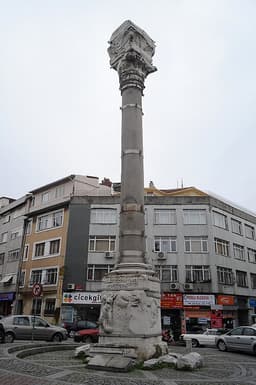
Marcian
Emperor · Ancient
55.0Total
Basic Information
Born
374
392
Died
413
457
Era
Ancient
Ancient
Nationality
Korea
Byzantine Empire
Occupation
Emperor
Emperor
Civilization
Eastern
Western
Score Comparison
Military (10%)
75.0
47.5
Political (20%)
45.0
61.3
Influence (20%)
58.3
56.4
Legacy (20%)
52.0
48.3
Leadership (15%)
72.0
65.7
Strategy (15%)
70.0
50.0
TOTAL
59.6
55.0
King Gwanggaeto the Great — Complete Timeline
391 AD
Conquered the Han River BasinWar
Gwanggaeto the Great led a campaign to seize the Han River basin from Baekje. This strategic region gave Goguryeo control over trade routes and access to the Yellow Sea, boosting its economic power.
Territorial ExpansionGoguryeoWar
Impact: regionalconstructive
395 AD
Subjugated the Khitan TribesWar◆ Major
Gwanggaeto launched a campaign against the Khitan tribes in Manchuria, defeating them and incorporating their lands into Goguryeo. This expanded Goguryeo's territory northward and secured its borders.
WarKhitanManchuria
Impact: regionalconstructive
400 AD
Defeated the Japanese Invasion of SillaWar◆ Major
Gwanggaeto sent 50,000 troops to aid the Silla kingdom against a Japanese invasion. The Goguryeo army expelled the Japanese forces, securing Silla as a tributary ally and extending Goguryeo's influence.
WarSillaJapan
Impact: regionalconstructive
410 AD
Expanded Goguryeo to Its Greatest ExtentWar
By the end of his reign, Gwanggaeto had expanded Goguryeo to control most of the Korean Peninsula and parts of Manchuria. His empire became the largest in Korean history, dominating Northeast Asia.
Territorial ExpansionGoguryeoEmpire
Impact: regionalconstructive
414 AD
Erected the Gwanggaeto SteleCultural◆ Major
Gwanggaeto's son commissioned a stele in Ji'an, China, recording the king's conquests and achievements. The stele provides crucial historical evidence of Goguryeo's military campaigns and territorial extent.
SteleInscriptionHistory
Impact: regionalconstructive
Marcian — Complete Timeline
450 AD
Refused tribute to Attila the HunPolitical Action
Upon becoming Eastern Roman Emperor, Marcian reversed the policy of paying tribute to Attila the Hun. He declared that he had gold for his friends but iron for his enemies. This defiance marked a shift in Eastern policy and contributed to Attila's decision to invade the West.
Foreign PolicyHunnic Wars
Impact: regionalconstructive
451 AD
Convened the Council of ChalcedonCultural
Marcian convened the Council of Chalcedon, the fourth ecumenical council. The council condemned the Monophysite heresy and defined the Chalcedonian Creed, which affirmed the two natures of Christ. This decision had lasting theological and political consequences for the Christian world.
Ecumenical CouncilChristian TheologyReligious Policy
Impact: globalconstructive
452 AD
Stabilized the Eastern Empire's financesReform◆ Major
Marcian implemented fiscal reforms that stabilized the Eastern Roman Empire's economy. He abolished the tax on the city of Constantinople and reduced state expenditures, leaving a substantial treasury surplus upon his death.
Economic ReformFiscal Policy
Impact: nationalconstructive
This comparison has not been analyzed yet.
One-time AI generation (~1 minute). Scores and timeline are already available below.
Rankings
🥇
King Gwanggaeto the GreatLeader
Mil: 75.0Pol: 45.0Inf: 58.3
59.6
🥈
Marcian
Mil: 47.5Pol: 61.3Inf: 56.4
55.0
+4.6 behind
How This Comparison Works
Algorithm
Each figure is scored on 6 dimensions (0—100 scale) based on structured historical data: Military (10%), Political (20%), Influence (20%), Legacy (20%), Leadership (15%), Strategy (15%). The weighted total produces the final ranking.
Data Sources
Scores are computed from structured sub-indicators in the database. Scale factors adjust for era (Ancient ×0.85, Modern ×1.0) and civilization size (Eastern ×1.05, Other ×0.80) to account for differences in population and military scale.
Maximum 3 Figures
Comparisons are limited to 2—3 figures to ensure readability and statistical meaningfulness.
Error Margins
±5 points per dimension — Sub-scores are derived from historical records with inherent uncertainty. Two figures within 5 points on a dimension should be considered roughly equivalent in that area.
Total Score Accuracy
±3 points overall — The weighted combination of 6 dimensions produces a total score with approximately ±3 points of uncertainty. Differences of less than 3 points are not statistically significant— the figures are effectively tied.
Known Limitations
- Historical records are incomplete and uneven across civilizations
- Figures from oral-tradition societies may be underrepresented
- Occupation labels can misclassify multi-role figures
- Scores measure capability and impact, not moral character
- Quantitative scoring is a comparison tool, not absolute truth
Capability Radar
Military (10%) — Battles & Warfare
Battles
85
20
Win Rate
90
30
Expansion
90
10
Political (20%) — Governance & Reform
Reform
65
50
Diplomacy
70
65
Economy
60
30
Influence (20%) — Cultural & Global Reach
Cultural
75
55
Global
65
45
Legacy (20%) — Historical Impact
Historical
80
60
Longevity
70
50
Leadership (15%) — Power & Stability
Tenure
75
40
Stability
70
45
Strategy (15%) — Tactics & Innovation
Strategy
85
35
Tactics
80
25
Reform
70
10
Similar Comparisons
Comments & Discussion
No comments yet. Be the first to share your thoughts!