Loading...
King Sejong the Great vs Sebuk Tigin
King Sejong the Great leads by 18.9 pts · 2 figures compared
…

King Sejong the Great
Emperor · Medieval
74.9Total
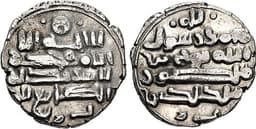
Sebuk Tigin
Emperor · Medieval
56.0Total
Basic Information
Born
1397
942
Died
1450
997
Era
Medieval
Medieval
Nationality
Korea
Ghaznavid Empire
Occupation
Emperor
Emperor
Civilization
Eastern
Middle Eastern
Score Comparison
Military (10%)
55.0
72.5
Political (20%)
78.0
68.0
Influence (20%)
85.0
58.0
Legacy (20%)
75.0
49.2
Leadership (15%)
78.0
40.0
Strategy (15%)
60.0
57.5
TOTAL
74.9
56.0
King Sejong the Great — Complete Timeline
1441 AD
Development of the Cheugugi (Rain Gauge)Invention◆ Major
Sejong's court invented the cheugugi, the world's first standardized rain gauge, to improve agricultural planning and tax assessment. This scientific instrument was distributed across the kingdom, enabling systematic weather data collection and enhancing state capacity to manage crop yields.
Scientific InstrumentAgricultureInnovation
Impact: nationalconstructive
1443 AD
Creation of Hangul (Hunminjeongeum)Invention
King Sejong oversaw the creation of Hangul, the Korean alphabet, promulgated in 1446 as the Hunminjeongeum. The script was designed to be easily learned by commoners, dramatically increasing literacy rates and fostering a distinct Korean cultural identity, separate from Chinese characters.
AlphabetLiteracyCultural Identity
Impact: nationalconstructive
1446 AD
Promulgation of the Gyeongguk Daejeon (National Code)Reform◆ Major
Sejong initiated the compilation of the Gyeongguk Daejeon, a comprehensive legal code that systematized Joseon's government and laws. Although completed after his death, it became the foundational legal document of the dynasty, centralizing royal authority and standardizing administration.
Legal ReformGovernanceJoseon Dynasty
Impact: nationalconstructive
Sebuk Tigin — Complete Timeline
977 AD
Consolidation of the Ghaznavid StatePolitical Action◆ Major
Sebuk Tigin succeeded his father-in-law Alp Tigin as ruler of Ghazni and consolidated the Ghaznavid state. He defeated rival Turkic commanders, secured the borders against the Samanids and Karakhanids, and established a stable succession.
ConsolidationGhaznavidSuccession
Impact: regionalconstructive
986 AD
Expansion into IndiaWar◆ Major
Sebuk Tigin launched the first Ghaznavid campaigns into the Indian subcontinent, defeating the Hindu Shahi kingdom of Kabul. He annexed the region of Peshawar and established Ghaznavid control over the Khyber Pass, opening the way for future invasions.
Indian CampaignHindu ShahiExpansion
Impact: regional
994 AD
Defeat of the Samanids at the Battle of BalkhWar
Sebuk Tigin allied with the Samanid ruler Nuh II to defeat the rebel Fa'iq at Balkh. This victory secured Ghaznavid influence over Khorasan and marked the beginning of Ghaznavid expansion into Central Asia.
BattleSamanidKhorasan
Impact: regional
Expert Analysis
Origins
King Sejong the Great was born in 1397 as the third son of King Taejong of Joseon, Korea. His early education emphasized Confucian scholarship, and he was groomed for leadership despite not being the eldest. His father Taejong had consolidated power through purges, and Sejong ascended the throne in 1418 at age 21, inheriting a stable but centralized state. Sejong's intellectual curiosity was nurtured by scholars like Jeong Do-jeon and Hwang Hui, who later became key advisors.
Sebuk Tigin (also Sabuktigin) was born around 942 in what is now Kyrgyzstan, likely of Turkic slave origin. He was purchased as a military slave (ghulam) by Alp Tigin, the Samanid governor of Ghazni. Through military prowess, he rose to become Alp Tigin's son-in-law and successor. His early life was shaped by the volatile politics of the Samanid Empire and the frontier warfare of Central Asia.
Rise to Power
Sejong became king in 1418 after his father Taejong abdicated. His early reign focused on consolidating royal authority while fostering scholarly projects. He established the Jiphyeonjeon (Hall of Worthies) in 1420, a research institute that attracted the brightest minds. This institution became the engine for his cultural and scientific reforms. Key turning points included the 1423 revision of the criminal code and the 1429 publication of a farming guide.
Sebuk Tigin rose to power after Alp Tigin's death in 963. He faced rival Turkic commanders but ultimately secured Ghazni. In 977, he was recognized as the de facto ruler. His major turning point came in 986–987 when he launched campaigns into India, defeating the Hindu Shahi king Jayapala. This victory opened the door for Ghaznavid expansion and established his reputation as a military commander. He also allied with the Samanid ruler Nuh II to defeat rebels at the Battle of Balkh in 994, securing Ghaznavid influence in Khorasan.
Leadership & Governance
Sejong's leadership was intellectual and bureaucratic. He personally oversaw the creation of Hangul in 1443, promulgated in 1446 as the Hunminjeongeum. He also initiated the compilation of the Gyeongguk Daejeon (National Code), though it was completed after his death. His governance emphasized Confucian ideals, with policies to improve agriculture, such as the development of the cheugugi (rain gauge) in 1441. He also reformed taxation and promoted astronomy, resulting in the creation of celestial globes and calendars. Sejong's military score of 55.0 reflects his focus on defense rather than expansion, including the strengthening of northern borders against the Jurchens.
Sebuk Tigin was a military ruler who consolidated the Ghaznavid state through warfare and alliances. He expanded the Ghaznavid domain into India, capturing territory from the Hindu Shahi kingdom. He also defeated rival Turkic commanders and secured Ghazni's independence from the Samanids. His governance was typical of medieval Islamic states, relying on a slave army (ghulams) and tribute from conquered regions. He did not initiate major administrative or cultural reforms. His political score of 68.0 indicates effective statecraft, but his leadership score of 40.0 suggests a lack of broader vision beyond conquest.
Triumph & Tragedy
Sejong's greatest triumph is the creation of Hangul, which revolutionized Korean literacy and remains the nation's script. His scientific contributions, like the rain gauge and improved calendars, boosted agricultural productivity. His legal code laid the foundation for Joseon bureaucracy. However, his reign saw the tragic suppression of Buddhism in favor of Confucianism, leading to the destruction of many temples. Additionally, his border campaigns against the Jurchens were not decisive, and his military score of 55.0 reflects limited territorial gains.
Sebuk Tigin's triumph was his successful expansion into India, which brought wealth and prestige to Ghazni. His defeat of the Hindu Shahi kingdom opened the subcontinent to future Ghaznavid raids. However, his legacy is overshadowed by his son Mahmud of Ghazni, who became far more famous. Sebuk Tigin's failure was his inability to establish a lasting administrative system; the empire remained fragile and reliant on plunder. His low legacy score of 49.2 indicates his relative obscurity compared to his son.
Character & Destiny
Sejong was known as a benevolent and scholarly ruler, deeply committed to the welfare of his people. His decision to create Hangul was driven by compassion for commoners who struggled with Chinese characters. He also showed humility, often seeking advice from scholars. His character shaped a reign focused on cultural and scientific advancement rather than military glory. Historical assessments praise him as one of Korea's greatest rulers, with a total score of 74.9 reflecting his high influence and legacy.
Sebuk Tigin was a pragmatic and ambitious commander, typical of the ghulam military elite. His rise from slavery to power shaped a ruthless and calculating personality. He prioritized military expansion and personal power over institutional development. His destiny was to be a stepping stone for his son Mahmud, who overshadowed him. His total score of 56.0 indicates a competent but not exceptional ruler.
Legacy
Sejong's legacy is immense. Hangul is used by over 75 million people today, and his scientific instruments are celebrated in Korean history. The Gyeongguk Daejeon influenced Korean law for centuries. He is consistently ranked as the most revered monarch in Korean history, with statues and a national holiday (Hangul Day) commemorating his achievements. His influence score of 85.0 reflects this enduring impact.
Sebuk Tigin's legacy is more limited. He is remembered as the founder of the Ghaznavid dynasty's Indian expansion, but his son Mahmud is far more famous. His conquests laid the groundwork for later Islamic invasions of India, but his name is little known outside specialist circles. His legacy score of 49.2 is modest.
Conclusion
King Sejong the Great had a greater impact than Sebuk Tigin. Sejong's creation of Hangul alone transformed Korean society and endures to this day, while his scientific and legal reforms had lasting effects. Sebuk Tigin's military achievements, though significant, were eclipsed by his son and did not produce lasting cultural or administrative innovations. Sejong's total score of 74.9 far exceeds Sebuk Tigin's 56.0, and his influence and legacy scores are substantially higher. In the contest between a cultural innovator and a military conqueror, the former's contributions proved more durable and beneficial to humanity.
Rankings
🥇
King Sejong the GreatLeader
Mil: 55.0Pol: 78.0Inf: 85.0
74.9
🥈
Sebuk Tigin
Mil: 72.5Pol: 68.0Inf: 58.0
56.0
+18.9 behind
How This Comparison Works
Algorithm
Each figure is scored on 6 dimensions (0—100 scale) based on structured historical data: Military (10%), Political (20%), Influence (20%), Legacy (20%), Leadership (15%), Strategy (15%). The weighted total produces the final ranking.
Data Sources
Scores are computed from structured sub-indicators in the database. Scale factors adjust for era (Ancient ×0.85, Modern ×1.0) and civilization size (Eastern ×1.05, Other ×0.80) to account for differences in population and military scale.
Maximum 3 Figures
Comparisons are limited to 2—3 figures to ensure readability and statistical meaningfulness.
Error Margins
±5 points per dimension — Sub-scores are derived from historical records with inherent uncertainty. Two figures within 5 points on a dimension should be considered roughly equivalent in that area.
Total Score Accuracy
±3 points overall — The weighted combination of 6 dimensions produces a total score with approximately ±3 points of uncertainty. Differences of less than 3 points are not statistically significant— the figures are effectively tied.
Known Limitations
- Historical records are incomplete and uneven across civilizations
- Figures from oral-tradition societies may be underrepresented
- Occupation labels can misclassify multi-role figures
- Scores measure capability and impact, not moral character
- Quantitative scoring is a comparison tool, not absolute truth
Capability Radar
Military (10%) — Battles & Warfare
Battles
30
55
Win Rate
40
60
Expansion
20
65
Political (20%) — Governance & Reform
Reform
90
45
Diplomacy
70
50
Economy
85
55
Influence (20%) — Cultural & Global Reach
Cultural
95
40
Global
85
40
Legacy (20%) — Historical Impact
Historical
90
50
Longevity
95
45
Leadership (15%) — Power & Stability
Tenure
80
60
Stability
85
55
Strategy (15%) — Tactics & Innovation
Strategy
40
55
Tactics
35
50
Reform
50
40
Similar Comparisons
Comments & Discussion
No comments yet. Be the first to share your thoughts!