Loading...
King Sejong the Great vs Theudelinda
King Sejong the Great leads by 24.7 pts · 2 figures compared
…

King Sejong the Great
Emperor · Medieval
74.9Total
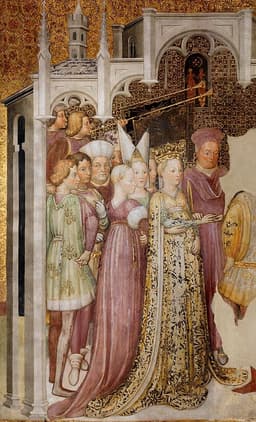
Theudelinda
Emperor · Medieval
50.2Total
Basic Information
Born
1397
570
Died
1450
628
Era
Medieval
Medieval
Nationality
Korea
Lombards
Occupation
Emperor
Emperor
Civilization
Eastern
Western
Score Comparison
Military (10%)
55.0
21.2
Political (20%)
78.0
68.0
Influence (20%)
85.0
56.4
Legacy (20%)
75.0
48.3
Leadership (15%)
78.0
53.2
Strategy (15%)
60.0
36.8
TOTAL
74.9
50.2
King Sejong the Great — Complete Timeline
1441 AD
Development of the Cheugugi (Rain Gauge)Invention◆ Major
Sejong's court invented the cheugugi, the world's first standardized rain gauge, to improve agricultural planning and tax assessment. This scientific instrument was distributed across the kingdom, enabling systematic weather data collection and enhancing state capacity to manage crop yields.
Scientific InstrumentAgricultureInnovation
Impact: nationalconstructive
1443 AD
Creation of Hangul (Hunminjeongeum)Invention
King Sejong oversaw the creation of Hangul, the Korean alphabet, promulgated in 1446 as the Hunminjeongeum. The script was designed to be easily learned by commoners, dramatically increasing literacy rates and fostering a distinct Korean cultural identity, separate from Chinese characters.
AlphabetLiteracyCultural Identity
Impact: nationalconstructive
1446 AD
Promulgation of the Gyeongguk Daejeon (National Code)Reform◆ Major
Sejong initiated the compilation of the Gyeongguk Daejeon, a comprehensive legal code that systematized Joseon's government and laws. Although completed after his death, it became the foundational legal document of the dynasty, centralizing royal authority and standardizing administration.
Legal ReformGovernanceJoseon Dynasty
Impact: nationalconstructive
Theudelinda — Complete Timeline
589 AD
Marriage to AuthariPolitical Action◆ Major
Theudelinda married Lombard King Authari, strengthening ties between the Lombards and Bavarians. After Authari's death, she married his successor Agilulf, ensuring political continuity and promoting Catholic conversion.
Marriage AllianceDynastic PoliticsLombard Kingdom
Impact: nationalconstructive
590 AD
Promotion of Catholic ConversionCultural◆ Major
Theudelinda used her influence as queen to promote the conversion of the Lombards from Arianism to Catholicism. She corresponded with Pope Gregory I and supported the construction of Catholic churches, including the Basilica of Saint John in Monza.
Religious ConversionCatholic ChurchLombard Kingdom
Impact: regionalconstructive
595 AD
Construction of the Basilica of Saint John in MonzaCultural
Theudelinda founded the Basilica of Saint John in Monza, which became a major religious center. She donated the Iron Crown of Lombardy to the church, a symbol of Lombard kingship later used for coronations.
Church BuildingPatronageIron Crown
Impact: regionalconstructive
616 AD
Regency for AdaloaldPolitical Action
After Agilulf's death, Theudelinda served as regent for her young son Adaloald. She maintained stability and continued her religious policies, but Adaloald's later mental instability led to his deposition.
RegencyLombard KingdomSuccession
Impact: nationalconstructive
Expert Analysis
Origins
King Sejong the Great (1397–1450) was born as the third son of King Taejong of Joseon, a dynasty that had overthrown Goryeo. His mother, Queen Wongyeong, came from a powerful aristocratic family. Sejong received a rigorous Confucian education, excelling in scholarship and statecraft from an early age. He was appointed crown prince in 1418 and ascended the throne later that year.
Theudelinda (circa 570–627) was a Bavarian princess, daughter of Duke Garibald I of Bavaria. She was raised in a Catholic household amid the Arian Lombards. Her marriage to Lombard King Authari in 589 was a political alliance to strengthen ties between Bavaria and the Lombards. After Authari's death in 590, she married his successor Agilulf, solidifying her influence.
Rise to Power
Sejong became king in 1418 at age 21, but his father Taejong remained the de facto ruler until 1422. Sejong gradually asserted his authority, focusing on internal reforms rather than military expansion. He surrounded himself with talented scholars like Jeong In-ji and Sin Suk-ju, forming the Jiphyeonjeon (Hall of Worthies) to advance research and policy.
Theudelinda's rise came through strategic marriages. She first married Authari, becoming queen of the Lombards. After his death, she married his cousin Agilulf, who became king. She used her position to influence religious policy, corresponding with Pope Gregory I and promoting the conversion of Lombards from Arianism to Catholicism. Her regency for her son Adaloald after Agilulf's death in 616 gave her direct political control.
Leadership & Governance
Sejong's governance was characterized by systematic reform. He ordered the compilation of the Gyeongguk Daejeon (National Code), which codified laws and administrative procedures, though it was completed after his death. He introduced the hopae (identification tag) system to track population and reduce tax evasion. His court invented the cheugugi (rain gauge) in 1441 to improve agricultural planning. He also reformed land taxes and promoted Confucian ethics. His leadership score is 78.0.
Theudelinda's governance focused on religious unity and stability. She used her influence to sway the Lombard court toward Catholicism, building churches and supporting the Roman Church. She corresponded with Pope Gregory I and hosted religious councils. As regent, she maintained peace with the Byzantines and Franks. However, her political score of 68.0 reflects limited institutional reforms compared to Sejong.
Triumph & Tragedy
Sejong's greatest triumph was the creation of Hangul (Hunminjeongeum) in 1446, a phonetic alphabet designed to increase literacy among commoners. It is considered one of the most scientific writing systems in the world. He also advanced astronomy, publishing almanacs and developing the sundial and water clock. However, his military score of 55.0 reflects a lack of major conquests; he did expand Korea's northern borders but faced Japanese pirate raids (wokou). His attempts to reform the tax system met resistance from aristocrats.
Theudelinda's triumph was the successful conversion of many Lombards to Catholicism, which eventually unified the kingdom under a single faith. The Basilica of Saint John in Monza, which she founded, became a major religious center, and she donated the Iron Crown of Lombardy. Her tragedy was the failure of her son Adaloald's reign; he was deposed in 626 due to mental instability, leading to a period of instability. Her influence score is 56.4.
Character & Destiny
Sejong was methodical, scholarly, and empathetic. He prioritized the welfare of his people, as seen in his scientific and linguistic reforms. His decision to create Hangul despite opposition from the literati shows his determination. His character led him to focus on long-term cultural and institutional development rather than military glory. His total score of 74.9 reflects this balanced approach.
Theudelinda was pragmatic and diplomatic, using her marriages to secure power and her religious fervor to convert a kingdom. She corresponded with the Pope and built alliances. However, her reliance on personal influence left no lasting institutional legacy beyond the church. Her total score of 50.2 indicates a more limited impact.
Legacy
Sejong's legacy is immense. Hangul is still used by over 75 million people today. His scientific instruments and legal codes influenced Korea for centuries. He is revered as one of Korea's greatest kings, with his face on the 10,000 won note. His influence score of 85.0 reflects this enduring impact.
Theudelinda's legacy is primarily religious. The conversion of the Lombards to Catholicism helped shape medieval Italy. The Iron Crown of Lombardy, associated with her, became a symbol of kingship. However, her political and cultural impact is less tangible. Her legacy score is 48.3.
Conclusion
King Sejong the Great had a greater impact, with a total score of 74.9 versus Theudelinda's 50.2. His creation of Hangul alone revolutionized Korean society and literacy, while his scientific and legal reforms had lasting effects. Theudelinda's contributions to Catholic conversion were significant but less transformative in scope. Sejong's influence continues to resonate globally, whereas Theudelinda's is confined to early medieval Italian history. The data supports: Sejong's legacy is more profound and enduring.
Rankings
🥇
King Sejong the GreatLeader
Mil: 55.0Pol: 78.0Inf: 85.0
74.9
🥈
Theudelinda
Mil: 21.2Pol: 68.0Inf: 56.4
50.2
+24.7 behind
How This Comparison Works
Algorithm
Each figure is scored on 6 dimensions (0—100 scale) based on structured historical data: Military (10%), Political (20%), Influence (20%), Legacy (20%), Leadership (15%), Strategy (15%). The weighted total produces the final ranking.
Data Sources
Scores are computed from structured sub-indicators in the database. Scale factors adjust for era (Ancient ×0.85, Modern ×1.0) and civilization size (Eastern ×1.05, Other ×0.80) to account for differences in population and military scale.
Maximum 3 Figures
Comparisons are limited to 2—3 figures to ensure readability and statistical meaningfulness.
Error Margins
±5 points per dimension — Sub-scores are derived from historical records with inherent uncertainty. Two figures within 5 points on a dimension should be considered roughly equivalent in that area.
Total Score Accuracy
±3 points overall — The weighted combination of 6 dimensions produces a total score with approximately ±3 points of uncertainty. Differences of less than 3 points are not statistically significant— the figures are effectively tied.
Known Limitations
- Historical records are incomplete and uneven across civilizations
- Figures from oral-tradition societies may be underrepresented
- Occupation labels can misclassify multi-role figures
- Scores measure capability and impact, not moral character
- Quantitative scoring is a comparison tool, not absolute truth
Capability Radar
Military (10%) — Battles & Warfare
Battles
30
10
Win Rate
40
10
Expansion
20
10
Political (20%) — Governance & Reform
Reform
90
55
Diplomacy
70
70
Economy
85
50
Influence (20%) — Cultural & Global Reach
Cultural
95
50
Global
85
30
Legacy (20%) — Historical Impact
Historical
90
50
Longevity
95
40
Leadership (15%) — Power & Stability
Tenure
80
60
Stability
85
60
Strategy (15%) — Tactics & Innovation
Strategy
40
10
Tactics
35
10
Reform
50
10
Similar Comparisons
Comments & Discussion
No comments yet. Be the first to share your thoughts!