Loading...
King Wen of Zhou vs Tudhaliya I
King Wen of Zhou leads by 0.9 pts · 2 figures compared
…
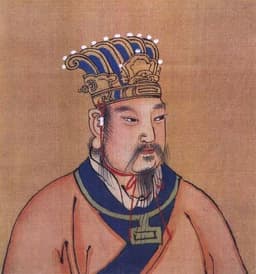
King Wen of Zhou
Emperor · Ancient
57.5Total
Tudhaliya I
Emperor · Ancient
56.6Total
Basic Information
Born
-1152
-1430
Died
-1056
-1400
Era
Ancient
Ancient
Nationality
China
Hittite Empire
Occupation
Emperor
Emperor
Civilization
Eastern
Middle Eastern
Score Comparison
Military (10%)
38.3
70.0
Political (20%)
72.0
53.8
Influence (20%)
65.0
54.1
Legacy (20%)
65.0
50.0
Leadership (15%)
40.0
70.0
Strategy (15%)
43.3
50.0
TOTAL
57.5
56.6
King Wen of Zhou — Complete Timeline
1100 BC
Development of Zhou StatePolitical Action◆ Major
King Wen of Zhou expanded the Zhou state's territory and influence in the Wei River valley. He cultivated alliances with neighboring tribes and prepared the foundation for the eventual overthrow of the Shang dynasty, though he died before achieving it.
Zhou DynastyState BuildingPreparation
Impact: regionalconstructive
Imprisonment by King Zhou of ShangPolitical Action
King Wen was imprisoned by the last Shang ruler, King Zhou, at Youli. During his captivity, he is traditionally said to have studied the I Ching (Book of Changes) and expanded its hexagrams. He was later released after his followers paid tribute.
Shang DynastyImprisonmentI Ching
tragic
Tudhaliya I — Complete Timeline
1430 BC
Foundation of the Hittite New KingdomPolitical Action
Tudhaliya I established the Hittite New Kingdom, ending the period of decline known as the Middle Kingdom. He reorganized the state and initiated a period of renewed military expansion and centralization of power in Hattusa.
Hittite EmpireNew KingdomState Formation
Impact: regionalconstructive
1420 BC
Campaign against AleppoWar◆ Major
Tudhaliya I led a military campaign against the kingdom of Aleppo, a major power in northern Syria. The campaign reasserted Hittite influence in the region and secured control over key trade routes.
Hittite EmpireSyriaMilitary Campaign
Impact: regional
1410 BC
Conquest of ArzawaWar◆ Major
Tudhaliya I launched a successful campaign against the Arzawa states in western Anatolia. This conquest expanded Hittite territory to the Aegean coast and neutralized a major rival.
Hittite EmpireArzawaAnatolia
Impact: regional
Expert Analysis
Origins
King Wen of Zhou, born around 1152 BCE as Chang, was the son of Ji Li, a Zhou tribal leader in the Wei River valley of present-day Shaanxi, China. The Zhou were a vassal state of the Shang dynasty. His father was killed by the Shang king, and Wen inherited a small but growing state. He married Tai Si, a virtuous woman from a powerful clan, and had many children, including the future King Wu. Wen was known for his humility and learning, and he spent his youth studying governance and the ways of ancient sage-kings.
Tudhaliya I, whose birth date is uncertain but likely around 1420 BCE, was a Hittite prince who emerged during the decline of the Hittite Middle Kingdom. The Hittite Empire, centered in Anatolia (modern Turkey), had fragmented after the fall of the Old Kingdom. Tudhaliya claimed descent from the earlier Hittite kings and was likely a grandson of Muwatalli I. He was trained as a military leader and administrator in a period of external threats from the Hurrians and internal strife.
Rise to Power
King Wen gradually expanded Zhou influence through diplomacy and strategic marriages, not large-scale warfare. He attracted talented advisors like Jiang Ziya, whom he met while fishing. Wen's state became a refuge for those fleeing Shang oppression. His rise was cut short when the Shang king Zhou (Di Xin) imprisoned him at Youli around 1078 BCE. During his captivity, Wen studied the I Ching and developed its hexagrams. After his release, he continued building alliances, but died before confronting Shang directly. His son Wu completed the conquest in 1046 BCE at the Battle of Muye.
Tudhaliya I rose by claiming the throne after a period of Hittite weakness. He likely seized power in a coup or civil war, as Hittite records mention a conspiracy against him. Once king, he immediately launched campaigns to restore Hittite authority. He defeated the kingdom of Aleppo around 1370 BCE, reasserting Hittite control in northern Syria. This victory was a turning point that established his legitimacy and brought wealth and prestige.
Leadership & Governance
King Wen's leadership score of 40.0 reflects his more passive style. He governed through moral example and decentralized alliances. He promoted agriculture and justice in Zhou lands, but his main role was as a cultural symbol. His posthumous name 'Wen' means 'civil' or 'cultured', emphasizing his focus on civilization over military might. He did not create a central bureaucracy; instead, he relied on clan loyalty and feudal bonds. His governance laid the groundwork for the Zhou feudal system, where local lords held power under the king.
Tudhaliya I, with a leadership score of 70.0, was a vigorous military commander and state-builder. He reorganized the Hittite army, introduced new tactics, and expanded the empire through conquest. He established a centralized administration with appointed governors, replacing the earlier tribal structure. He also built fortifications and roads to secure conquered territories. His governance was practical and expansionist, focusing on military control rather than cultural or moral influence.
Triumph & Tragedy
King Wen's greatest triumph was laying the ideological foundation for the Zhou dynasty. His son Wu credited Wen with the mandate of heaven theory, which justified the overthrow of Shang. Wen's reputation as a wise and virtuous ruler endured for millennia. His tragedy was his failure to see the conquest; he died before his life's work was complete. Additionally, his passive approach allowed the Shang to remain in power longer than necessary, and his imprisonment could be seen as a strategic blunder.
Tudhaliya I's triumph was the revival of Hittite power. He conquered Aleppo and Arzawa, expanding Hittite territory to the Aegean. He founded the New Kingdom, which lasted over two centuries. His tragedy was that his successors could not maintain his gains. The Arzawa states rebelled, and internal conflicts plagued the dynasty. His military successes were not matched by stable institutions, and his reign ended with assassination? Some records suggest he was murdered, though details are unclear.
Character & Destiny
King Wen was patient, scholarly, and diplomatic. His character shaped his destiny: his non-confrontational approach allowed him to build alliances but also led to his imprisonment. He was revered for his wisdom and virtue, but his lack of direct military action meant he relied on his son to achieve victory. Historical assessments rank him as a cultural hero rather than a conqueror.
Tudhaliya I was ambitious, warlike, and decisive. His character drove him to act boldly, restoring Hittite supremacy through force. However, his aggressive expansion created enemies and overextended resources. His destiny was to be remembered as a founder, but also as a king whose achievements were fragile. Modern historians see him as a pivotal figure who saved the Hittite state from collapse.
Legacy
King Wen's legacy is profound. He is honored as the founder of the Zhou dynasty, which lasted 790 years (the longest in Chinese history). His association with the I Ching made him a central figure in Chinese philosophy. The concept of the Mandate of Heaven, which he inspired, influenced Chinese political thought for centuries. His political score of 72.0 and influence score of 65.0 reflect this enduring impact.
Tudhaliya I's legacy is more limited. He revived the Hittite Empire but his dynasty did not last as long as the Zhou. His military score of 70.0 is high, but his political and influence scores are lower (53.8 and 54.1). He is known primarily to specialists in Hittite history. His conquests were important but did not fundamentally change the region's culture or politics in the way the Zhou did for China.
Conclusion
King Wen of Zhou had greater long-term impact than Tudhaliya I. While Tudhaliya's military achievements were impressive, Wen's political and cultural innovations shaped an entire civilization. The Zhou dynasty's feudal system and moral philosophy became the bedrock of Chinese governance. Tudhaliya's empire, though powerful, collapsed within a few centuries and left less lasting influence. The total score gap of 0.9 points (57.5 vs 56.6) understates Wen's advantage, as his legacy in terms of historical significance and cultural diffusion is far broader. King Wen's approach of building alliances and fostering culture proved more sustainable than Tudhaliya's reliance on conquest. Thus, King Wen of Zhou stands as the more consequential figure.
Rankings
🥇
King Wen of ZhouLeader
Mil: 38.3Pol: 72.0Inf: 65.0
57.5
🥈
Tudhaliya I
Mil: 70.0Pol: 53.8Inf: 54.1
56.6
+0.9 behind
How This Comparison Works
Algorithm
Each figure is scored on 6 dimensions (0—100 scale) based on structured historical data: Military (10%), Political (20%), Influence (20%), Legacy (20%), Leadership (15%), Strategy (15%). The weighted total produces the final ranking.
Data Sources
Scores are computed from structured sub-indicators in the database. Scale factors adjust for era (Ancient ×0.85, Modern ×1.0) and civilization size (Eastern ×1.05, Other ×0.80) to account for differences in population and military scale.
Maximum 3 Figures
Comparisons are limited to 2—3 figures to ensure readability and statistical meaningfulness.
Error Margins
±5 points per dimension — Sub-scores are derived from historical records with inherent uncertainty. Two figures within 5 points on a dimension should be considered roughly equivalent in that area.
Total Score Accuracy
±3 points overall — The weighted combination of 6 dimensions produces a total score with approximately ±3 points of uncertainty. Differences of less than 3 points are not statistically significant— the figures are effectively tied.
Known Limitations
- Historical records are incomplete and uneven across civilizations
- Figures from oral-tradition societies may be underrepresented
- Occupation labels can misclassify multi-role figures
- Scores measure capability and impact, not moral character
- Quantitative scoring is a comparison tool, not absolute truth
Capability Radar
Military (10%) — Battles & Warfare
Battles
20
55
Win Rate
25
60
Expansion
45
60
Political (20%) — Governance & Reform
Reform
70
70
Diplomacy
75
55
Economy
60
50
Influence (20%) — Cultural & Global Reach
Cultural
80
45
Global
75
40
Legacy (20%) — Historical Impact
Historical
85
60
Longevity
90
55
Leadership (15%) — Power & Stability
Tenure
50
60
Stability
65
55
Strategy (15%) — Tactics & Innovation
Strategy
40
55
Tactics
30
50
Reform
35
65
Similar Comparisons
Comments & Discussion
No comments yet. Be the first to share your thoughts!