Loading...
Constantius I vs King Wen of Zhou
Constantius I leads by 0.3 pts · 2 figures compared
…
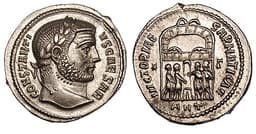
Constantius I
Emperor · Ancient
57.8Total
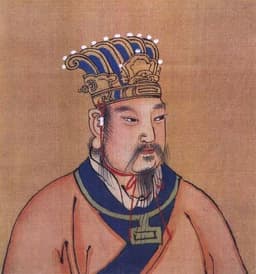
King Wen of Zhou
Emperor · Ancient
57.5Total
Basic Information
Born
250
-1152
Died
306
-1056
Era
Ancient
Ancient
Nationality
Roman Empire
China
Occupation
Emperor
Emperor
Civilization
Western
Eastern
Score Comparison
Military (10%)
50.0
38.3
Political (20%)
68.0
72.0
Influence (20%)
54.9
65.0
Legacy (20%)
50.0
65.0
Leadership (15%)
74.0
40.0
Strategy (15%)
52.5
43.3
TOTAL
57.8
57.5
Constantius I — Complete Timeline
296 AD
Recovery of Britain from Carausius and AllectusWar◆ Major
Constantius I led an invasion to reclaim Britain from the usurper Allectus, who had succeeded Carausius. His forces landed near London and defeated Allectus, restoring Britain to the Roman Empire and ending the breakaway Britannic Empire.
BritainReconquestUsurper
Impact: regionalconstructive
298 AD
Campaign against the AlemanniWar◆ Major
Constantius I defeated the Alemanni at the Battle of Lingones (modern Langres) and later at Vindonissa. These victories secured the Rhine frontier and earned him the title Germanicus Maximus, strengthening his reputation as a capable military commander.
CampaignAlemanniRhine Frontier
Impact: regional
305 AD
Elevation to AugustusPolitical Action◆ Major
Upon the abdication of Diocletian and Maximian, Constantius I became the senior Augustus of the Western Roman Empire as part of the Tetrarchy. He ruled jointly with Galerius in the East, but his reign was short-lived as he died the following year.
TetrarchySuccessionAugustus
Impact: global
306 AD
Death at Eboracum (York)Other◆ Major
Constantius I died at Eboracum (modern York) while on campaign against the Picts in northern Britain. His son Constantine was proclaimed Augustus by the troops, setting the stage for Constantine's eventual rise to sole emperor.
DeathSuccessionConstantine
Impact: global
Toleration of Christians (Edict of Milan precursor)Political Action
Constantius I, unlike his co-emperor Galerius, was tolerant of Christians and did not enforce the Diocletianic persecution in his territories. This policy of religious tolerance foreshadowed the Edict of Milan issued by his son Constantine.
ToleranceChristianityReligion
Impact: regionalconstructive
King Wen of Zhou — Complete Timeline
1100 BC
Development of Zhou StatePolitical Action◆ Major
King Wen of Zhou expanded the Zhou state's territory and influence in the Wei River valley. He cultivated alliances with neighboring tribes and prepared the foundation for the eventual overthrow of the Shang dynasty, though he died before achieving it.
Zhou DynastyState BuildingPreparation
Impact: regionalconstructive
Imprisonment by King Zhou of ShangPolitical Action
King Wen was imprisoned by the last Shang ruler, King Zhou, at Youli. During his captivity, he is traditionally said to have studied the I Ching (Book of Changes) and expanded its hexagrams. He was later released after his followers paid tribute.
Shang DynastyImprisonmentI Ching
tragic
Expert Analysis
Origins
Constantius I (c. 250–306 CE) was born in the Roman province of Moesia (modern Serbia) to a humble family, possibly of Illyrian origin. His early career was military, serving under Emperor Aurelian and later under Diocletian. He rose through the ranks due to his competence and loyalty, eventually being appointed as a Caesar in the Tetrarchy in 293 CE. His marriage to Theodora, stepdaughter of Maximian, tied him to the imperial family.
King Wen of Zhou (c. 1152–1056 BCE) was born as Chang, son of Ji Jili, a Zhou chieftain in the Wei River valley. The Zhou were a vassal state of the Shang dynasty. King Wen inherited his father's position after Jili was executed by the Shang king. He was known for his virtuous rule and for attracting talented advisors, such as Jiang Ziya. His name 'Wen' (meaning 'civil') reflects his cultural and administrative focus.
Rise to Power
Constantius I was appointed Caesar of the Western Roman Empire in 293 CE as part of Diocletian's Tetrarchy, tasked with governing Gaul and Britain. His first major campaign was against the Alemanni, whom he defeated at the Battle of Lingones (modern Langres) in 298 CE. He then focused on recovering Britain from the usurper Allectus, who had succeeded Carausius. In 296 CE, Constantius invaded Britain, landing near London and defeating Allectus's forces, restoring the province to Roman control. Upon the abdication of Diocletian and Maximian in 305 CE, Constantius became the senior Augustus of the West, ruling from Trier.
King Wen rose to prominence by expanding the Zhou state's territory and influence through diplomacy and alliances. He cultivated relationships with neighboring tribes and clans, preparing the ground for overthrowing the Shang. However, his growing power alarmed King Zhou of Shang, who imprisoned him at Youli. During his captivity, King Wen is traditionally said to have studied the I Ching (Book of Changes). After his release, he continued to build alliances and expanded Zhou's territory, but he died before realizing his ambition. His son, King Wu, completed the conquest.
Leadership & Governance
Constantius I's leadership style was moderate and pragmatic. He was known for his tolerance, especially toward Christians, unlike his co-emperor Galerius who enforced the Diocletianic persecution. Constantius did not actively persecute Christians in his territories, which foreshadowed his son Constantine's Edict of Milan. He also maintained stability on the Rhine frontier through military campaigns and diplomacy, securing the empire's borders. His governance focused on administrative efficiency and military preparedness.
King Wen's leadership was characterized by virtue and strategic alliance-building. He is remembered as a wise and just ruler who attracted talented officials. He developed the Zhou state's infrastructure and expanded its influence through marriage alliances and peaceful means. Unlike his Shang counterparts, he emphasized moral authority and cultural development, which later became a cornerstone of Zhou legitimacy. His approach was more civil (wen) than military (wu), as reflected in his posthumous title.
Triumph & Tragedy
Constantius I's greatest success was the recovery of Britain from Allectus and the stabilization of the Rhine frontier. His military victories, such as at Lingones and Vindonissa, secured the western provinces. He also demonstrated political acumen by navigating the Tetrarchy's complex power dynamics. However, his reign was short as Augustus (only one year), and he died unexpectedly at Eboracum (York) while campaigning against the Picts in 306 CE. His son Constantine was proclaimed emperor by his troops, leading to a civil war that Constantius did not live to see.
King Wen's triumph was laying the foundation for the Zhou dynasty, which would rule for nearly 800 years. He expanded Zhou territory, cultivated alliances, and established the moral framework for governance. However, his tragedy was that he never saw the Shang overthrown; he died in prison or shortly after release, leaving the conquest to his son King Wu. His imprisonment by King Zhou of Shang was a personal humiliation, though it later enhanced his legend as a virtuous martyr.
Character & Destiny
Constantius I was a capable and moderate ruler, but his lack of ambition may have limited his impact. He did not seek to overthrow the Tetrarchy or expand the empire aggressively. His destiny was to be a transitional figure, bridging the era of Diocletian's reforms and the rise of Constantine. His tolerance of Christians and support for his son's succession shaped the future of the Roman Empire.
King Wen was a visionary and patient leader, willing to endure imprisonment for his cause. His character emphasized virtue and wisdom, which became central to Zhou ideology. His destiny was to be the patriarch of a dynasty that would define Chinese civilization. Historians credit him with the strategic foresight to prepare the Zhou for conquest, even if he did not live to see it.
Legacy
Constantius I's legacy is often overshadowed by his son Constantine. However, his military campaigns secured the western frontiers, and his religious tolerance paved the way for Christianity's rise. He is remembered as a competent emperor who stabilized the empire during a turbulent time. In historical scores, Constantius I receives a total of 57.8, with high marks in Leadership (74.0) and Political (68.0), but lower in Military (50.0) and Legacy (50.0).
King Wen's legacy is immense: he is revered as the founder of the Zhou dynasty, which established many of the cultural and political institutions of classical China. His association with the I Ching and the concept of the Mandate of Heaven influenced Chinese thought for millennia. His scores reflect this: total 57.5, with high marks in Political (72.0), Influence (65.0), and Legacy (65.0), but lower in Military (38.3) and Leadership (40.0).
Conclusion
While Constantius I and King Wen both achieved significant power, King Wen's long-term impact on civilization was greater. Constantius I's scores are slightly higher overall (57.8 vs 57.5), but King Wen's legacy as the founder of a dynasty that shaped Chinese culture for centuries outweighs Constantius's more immediate but less enduring achievements. Constantius I was a competent administrator and military leader, but his influence was largely transitional. King Wen, by contrast, laid the ideological and political foundation for one of history's longest-lasting dynasties. Therefore, King Wen of Zhou had a greater impact on history.
Rankings
🥇
Constantius ILeader
Mil: 50.0Pol: 68.0Inf: 54.9
57.8
🥈
King Wen of Zhou
Mil: 38.3Pol: 72.0Inf: 65.0
57.5
+0.3 behind
How This Comparison Works
Algorithm
Each figure is scored on 6 dimensions (0—100 scale) based on structured historical data: Military (10%), Political (20%), Influence (20%), Legacy (20%), Leadership (15%), Strategy (15%). The weighted total produces the final ranking.
Data Sources
Scores are computed from structured sub-indicators in the database. Scale factors adjust for era (Ancient ×0.85, Modern ×1.0) and civilization size (Eastern ×1.05, Other ×0.80) to account for differences in population and military scale.
Maximum 3 Figures
Comparisons are limited to 2—3 figures to ensure readability and statistical meaningfulness.
Error Margins
±5 points per dimension — Sub-scores are derived from historical records with inherent uncertainty. Two figures within 5 points on a dimension should be considered roughly equivalent in that area.
Total Score Accuracy
±3 points overall — The weighted combination of 6 dimensions produces a total score with approximately ±3 points of uncertainty. Differences of less than 3 points are not statistically significant— the figures are effectively tied.
Known Limitations
- Historical records are incomplete and uneven across civilizations
- Figures from oral-tradition societies may be underrepresented
- Occupation labels can misclassify multi-role figures
- Scores measure capability and impact, not moral character
- Quantitative scoring is a comparison tool, not absolute truth
Capability Radar
Military (10%) — Battles & Warfare
Battles
45
20
Win Rate
50
25
Expansion
35
45
Political (20%) — Governance & Reform
Reform
45
70
Diplomacy
55
75
Economy
50
60
Influence (20%) — Cultural & Global Reach
Cultural
30
80
Global
40
75
Legacy (20%) — Historical Impact
Historical
55
85
Longevity
60
90
Leadership (15%) — Power & Stability
Tenure
50
50
Stability
55
65
Strategy (15%) — Tactics & Innovation
Strategy
60
40
Tactics
55
30
Reform
40
35
Similar Comparisons
Comments & Discussion
No comments yet. Be the first to share your thoughts!