Loading...
King Wuling of Zhao vs Marcus Aurelius
Marcus Aurelius leads by 7.9 pts · 2 figures compared
…
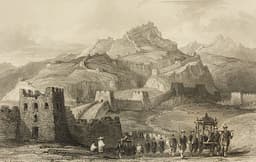
King Wuling of Zhao
Emperor · Ancient
60.6Total

Marcus Aurelius
Emperor · Ancient
68.5Total
Basic Information
Born
-340
121
Died
-295
180
Era
Ancient
Ancient
Nationality
China
Roman Empire
Occupation
Emperor
Emperor
Civilization
Eastern
Western
Score Comparison
Military (10%)
67.3
70.0
Political (20%)
65.0
72.0
Influence (20%)
55.0
68.0
Legacy (20%)
52.0
65.0
Leadership (15%)
66.0
79.8
Strategy (15%)
75.0
55.0
TOTAL
60.6
68.5
King Wuling of Zhao — Complete Timeline
307 BC
Introduced cavalry and Hu clothing reformsReform
King Wuling of Zhao ordered his army to adopt the clothing and archery techniques of the nomadic Hu (Xiongnu) peoples, including trousers and horseback archery. This military reform created a highly mobile cavalry force that gave Zhao a tactical advantage over rival states.
Military ReformCavalryCultural Change
Impact: regionalconstructive
299 BC
Abdicated in favor of his sonPolitical Action◆ Major
King Wuling abdicated the throne to his son, King Huiwen, but retained power as 'Lord Father' (Zhufu). This unusual arrangement was intended to allow him to focus on military campaigns, but it created a power struggle within the royal family.
AbdicationPower StruggleSuccession
Impact: national
296 BC
Conquered the Zhongshan stateWar◆ Major
King Wuling led a prolonged campaign to conquer the Zhongshan state, a non-Chinese kingdom located within Zhao's borders. The annexation of Zhongshan expanded Zhao's territory and population, strengthening its position among the Warring States.
ConquestTerritorial ExpansionZhongshan
Impact: regional
295 BC
Starved to death in the Shaqiu PalacePolitical Action◆ Major
During a succession conflict between his sons, King Wuling was trapped in the Shaqiu Palace by rebels loyal to his grandson. He was denied food and water for three months, eventually starving to death. His death ended Zhao's period of expansion.
DeathSuccession CrisisTragedy
Impact: nationaltragic
Marcus Aurelius — Complete Timeline
161 AD
Became Roman EmperorPolitical Action◆ Major
Marcus Aurelius succeeded Antoninus Pius as Roman Emperor in 161 CE, initially co-ruling with Lucius Verus. His accession marked the beginning of a reign that would be defined by constant warfare and the Antonine Plague, testing his Stoic principles.
SuccessionRoman EmpireCo-Emperor
Impact: global
165 AD
Endured the Antonine PlagueOther◆ Major
The Antonine Plague, likely smallpox, swept through the Roman Empire during Marcus Aurelius's reign, killing an estimated 5-10 million people. The epidemic weakened the military and economy, contributing to the empire's long-term decline and forcing the emperor to recruit slaves and gladiators.
PlaguePandemicRoman Empire
Impact: globaltragic
166 AD
Fought the Marcomannic WarsWar◆ Major
Marcus Aurelius led Roman forces in a series of campaigns along the Danube frontier against the Marcomanni, Quadi, and other Germanic tribes. The wars lasted from 166 to 180 CE, straining the empire's resources and requiring the emperor to spend years on the front lines.
Danube FrontierGermanic TribesWar
Impact: regional
170 AD
Wrote MeditationsCultural
During his military campaigns, Marcus Aurelius composed his personal philosophical writings, later known as Meditations. The work, written in Greek, consists of Stoic reflections on duty, mortality, and self-discipline, and has become a foundational text of Western philosophy.
PhilosophyStoicismLiterature
Impact: globalconstructive
177 AD
Appointed Commodus as SuccessorPolitical Action◆ Major
Marcus Aurelius appointed his son Commodus as co-emperor and successor, breaking the tradition of adopting capable successors. Commodus's subsequent tyrannical rule is often cited as a turning point in Rome's decline, marking the end of the Pax Romana.
SuccessionCommodusPax Romana
Impact: globaltragic
Expert Analysis
Origins
King Wuling of Zhao (c. 340–295 BCE) was a ruler of the Zhao state during the Warring States period in China. Born as Zhao Yong, he ascended the throne at a young age. His early life was shaped by the constant warfare among the seven major states, and he received a traditional education in Chinese classics and military arts. In contrast, Marcus Aurelius (121–180 CE) was born into a wealthy Roman family in Rome. His father died young, and he was raised by his grandfather. He was educated by renowned tutors, including the Stoic philosopher Junius Rusticus, which deeply influenced his philosophical outlook.
Rise to Power
King Wuling inherited the Zhao throne around 325 BCE. His early reign focused on consolidating power and defending against neighboring states. A turning point came when he realized the military superiority of the nomadic Hu tribes, who used cavalry and archery from horseback. In 307 BCE, he initiated the "Hu clothing reforms," ordering his army to adopt trousers and horse-riding techniques. This was met with resistance from conservative nobles, but he persisted. Marcus Aurelius rose to power through adoption; Emperor Antoninus Pius adopted him, and he became co-emperor with Lucius Verus in 161 CE upon Antoninus's death. His rise was smooth, as he was groomed for leadership from a young age.
Leadership & Governance
King Wuling was a pragmatic reformer. He focused on military modernization, introducing cavalry and new tactics that gave Zhao a strategic edge. He also conquered the Zhongshan state (c. 296 BCE), expanding Zhao's territory. However, his governance was autocratic; he abdicated in 299 BCE to his son but retained power as 'Lord Father,' leading to political instability. Marcus Aurelius governed as a philosopher-king, emphasizing justice and duty. He wrote *Meditations*, a personal guide to Stoic ethics. He shared power with Lucius Verus and later with his son Commodus. His reign was marked by legal reforms and efforts to improve the welfare of citizens, but he also faced constant warfare and a devastating plague.
Triumph & Tragedy
King Wuling's triumph was his successful military reforms, which allowed Zhao to defeat the Zhongshan state and resist other states. His strategy score of 75.0 reflects his innovative tactics. However, his tragedy was his death: after abdicating, a succession conflict led to his imprisonment in Shaqiu Palace, where he starved to death. His failure to secure a stable succession undid his achievements. Marcus Aurelius's triumph was his philosophical legacy; *Meditations* remains a cornerstone of Stoic thought. He also successfully defended the Roman Empire during the Marcomannic Wars (166–180 CE). Yet his tragedy was the appointment of his son Commodus as successor. Commodus's tyrannical rule led to instability. Additionally, the Antonine Plague (165–180 CE) killed millions, weakening the empire. Marcus's leadership score of 79.8 is high, but his political score of 72.0 reflects his flawed succession.
Character & Destiny
King Wuling was bold and innovative but also rigid and politically naïve. His decision to abdicate while retaining power created a power vacuum. His character led to his downfall. Marcus Aurelius was disciplined and reflective, but his sense of duty sometimes blinded him to the flaws of his son. He prioritized stability over merit, leading to a disastrous succession. Both rulers were shaped by their environments: King Wuling by the brutal Warring States, Marcus by the Stoic ideal of service.
Legacy
King Wuling's military reforms influenced later Chinese dynasties, particularly the Qin, who unified China. His adoption of cavalry tactics became standard. However, his political legacy is mixed; his death by starvation is a cautionary tale. Marcus Aurelius's legacy is vast: *Meditations* inspired countless readers, and his reign is seen as the last of the "Five Good Emperors." His philosophical contributions score an influence of 68.0, while his legacy score is 65.0. The scores reflect his enduring impact on thought, but his military and political scores (70.0 and 72.0) show he was a competent but not transformative ruler in those areas.
Conclusion
Marcus Aurelius had a greater overall impact due to his philosophical writings and his role as a model of the philosopher-king. His total score of 68.5 exceeds King Wuling's 60.6. While King Wuling's military innovations were significant, they were limited to a regional context. Marcus Aurelius's ideas transcended his era, influencing Western philosophy and governance. Therefore, Marcus Aurelius is the more impactful figure.
Rankings
🥇
Marcus AureliusLeader
Mil: 70.0Pol: 72.0Inf: 68.0
68.5
🥈
King Wuling of Zhao
Mil: 67.3Pol: 65.0Inf: 55.0
60.6
+7.9 behind
How This Comparison Works
Algorithm
Each figure is scored on 6 dimensions (0—100 scale) based on structured historical data: Military (10%), Political (20%), Influence (20%), Legacy (20%), Leadership (15%), Strategy (15%). The weighted total produces the final ranking.
Data Sources
Scores are computed from structured sub-indicators in the database. Scale factors adjust for era (Ancient ×0.85, Modern ×1.0) and civilization size (Eastern ×1.05, Other ×0.80) to account for differences in population and military scale.
Maximum 3 Figures
Comparisons are limited to 2—3 figures to ensure readability and statistical meaningfulness.
Error Margins
±5 points per dimension — Sub-scores are derived from historical records with inherent uncertainty. Two figures within 5 points on a dimension should be considered roughly equivalent in that area.
Total Score Accuracy
±3 points overall — The weighted combination of 6 dimensions produces a total score with approximately ±3 points of uncertainty. Differences of less than 3 points are not statistically significant— the figures are effectively tied.
Known Limitations
- Historical records are incomplete and uneven across civilizations
- Figures from oral-tradition societies may be underrepresented
- Occupation labels can misclassify multi-role figures
- Scores measure capability and impact, not moral character
- Quantitative scoring is a comparison tool, not absolute truth
Capability Radar
Military (10%) — Battles & Warfare
Battles
65
70
Win Rate
70
65
Expansion
70
40
Political (20%) — Governance & Reform
Reform
85
70
Diplomacy
70
75
Economy
65
60
Influence (20%) — Cultural & Global Reach
Cultural
75
85
Global
60
80
Legacy (20%) — Historical Impact
Historical
80
90
Longevity
70
95
Leadership (15%) — Power & Stability
Tenure
75
85
Stability
60
65
Strategy (15%) — Tactics & Innovation
Strategy
75
75
Tactics
80
60
Reform
90
55
Similar Comparisons
Comments & Discussion
No comments yet. Be the first to share your thoughts!