Loading...
Kofi Annan vs P.J. Patterson
Kofi Annan leads by 2.1 pts · 2 figures compared
…
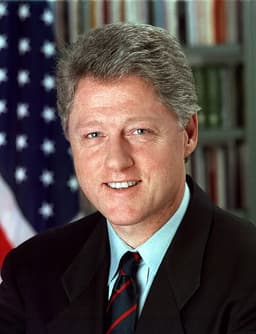
Kofi Annan
Politician · Modern
57.7Total

P.J. Patterson
Politician · Modern
55.6Total
Basic Information
Born
1938
1935
Died
—
—
Era
Modern
Modern
Nationality
Ghana
Jamaica
Occupation
Politician
Politician
Civilization
Other
Western
Score Comparison
Military (10%)
46.6
50.0
Political (20%)
70.0
55.0
Influence (20%)
55.0
57.2
Legacy (20%)
52.0
48.3
Leadership (15%)
78.0
78.0
Strategy (15%)
40.8
42.8
TOTAL
57.7
55.6
Kofi Annan — Complete Timeline
1997 AD
Elected Secretary-General of the United NationsPolitical Action◆ Major
Kofi Annan became the seventh Secretary-General of the United Nations, the first from sub-Saharan Africa. His election followed the US veto of Boutros-Ghali, and he pledged to reform the UN and strengthen peacekeeping.
UN Secretary-GeneralReformPeacekeeping
Impact: globalconstructive
2000 AD
Launched the Millennium Development GoalsReform◆ Major
Annan spearheaded the adoption of the Millennium Development Goals at the UN Millennium Summit, setting targets for poverty reduction, education, health, and environmental sustainability by 2015.
MDGsDevelopmentGlobal Goals
Impact: globalconstructive
2001 AD
Awarded the Nobel Peace PrizeCultural◆ Major
Kofi Annan and the United Nations were jointly awarded the Nobel Peace Prize for their work in promoting peace, human rights, and global cooperation. The prize recognized Annan's leadership in UN reform and conflict resolution.
Nobel PrizePeaceUN
Impact: globalconstructive
2004 AD
Investigated the Oil-for-Food Programme scandalPolitical Action◆ Major
Annan faced criticism over the UN Oil-for-Food Programme in Iraq, which was marred by corruption and mismanagement. An independent inquiry found no direct evidence of Annan's involvement but cited systemic failures.
CorruptionIraqUN Scandal
Impact: globaldestructive
2005 AD
Advocated for the Responsibility to Protect doctrinePolitical Action◆ Major
Annan promoted the Responsibility to Protect doctrine, endorsed by the UN World Summit, asserting that states have a responsibility to protect populations from genocide, war crimes, and crimes against humanity.
R2PHuman RightsUN Doctrine
Impact: globalconstructive
P.J. Patterson — Complete Timeline
1992 AD
Became Prime Minister of JamaicaPolitical Action◆ Major
Patterson succeeded Michael Manley as Prime Minister in 1992, becoming the first person of African descent to hold the office. He led the People's National Party (PNP) and continued Manley's centrist policies.
SuccessionPNPFirst Black PM
Impact: nationalconstructive
1993 AD
Implemented Economic LiberalizationReform◆ Major
Patterson's government pursued economic liberalization, including trade liberalization, privatization, and deregulation. These policies attracted foreign investment but also increased inequality and vulnerability to global markets.
Economic ReformLiberalizationPrivatization
Impact: nationalconstructive
Won Three Consecutive General ElectionsPolitical Action◆ Major
Patterson led the PNP to victory in the 1993, 1997, and 2002 general elections, becoming Jamaica's longest-serving prime minister. His tenure was marked by political stability and economic growth.
Election VictoriesLongest-Serving PMStability
Impact: nationalconstructive
2006 AD
Resigned as Prime MinisterPolitical Action◆ Major
Patterson resigned as Prime Minister in 2006 after 14 years in office, handing over power to Portia Simpson-Miller. His resignation marked the end of a long and stable era in Jamaican politics.
ResignationEnd of EraSuccession
Impact: national
Expert Analysis
Origins
Kofi Annan was born on April 8, 1938, in Kumasi, Ghana, into a prominent family; his father was a provincial governor and his mother a homemaker. He studied at the University of Science and Technology in Kumasi and later at Macalester College in the US, earning a degree in economics. He also obtained a master's in management from MIT. Annan's early career at the UN began in 1962 as a budget officer for the World Health Organization, giving him deep institutional knowledge.
P.J. Patterson was born on April 10, 1935, in Portland, Jamaica, to a farming family. He attended Kingston College and the University of the West Indies, where he studied law. He later earned a law degree at the London School of Economics. Patterson entered politics early, becoming a member of the People's National Party (PNP) and serving as a legal advisor to Premier Norman Manley.
Rise to Power
Annan rose through the UN ranks over decades, serving in various administrative roles. His big break came in 1993 when he was appointed Under-Secretary-General for Peacekeeping. He handled UN peacekeeping operations during the Rwandan genocide and Bosnian war, which exposed both the UN's limitations and his diplomatic skills. In 1997, he was elected Secretary-General, succeeding Boutros Boutros-Ghali, despite initial US opposition.
Patterson rose in Jamaican politics as a protégé of Michael Manley. He served as Minister of Industry and Tourism (1972-1974), Minister of Foreign Affairs (1974-1980), and later as Minister of Finance. After Manley's resignation in 1992, Patterson was elected Prime Minister, becoming the first person of African descent to hold the office. He won three consecutive general elections (1993, 1997, 2002), cementing his political dominance.
Leadership & Governance
Annan's leadership style was diplomatic and consensus-driven. He pushed for UN reform, including the creation of the Human Rights Council and the adoption of the Responsibility to Protect (R2P) doctrine. He also launched the Millennium Development Goals (MDGs) in 2000, setting global targets for poverty reduction. However, his tenure was marred by the Oil-for-Food scandal, where an independent inquiry found mismanagement but not direct corruption. Annan's political score is 70.0, reflecting his ability to navigate global politics.
Patterson governed with a focus on economic liberalization. He implemented trade liberalization, privatization, and deregulation, attracting foreign investment but also increasing inequality. He maintained social programs like free education and healthcare. His leadership score is 78.0, tied with Annan, but his political score is 55.0, lower due to the mixed results of his economic policies. His strategy score is 42.8, indicating less strategic vision on the global stage.
Triumph & Tragedy
Annan's greatest triumph was winning the Nobel Peace Prize in 2001, shared with the UN, for his work in promoting peace and human rights. His advocacy for the MDGs and R2P left lasting frameworks. His greatest failure was the UN's inability to prevent the Rwandan genocide (which occurred before his tenure as Secretary-General) and the handling of the Iraq War, which damaged UN credibility. The Oil-for-Food scandal also tarnished his legacy.
Patterson's triumphs include becoming Jamaica's longest-serving PM and maintaining political stability. He oversaw economic growth in the 1990s but also rising debt. His failure was the persistence of high crime and poverty, and his economic policies led to increased inequality. He resigned in 2006, leaving a mixed economic legacy.
Character & Destiny
Annan was known as a calm, principled diplomat. His character shaped his fate: his patience allowed him to push reforms but also led to criticism of being too cautious. He scored 78.0 in leadership, reflecting his steady hand. His total score of 57.7 places him slightly above Patterson.
Patterson was pragmatic and politically astute. He maintained party unity and electoral success but lacked transformative vision. His leadership score is also 78.0, but his lower legacy score (48.3 vs Annan's 52.0) reflects his narrower impact.
Legacy
Annan's legacy is global: the MDGs influenced development policy for decades; R2P became a norm in international relations. He is remembered as a moral voice for the UN. His legacy score of 52.0 reflects his enduring influence.
Patterson's legacy is national: he modernized Jamaica's economy but also left high debt. He is remembered as a stable leader but not a transformative one. His legacy score is 48.3.
Conclusion
Kofi Annan had a greater impact than P.J. Patterson. Annan's global initiatives like the MDGs and R2P have shaped international policy, while Patterson's influence was confined to Jamaica. Annan's total score of 57.7 edges Patterson's 55.6, and his political score of 70.0 far exceeds Patterson's 55.0. While both scored 78.0 in leadership, Annan's strategic vision (40.8 vs 42.8) is comparable, but his influence and legacy are broader. Annan's work affected billions, while Patterson's affected millions. Thus, Annan is the more significant historical figure.
Rankings
🥇
Kofi AnnanLeader
Mil: 46.6Pol: 70.0Inf: 55.0
57.7
🥈
P.J. Patterson
Mil: 50.0Pol: 55.0Inf: 57.2
55.6
+2.1 behind
How This Comparison Works
Algorithm
Each figure is scored on 6 dimensions (0—100 scale) based on structured historical data: Military (10%), Political (20%), Influence (20%), Legacy (20%), Leadership (15%), Strategy (15%). The weighted total produces the final ranking.
Data Sources
Scores are computed from structured sub-indicators in the database. Scale factors adjust for era (Ancient ×0.85, Modern ×1.0) and civilization size (Eastern ×1.05, Other ×0.80) to account for differences in population and military scale.
Maximum 3 Figures
Comparisons are limited to 2—3 figures to ensure readability and statistical meaningfulness.
Error Margins
±5 points per dimension — Sub-scores are derived from historical records with inherent uncertainty. Two figures within 5 points on a dimension should be considered roughly equivalent in that area.
Total Score Accuracy
±3 points overall — The weighted combination of 6 dimensions produces a total score with approximately ±3 points of uncertainty. Differences of less than 3 points are not statistically significant— the figures are effectively tied.
Known Limitations
- Historical records are incomplete and uneven across civilizations
- Figures from oral-tradition societies may be underrepresented
- Occupation labels can misclassify multi-role figures
- Scores measure capability and impact, not moral character
- Quantitative scoring is a comparison tool, not absolute truth
Capability Radar
Military (10%) — Battles & Warfare
Battles
19
28
Win Rate
27
33
Expansion
28
33
Political (20%) — Governance & Reform
Reform
70
65
Diplomacy
85
70
Economy
60
65
Influence (20%) — Cultural & Global Reach
Cultural
55
40
Global
75
45
Legacy (20%) — Historical Impact
Historical
70
50
Longevity
60
40
Leadership (15%) — Power & Stability
Tenure
75
85
Stability
65
75
Strategy (15%) — Tactics & Innovation
Strategy
33
39
Tactics
32
40
Reform
38
45
Similar Comparisons
Comments & Discussion
No comments yet. Be the first to share your thoughts!