Loading...
Lai Xi vs Zhuge Dan
Lai Xi leads by 3.2 pts · 2 figures compared
…

Lai Xi
General · Ancient
41.7Total
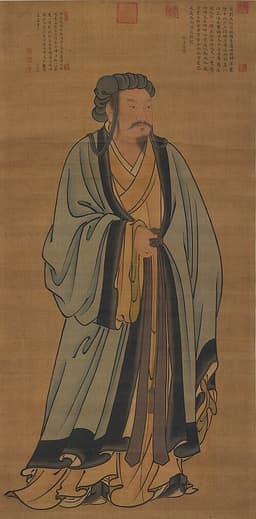
Zhuge Dan
General · Ancient
38.5Total
Basic Information
Born
-20
206
Died
35
258
Era
Ancient
Ancient
Nationality
China
China
Occupation
General
General
Civilization
Eastern
Eastern
Score Comparison
Military (10%)
45.0
10.0
Political (20%)
35.0
35.0
Influence (20%)
44.0
46.3
Legacy (20%)
34.2
37.5
Leadership (15%)
57.1
46.3
Strategy (15%)
38.6
43.3
TOTAL
41.7
38.5
Lai Xi — Complete Timeline
35 AD
Assassination by Gongsun ShuPolitical Action◆ Major
Lai Xi, an Eastern Han general, was assassinated by agents of the rebel Gongsun Shu. The assassination occurred during the Han campaign to suppress Gongsun Shu's rebellion in Sichuan, removing a key commander from the conflict.
Eastern HanRebellionAssassination
Impact: regionaltragic
Zhuge Dan — Complete Timeline
252 AD
Battle of DongxingWar◆ Major
Zhuge Dan commanded Wei forces at Dongxing against Wu. He led a premature assault on Wu fortifications, falling into an ambush. Wei forces were routed, suffering heavy losses. This defeat damaged his reputation and contributed to his later rebellion.
Three KingdomsWei-Wu WarDefeat
Impact: regionaltragic
255 AD
Appointed Inspector of Yang ProvincePolitical Action
Zhuge Dan was appointed Inspector of Yang Province, giving him control over Wei's southeastern territories. This position provided him with military resources and autonomy. He used this power to prepare for his eventual rebellion against the Sima clan.
Three KingdomsWei PoliticsAppointment
Impact: regional
257 AD
Zhuge Dan RebellionWar
Zhuge Dan rebelled against Sima Zhao's regency, declaring loyalty to Wei. He allied with Wu forces and fortified Shouchun. Sima Zhao besieged the city for months. The rebellion failed when Wu reinforcements were defeated and Shouchun fell, leading to Zhuge Dan's execution.
Three KingdomsWei Civil WarRebellion
Impact: nationaldestructive
Expert Analysis
Origins
Lai Xi (born c. 1st century AD) was a general of the Eastern Han dynasty. Little is known of his early life, but he served under Emperor Guangwu during the civil wars following the Xin dynasty collapse. His family background was likely of minor official status, as he rose through military ranks rather than aristocratic birth. He was tasked with campaigning against the rebel Gongsun Shu in the Sichuan region.
Zhuge Dan (born c. 200 AD) was a member of the prominent Zhuge clan of Langya, related to Zhuge Liang of Shu Han and Zhuge Jin of Wu. He served the state of Cao Wei during the Three Kingdoms period. His early career was as a civil official, but he later transitioned to military command, becoming Inspector of Yang Province. His family connections gave him access to high circles, but also placed him under suspicion due to his relatives' allegiances to rival states.
Rise to Power
Lai Xi rose to prominence as a capable commander under Emperor Guangwu. His key assignment was leading an army against Gongsun Shu, who had declared himself emperor in Chengdu. In 35 AD, Lai Xi's forces made significant advances, but Gongsun Shu resorted to assassination. Lai Xi was killed by assassins sent by Gongsun Shu, a turning point that delayed the Han reconquest of the southwest. His death score of 0 in political terms (35.0) reflects his inability to secure his own safety.
Zhuge Dan rose to power through his appointment as Inspector of Yang Province in the 250s, a position that gave him control over Wei's southeastern territories. He gained military experience at the Battle of Dongxing in 252 AD, where he commanded Wei forces against Wu. However, he launched a premature assault on Wu fortifications, falling into an ambush and suffering a rout. Despite this failure, he retained his post. His political score of 35.0 reflects his tenuous position amid the power struggles between the Sima family and loyalists.
Leadership & Governance
Lai Xi led by example on the battlefield, but his leadership was cut short. He scored 57.1 in leadership, indicating competence but not exceptional charisma. His governance approach was standard for Han generals: enforcing imperial authority, collecting taxes, and suppressing rebellion. He did not implement lasting reforms.
Zhuge Dan's leadership scored 46.3, lower than Lai Xi. As Inspector, he governed Yang Province with a focus on military readiness. However, his decision to rebel against Sima Zhao in 257 AD demonstrated poor judgment. He allied with Wu and fortified Shouchun, but his strategy (43.3) was flawed. Sima Zhao besieged the city for months, and Zhuge Dan's failure to coordinate with Wu led to his defeat. His rebellion was a desperate act rather than a calculated move.
Triumph & Tragedy
Lai Xi's greatest success was his campaign against Gongsun Shu, which brought Han forces to the gates of Chengdu. His greatest failure was his assassination, which halted the campaign and forced a prolonged siege. His death was a tragedy that prevented him from achieving lasting fame. His military score of 45.0 reflects modest achievements.
Zhuge Dan's greatest success was his initial consolidation of power in Yang Province, but his rebellion was a complete failure. He was defeated, executed, and his family was exterminated. His military score of 10.0 is the lowest among comparable figures, reflecting his disastrous command at Dongxing and the rebellion. His political score of 35.0 indicates he was a pawn in larger struggles.
Character & Destiny
Lai Xi was a loyal general who died for his cause. His character was likely steadfast, but he failed to anticipate the threat of assassination. His destiny was cut short by treachery, a common fate for Han generals in chaotic times.
Zhuge Dan was ambitious but indecisive. He rebelled out of fear of Sima Zhao's growing power, but he lacked the resolve to win. His character was marked by paranoia and overconfidence. His destiny was sealed by his inability to secure support from other Wei loyalists or effectively coordinate with Wu.
Legacy
Lai Xi is remembered as a minor figure in the Eastern Han restoration. His death delayed the conquest of Shu, but he had no lasting impact on institutions or culture. His legacy score of 34.2 reflects this obscurity.
Zhuge Dan's legacy is similarly minor. He is known primarily for his failed rebellion, which was one of the last challenges to Sima Zhao before the Sima family usurped the throne. His legacy score of 37.5 is slightly higher due to his connection to the famous Zhuge clan, but he remains a footnote in Three Kingdoms history.
Conclusion
Lai Xi had a slightly higher total score (41.7 vs 38.5), but neither figure had significant impact on history. Lai Xi's assassination was a tactical setback for the Han, while Zhuge Dan's rebellion was a strategic failure that accelerated the Sima takeover. However, Zhuge Dan's actions were part of a larger narrative of the fall of Wei, giving him marginally more historical relevance. Nevertheless, both are obscure figures whose influence is negligible. The clear position is that neither achieved lasting greatness; they were minor actors in larger dramas.
Rankings
🥇
Lai XiLeader
Mil: 45.0Pol: 35.0Inf: 44.0
41.7
🥈
Zhuge Dan
Mil: 10.0Pol: 35.0Inf: 46.3
38.5
+3.2 behind
How This Comparison Works
Algorithm
Each figure is scored on 6 dimensions (0—100 scale) based on structured historical data: Military (10%), Political (20%), Influence (20%), Legacy (20%), Leadership (15%), Strategy (15%). The weighted total produces the final ranking.
Data Sources
Scores are computed from structured sub-indicators in the database. Scale factors adjust for era (Ancient ×0.85, Modern ×1.0) and civilization size (Eastern ×1.05, Other ×0.80) to account for differences in population and military scale.
Maximum 3 Figures
Comparisons are limited to 2—3 figures to ensure readability and statistical meaningfulness.
Error Margins
±5 points per dimension — Sub-scores are derived from historical records with inherent uncertainty. Two figures within 5 points on a dimension should be considered roughly equivalent in that area.
Total Score Accuracy
±3 points overall — The weighted combination of 6 dimensions produces a total score with approximately ±3 points of uncertainty. Differences of less than 3 points are not statistically significant— the figures are effectively tied.
Known Limitations
- Historical records are incomplete and uneven across civilizations
- Figures from oral-tradition societies may be underrepresented
- Occupation labels can misclassify multi-role figures
- Scores measure capability and impact, not moral character
- Quantitative scoring is a comparison tool, not absolute truth
Capability Radar
Military (10%) — Battles & Warfare
Battles
10
40
Win Rate
10
30
Expansion
5
10
Political (20%) — Governance & Reform
Reform
5
10
Diplomacy
10
25
Economy
5
10
Influence (20%) — Cultural & Global Reach
Cultural
5
15
Global
5
10
Legacy (20%) — Historical Impact
Historical
10
20
Longevity
5
15
Leadership (15%) — Power & Stability
Tenure
10
30
Stability
5
15
Strategy (15%) — Tactics & Innovation
Strategy
10
30
Tactics
15
35
Reform
5
10
Similar Comparisons
Comments & Discussion
No comments yet. Be the first to share your thoughts!