Loading...
Lalitaditya Muktapida vs Peter III of Aragon
Lalitaditya Muktapida leads by 7.1 pts · 2 figures compared
…

Lalitaditya Muktapida
Emperor · Medieval
66.5Total
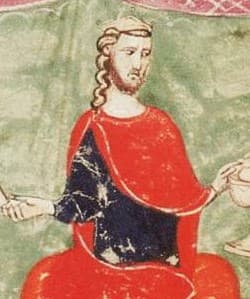
Peter III of Aragon
Emperor · Medieval
59.4Total
Basic Information
Born
724
1239
Died
760
1285
Era
Medieval
Medieval
Nationality
India
Aragon
Occupation
Emperor
Emperor
Civilization
Indian
Western
Score Comparison
Military (10%)
78.5
61.7
Political (20%)
59.3
68.0
Influence (20%)
72.0
57.2
Legacy (20%)
56.0
49.2
Leadership (15%)
72.0
65.0
Strategy (15%)
70.0
66.3
TOTAL
66.5
59.4
Lalitaditya Muktapida — Complete Timeline
738 AD
Defeat of the ArabsWar◆ Major
Lalitaditya allied with the Tibetan king to defeat an Arab invasion led by the Umayyad governor of Sindh. This victory checked Arab expansion into northern India and secured the Karkota Empire's western borders.
BattleArab InvasionUmayyad
Impact: regional
740 AD
Conquest of Central AsiaWar◆ Major
Lalitaditya Muktapida led a military campaign into Central Asia, defeating the Turks and extending Karkota influence to the Oxus River. He captured territories including parts of modern-day Afghanistan, Uzbekistan, and Tajikistan.
ConquestCentral AsiaKarkota Empire
Impact: regional
745 AD
Invasion of TibetWar◆ Major
Lalitaditya invaded Tibet, defeating the Tibetan army and capturing the capital Lhasa. He forced the Tibetan king to pay tribute and established Karkota dominance over the Tibetan plateau for a period.
InvasionTibetKarkota
Impact: regional
750 AD
Construction of the Martand Sun TempleCultural◆ Major
Lalitaditya commissioned the Martand Sun Temple in Kashmir, a grand architectural masterpiece dedicated to the Sun god Surya. The temple featured a central shrine surrounded by 84 smaller shrines, showcasing Kashmiri architectural style.
TempleArchitectureKashmir
Impact: regionalconstructive
Peter III of Aragon — Complete Timeline
1282 AD
Conquest of Sicily after the Sicilian VespersWar◆ Major
Following the Sicilian Vespers rebellion against Angevin rule, Peter III invaded Sicily and was crowned king in Palermo. This conquest established Aragonese rule in Sicily and triggered a long conflict with the Angevin dynasty and the Papacy.
ConquestSicilyAragon
Impact: regionalconstructive
Conquest of the Kingdom of SicilyWar◆ Major
Peter III landed at Trapani and quickly conquered the island of Sicily, defeating the Angevin forces of Charles I. He was crowned King of Sicily in Palermo, establishing the Aragonese Sicilian dynasty.
ConquestSicilyAragon
Impact: regionalconstructive
1283 AD
Excommunication by Pope Martin IVPolitical Action◆ Major
Pope Martin IV excommunicated Peter III for invading Sicily, a papal fief, and declared a crusade against him. The excommunication isolated Aragon diplomatically and led to a French invasion of Catalonia.
ExcommunicationPapacyConflict
Impact: regionaldestructive
1285 AD
Defense against the French CrusadeWar◆ Major
Peter III successfully defended the Crown of Aragon against a French crusade led by Philip III of France. The French army was defeated at the Battle of the Col de Panissars and forced to retreat, securing Aragonese independence.
WarDefenseAragon
Impact: regionalconstructive
Expert Analysis
Origins
Lalitaditya Muktapida, born around 700 CE, was a Karkota emperor of Kashmir. His early life is obscure, but he inherited a stable kingdom from his father, Durlabhavardhana. The Karkota dynasty had consolidated power in the Kashmir Valley, and Lalitaditya was groomed for leadership in a court that valued both martial prowess and cultural patronage. In contrast, Peter III of Aragon was born in 1239 to King James I of Aragon and his second wife, Violant of Hungary. As the second son, Peter was not expected to inherit the throne until his elder brother’s death in 1260. He received a knightly education, learning warfare and governance, and was married to Constance of Sicily, daughter of Manfred of Hohenstaufen, which later gave him a claim to the Sicilian throne.
Rise to Power
Lalitaditya ascended the throne around 724 CE and immediately embarked on a series of expansionist campaigns. His rise to power was marked by military aggression: he defeated the Karkota rivals, then turned northward. In 733 CE, he launched a campaign into Central Asia, reaching the Oxus River and subjugating Turkic tribes. He then invaded Tibet in 737 CE, capturing Lhasa and forcing the Tibetan king to pay tribute. These conquests were unprecedented for a Kashmiri ruler and established him as a major power in the region. Peter III’s rise was more political. He became king of Aragon in 1276 upon his father’s death. His claim to Sicily stemmed from his wife, Constance, daughter of Manfred of Hohenstaufen, who had been deposed by Charles of Anjou. In 1282, the Sicilian Vespers rebellion broke out against Angevin rule, and Peter seized the opportunity. He landed at Trapani in August 1282 and was crowned King of Sicily in Palermo by September. His swift action capitalized on popular revolt.
Leadership & Governance
Lalitaditya’s governance was autocratic and expansionist. He centralized power in Kashmir, built infrastructure including the Martand Sun Temple (commissioned circa 750 CE), and maintained a formidable army. His military campaigns scored 78.5, indicating his effectiveness as a commander. However, his political score of 59.3 suggests less skill in administration and diplomacy. He imposed heavy tributes on conquered regions but failed to integrate them into a lasting empire. Peter III, with a political score of 68.0, was more adept at navigating feudal and papal politics. He faced excommunication by Pope Martin IV in 1283 for invading Sicily, a papal fief. He defended Aragon against a French crusade, defeating Philip III at the Battle of the Col de Panissars in 1285. His leadership style combined military strategy (score 66.3) with diplomatic maneuvering, though his influence score of 57.2 reflects limited long-term impact.
Triumph & Tragedy
Lalitaditya’s greatest triumph was his military expansion: he conquered Central Asia, Tibet, and defeated an Arab invasion in alliance with Tibet. His construction of the Martand Sun Temple showcased his patronage of art. His tragedy was the ephemeral nature of his empire; after his death around 760 CE, the conquered territories quickly slipped away, and Kashmir reverted to regional power. His legacy score of 56.0 reflects this decline. Peter III’s triumph was the conquest of Sicily and successful defense against the French crusade. His tragedy was the excommunication and the prolonged conflict with the Papacy and Angevin dynasty, which drained resources. He died in 1285, leaving his son Alfonso to manage the ongoing war.
Character & Destiny
Lalitaditya was ambitious and ruthless, driven by conquest. His character shaped his destiny: his military brilliance brought him glory but his lack of administrative follow-through led to a fragile empire. Historical assessments note his energy but also his overreach. Peter III was pragmatic and opportunistic, as seen in his quick exploitation of the Sicilian Vespers. He was a capable knight and king, but his defiance of the Pope brought lasting conflict. His character—determined but not overly visionary—led to a mixed legacy.
Legacy
Lalitaditya is remembered in Kashmir as a great conqueror and patron of architecture, but his empire did not endure. The Martand Sun Temple stands as a ruin, a symbol of his ambition. His influence score of 72.0 indicates some regional impact, but his legacy is minimal outside Kashmir. Peter III’s legacy is more tangible: the Crown of Aragon became a Mediterranean power, and the Sicilian Vespers led to the War of the Sicilian Vespers, which reshaped Italian politics. However, his personal legacy score of 49.2 is lower due to the eventual loss of Sicily to the Angevins in the 14th century.
Conclusion
Lalitaditya Muktapida, with a total score of 66.5 against Peter III’s 59.4, had a greater military impact and more dramatic conquests. However, Peter III’s political maneuvering and lasting influence on Mediterranean geopolitics arguably gave him a more enduring, if less spectacular, legacy. Yet, based on the data, Lalitaditya’s higher military and influence scores tip the balance. He achieved more in a shorter time, even if his empire crumbled. Therefore, Lalitaditya Muktapida had a greater overall impact.
Rankings
🥇
Lalitaditya MuktapidaLeader
Mil: 78.5Pol: 59.3Inf: 72.0
66.5
🥈
Peter III of Aragon
Mil: 61.7Pol: 68.0Inf: 57.2
59.4
+7.1 behind
How This Comparison Works
Algorithm
Each figure is scored on 6 dimensions (0—100 scale) based on structured historical data: Military (10%), Political (20%), Influence (20%), Legacy (20%), Leadership (15%), Strategy (15%). The weighted total produces the final ranking.
Data Sources
Scores are computed from structured sub-indicators in the database. Scale factors adjust for era (Ancient ×0.85, Modern ×1.0) and civilization size (Eastern ×1.05, Other ×0.80) to account for differences in population and military scale.
Maximum 3 Figures
Comparisons are limited to 2—3 figures to ensure readability and statistical meaningfulness.
Error Margins
±5 points per dimension — Sub-scores are derived from historical records with inherent uncertainty. Two figures within 5 points on a dimension should be considered roughly equivalent in that area.
Total Score Accuracy
±3 points overall — The weighted combination of 6 dimensions produces a total score with approximately ±3 points of uncertainty. Differences of less than 3 points are not statistically significant— the figures are effectively tied.
Known Limitations
- Historical records are incomplete and uneven across civilizations
- Figures from oral-tradition societies may be underrepresented
- Occupation labels can misclassify multi-role figures
- Scores measure capability and impact, not moral character
- Quantitative scoring is a comparison tool, not absolute truth
Capability Radar
Military (10%) — Battles & Warfare
Battles
85
65
Win Rate
90
70
Expansion
90
70
Political (20%) — Governance & Reform
Reform
70
50
Diplomacy
75
65
Economy
80
50
Influence (20%) — Cultural & Global Reach
Cultural
65
40
Global
60
45
Legacy (20%) — Historical Impact
Historical
70
55
Longevity
50
40
Leadership (15%) — Power & Stability
Tenure
75
55
Stability
70
45
Strategy (15%) — Tactics & Innovation
Strategy
85
75
Tactics
80
60
Reform
70
40
Similar Comparisons
Comments & Discussion
No comments yet. Be the first to share your thoughts!