Loading...
Lamido of Adamawa vs Tipu Sultan
Tipu Sultan leads by 14.8 pts · 2 figures compared
…

Lamido of Adamawa
Emperor · Modern
53.3Total
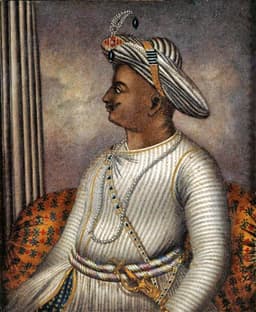
Tipu Sultan
Emperor · Modern
68.1Total
Basic Information
Born
1809
1751
Died
1850
1799
Era
Modern
Modern
Nationality
Nigeria
India
Occupation
Emperor
Emperor
Civilization
Other
Indian
Score Comparison
Military (10%)
50.0
61.7
Political (20%)
54.7
72.0
Influence (20%)
54.9
82.0
Legacy (20%)
47.5
55.0
Leadership (15%)
68.0
66.0
Strategy (15%)
43.3
70.0
TOTAL
53.3
68.1
Lamido of Adamawa — Complete Timeline
1809 AD
Foundation of Adamawa EmiratePolitical Action
Modibbo Adama established the Adamawa Emirate after receiving a flag from Usman dan Fodio. He gathered Fulani followers and began consolidating control over the region. This foundation created a new political entity that would become a major emirate in the Sokoto Caliphate.
FoundationAdamawaFulani Jihad
Impact: regionalconstructive
1812 AD
Conquest of YolaWar◆ Major
Modibbo Adama led his forces to capture the town of Yola from the local Bata people. He established Yola as the capital of the Adamawa Emirate. The conquest provided a strategic center for administration and further expansion into the Benue River region.
ConquestYolaCapital
Impact: regional
1820 AD
Campaigns Against Non-Muslim KingdomsWar◆ Major
Modibbo Adama conducted military campaigns against non-Muslim kingdoms such as Bata, Vere, and Chamba. These campaigns expanded the emirate's territory and spread Islam. The wars resulted in the subjugation of numerous communities and the incorporation of their lands into Adamawa.
ExpansionJihadNon-Muslim Kingdoms
Impact: regionaldestructive
Tipu Sultan — Complete Timeline
1780 AD
Battle of PollilurWar◆ Major
Tipu Sultan, commanding Mysore forces, defeated a British East India Company army at Pollilur during the Second Anglo-Mysore War. This was the worst defeat suffered by the British in India at that time, with over 4,000 casualties.
BattleAnglo-Mysore War
Impact: regional
1784 AD
Treaty of MangalorePolitical Action◆ Major
Tipu Sultan signed the Treaty of Mangalore with the British East India Company, ending the Second Anglo-Mysore War. The treaty restored the status quo ante bellum, with both sides returning captured territories, and was a diplomatic victory for Mysore.
TreatyAnglo-Mysore Relations
Impact: regional
1792 AD
Introduction of the Mysorean RocketInvention◆ Major
Tipu Sultan deployed iron-cased rockets in warfare against the British, notably at the Battle of Srirangapatna. These rockets, developed with French assistance, were more advanced than contemporary European designs and influenced later British rocket development.
Military TechnologyInnovation
Impact: global
1798 AD
Alliance with the FrenchPolitical Action
Tipu Sultan sought an alliance with Revolutionary France against the British, sending an embassy to Napoleon Bonaparte. This diplomatic move, though ultimately unsuccessful, alarmed the British and contributed to their decision to attack Mysore.
DiplomacyAnti-British Alliance
Impact: regional
1799 AD
Battle of SeringapatamWar◆ Major
Tipu Sultan was killed defending his capital, Srirangapatna, during the Fourth Anglo-Mysore War. The British, led by General Harris, stormed the fort, ending the Kingdom of Mysore's independence and leading to British control over southern India.
BattleDeathAnglo-Mysore War
Impact: regionaltragic
Expert Analysis
Origins
**Lamido of Adamawa** (born Modibbo Adama, c. 1786) was a Fulani scholar and warrior from the Fombina region (present-day northern Cameroon/Nigeria). His father was a Muslim teacher, and Adama studied under Usman dan Fodio, the leader of the Fulani jihad. He was appointed as a flag-bearer in 1809, tasked with spreading Islam and establishing a new emirate in the eastern reaches of the Sokoto Caliphate.
**Tipu Sultan** (born 1751) was the son of Hyder Ali, the de facto ruler of Mysore. Raised in a military court, Tipu was trained in warfare, languages, and administration from a young age. He fought alongside his father in the First Anglo-Mysore War (1767-1769) and became the ruler in 1782 after Hyder Ali's death. His background was rooted in resisting British expansion in South India.
Rise to Power
**Lamido of Adamawa** rose through the Fulani jihad network. In 1809, Usman dan Fodio gave him a flag and authority to lead jihad in the east. Adama gathered Fulani followers and conquered the Bata kingdom, capturing the town of Yola in 1841. He established Yola as his capital and expanded the emirate through campaigns against non-Muslim kingdoms like Vere, Chamba, and Kilba. By 1848, the Adamawa Emirate covered a large territory, but Adama remained a vassal of the Sokoto Caliphate.
**Tipu Sultan** rose to power after his father's death in 1782. He immediately continued the Second Anglo-Mysore War (1780-1784). His greatest victory came at the Battle of Pollilur in 1780, where he defeated a British East India Company army, inflicting the worst defeat the British ever suffered in India. The war ended with the Treaty of Mangalore (1784), which restored the status quo. Tipu then focused on modernizing his state, introducing new technologies and seeking alliances with the French.
Leadership & Governance
**Lamido of Adamawa** governed as a traditional Fulani emir, combining Islamic law with local customs. He appointed emirs over conquered territories and collected tribute. His leadership was decentralized, relying on local chiefs to maintain order. He scored 68.0 in leadership, reflecting his ability to build a stable emirate that lasted over a century. However, his political score (54.7) was lower, as he never achieved independence from Sokoto.
**Tipu Sultan** was a centralizing ruler who implemented reforms. He introduced a new calendar, coinage, and land revenue system. He modernized the army with European-style drill and deployed iron-cased rockets in warfare, a technological innovation that scored 70.0 in strategy. His political score (72.0) reflects his diplomatic efforts, including an alliance with Revolutionary France. However, his authoritarian style alienated many nobles, leading to internal dissent.
Triumph & Tragedy
**Lamido of Adamawa**'s greatest success was founding the Adamawa Emirate, which became a major power in the region. He expanded its territory through successful campaigns, scoring 50.0 in military. His greatest failure was his inability to secure full independence; the emirate remained subordinate to Sokoto. Additionally, his reliance on traditional warfare left it vulnerable to colonial conquest later.
**Tipu Sultan**'s triumph was his military resistance against the British. His victory at Pollilur and his rocket technology are highlights. He scored 61.7 in military and 82.0 in influence, reflecting his impact as a symbol of anti-colonial resistance. His tragedy was his death at the Battle of Seringapatam in 1799, leading to the fall of Mysore. He failed to unite other Indian states against the British, and his alliance with France did not materialize effectively.
Character & Destiny
**Lamido of Adamawa** was a devout Muslim and capable administrator. He was cautious, building power gradually within the Sokoto framework. His character shaped a stable but limited legacy; he did not seek global confrontation. His decision to remain a vassal ensured the emirate's survival but reduced his historical impact.
**Tipu Sultan** was ambitious, innovative, and defiant. He famously said, "Better to live one day as a tiger than a thousand years as a sheep." His aggressive stance against the British earned him enemies. His destiny was sealed by his refusal to compromise, leading to his death in battle. Historians see him as a tragic hero whose innovations were ahead of their time.
Legacy
**Lamido of Adamawa** left a lasting legacy in the Adamawa region. The emirate persisted under British colonial rule and later became part of Nigeria and Cameroon. His descendants continued as traditional rulers. His impact is regional, with a legacy score of 47.5.
**Tipu Sultan** is remembered as a national hero in India and a symbol of resistance. His rocket technology influenced British military development. The Mysorean rockets are considered precursors to modern rocketry. His legacy score is 55.0, reflecting his global recognition. However, his reputation is contested; some view him as a tyrannical ruler.
Conclusion
While both leaders fought against colonial powers, Tipu Sultan had greater impact. His total score (68.1) exceeds Lamido's (53.3) by 14.8 points. Tipu's innovations in warfare and his defiance against the British had global implications, while Lamido's achievements were confined to the Adamawa region. Tipu's story resonates more widely as a symbol of anti-colonial resistance. Therefore, Tipu Sultan is the more influential historical figure.
Rankings
🥇
Tipu SultanLeader
Mil: 61.7Pol: 72.0Inf: 82.0
68.1
🥈
Lamido of Adamawa
Mil: 50.0Pol: 54.7Inf: 54.9
53.3
+14.8 behind
How This Comparison Works
Algorithm
Each figure is scored on 6 dimensions (0—100 scale) based on structured historical data: Military (10%), Political (20%), Influence (20%), Legacy (20%), Leadership (15%), Strategy (15%). The weighted total produces the final ranking.
Data Sources
Scores are computed from structured sub-indicators in the database. Scale factors adjust for era (Ancient ×0.85, Modern ×1.0) and civilization size (Eastern ×1.05, Other ×0.80) to account for differences in population and military scale.
Maximum 3 Figures
Comparisons are limited to 2—3 figures to ensure readability and statistical meaningfulness.
Error Margins
±5 points per dimension — Sub-scores are derived from historical records with inherent uncertainty. Two figures within 5 points on a dimension should be considered roughly equivalent in that area.
Total Score Accuracy
±3 points overall — The weighted combination of 6 dimensions produces a total score with approximately ±3 points of uncertainty. Differences of less than 3 points are not statistically significant— the figures are effectively tied.
Known Limitations
- Historical records are incomplete and uneven across civilizations
- Figures from oral-tradition societies may be underrepresented
- Occupation labels can misclassify multi-role figures
- Scores measure capability and impact, not moral character
- Quantitative scoring is a comparison tool, not absolute truth
Capability Radar
Military (10%) — Battles & Warfare
Battles
45
75
Win Rate
50
60
Expansion
55
70
Political (20%) — Governance & Reform
Reform
40
80
Diplomacy
50
55
Economy
35
75
Influence (20%) — Cultural & Global Reach
Cultural
40
65
Global
30
55
Legacy (20%) — Historical Impact
Historical
45
70
Longevity
50
60
Leadership (15%) — Power & Stability
Tenure
60
65
Stability
45
50
Strategy (15%) — Tactics & Innovation
Strategy
45
70
Tactics
40
80
Reform
35
85
Similar Comparisons
Comments & Discussion
No comments yet. Be the first to share your thoughts!