Loading...
Mwezi III of Burundi vs Tipu Sultan
Tipu Sultan leads by 17.2 pts · 2 figures compared
…

Mwezi III of Burundi
Emperor · Modern
50.9Total
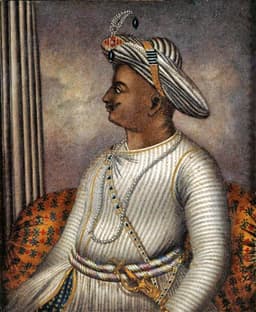
Tipu Sultan
Emperor · Modern
68.1Total
Basic Information
Born
1790
1751
Died
1852
1799
Era
Modern
Modern
Nationality
Burundi
India
Occupation
Emperor
Emperor
Civilization
Other
Indian
Score Comparison
Military (10%)
50.0
61.7
Political (20%)
48.0
72.0
Influence (20%)
51.8
82.0
Legacy (20%)
42.5
55.0
Leadership (15%)
72.0
66.0
Strategy (15%)
43.3
70.0
TOTAL
50.9
68.1
Mwezi III of Burundi — Complete Timeline
1820 AD
Expanded Burundi's territory to Lake TanganyikaWar◆ Major
Mwezi III led military campaigns that extended Burundian control to the shores of Lake Tanganyika, incorporating the Imbo region. This expansion secured access to trade routes and fishing resources, strengthening the kingdom's economic base and regional influence.
ExpansionConquestTrade
Impact: regional
1830 AD
Consolidated central authority over peripheral chiefsPolitical Action◆ Major
Mwezi III implemented administrative reforms to reduce the autonomy of regional chiefs, centralizing power under the mwami. He appointed loyal governors to oversee provinces, weakening the traditional clan-based leadership and strengthening the monarchy's control over the kingdom.
CentralizationAdministrationReform
Impact: regionalconstructive
1840 AD
Defended the kingdom against Rwandan incursionsWar◆ Major
Mwezi III repelled multiple invasions from the neighboring Kingdom of Rwanda, which sought to expand into Burundian territory. His successful defense preserved Burundi's independence and territorial integrity, preventing Rwandan domination of the region.
DefenseRwandaConflict
Impact: regional
Tipu Sultan — Complete Timeline
1780 AD
Battle of PollilurWar◆ Major
Tipu Sultan, commanding Mysore forces, defeated a British East India Company army at Pollilur during the Second Anglo-Mysore War. This was the worst defeat suffered by the British in India at that time, with over 4,000 casualties.
BattleAnglo-Mysore War
Impact: regional
1784 AD
Treaty of MangalorePolitical Action◆ Major
Tipu Sultan signed the Treaty of Mangalore with the British East India Company, ending the Second Anglo-Mysore War. The treaty restored the status quo ante bellum, with both sides returning captured territories, and was a diplomatic victory for Mysore.
TreatyAnglo-Mysore Relations
Impact: regional
1792 AD
Introduction of the Mysorean RocketInvention◆ Major
Tipu Sultan deployed iron-cased rockets in warfare against the British, notably at the Battle of Srirangapatna. These rockets, developed with French assistance, were more advanced than contemporary European designs and influenced later British rocket development.
Military TechnologyInnovation
Impact: global
1798 AD
Alliance with the FrenchPolitical Action
Tipu Sultan sought an alliance with Revolutionary France against the British, sending an embassy to Napoleon Bonaparte. This diplomatic move, though ultimately unsuccessful, alarmed the British and contributed to their decision to attack Mysore.
DiplomacyAnti-British Alliance
Impact: regional
1799 AD
Battle of SeringapatamWar◆ Major
Tipu Sultan was killed defending his capital, Srirangapatna, during the Fourth Anglo-Mysore War. The British, led by General Harris, stormed the fort, ending the Kingdom of Mysore's independence and leading to British control over southern India.
BattleDeathAnglo-Mysore War
Impact: regionaltragic
Expert Analysis
Origins
Mwezi III of Burundi was born around 1760 into the Ganwa royal clan, the ruling dynasty of the Kingdom of Burundi. Little is known of his early life, but he ascended the throne in 1796 after the death of his father, Mwambutsa I. His upbringing was steeped in the traditions of the Bantu monarchy, where the mwami was considered a semi-divine figure. He inherited a kingdom that was fragmented, with powerful regional chiefs often acting independently. His formative years were marked by the need to assert royal authority over these chiefs, a challenge that would define his reign.
Tipu Sultan was born on November 20, 1750, in Devanahalli, present-day Karnataka, India. His father, Hyder Ali, was a military commander who later became the de facto ruler of the Kingdom of Mysore. Tipu was educated in military tactics, Persian, Arabic, and Islamic law. He accompanied his father on military campaigns from a young age, gaining firsthand experience in warfare. His early exposure to the use of advanced weaponry, including rockets, and his father's alliance with the French shaped his strategic outlook.
Rise to Power
Mwezi III's rise to power was through hereditary succession, but his consolidation of authority was a gradual process. He began by centralizing power, reducing the autonomy of the baganwa (princes) and other chiefs. Around 1800, he launched campaigns to bring the Imbo region under direct control, securing access to Lake Tanganyika. He also appointed loyal governors (abanyamabanga) to oversee provinces, undermining the hereditary chiefs. His successful defense against Rwandan incursions in the 1810s further solidified his reputation as a strong leader.
Tipu Sultan's rise was more dramatic. He fought alongside his father in the First Anglo-Mysore War (1767–1769) and distinguished himself at the Battle of Pollilur in 1780, where his forces defeated a British army, capturing 7,000 soldiers. This victory, using rockets and innovative tactics, made him a national hero. Upon Hyder Ali's death in 1782, Tipu assumed control and quickly consolidated power, purging rivals. The Treaty of Mangalore in 1784 ended the Second Anglo-Mysore War, recognizing Tipu as the independent ruler of Mysore.
Leadership & Governance
Mwezi III's leadership was characterized by administrative centralization and territorial expansion. He implemented a system of appointed governors (abanyamabanga) who reported directly to him, bypassing traditional chiefs. This reduced the power of the baganwa and increased royal revenue. He also standardized tribute collection and enforced loyalty through a network of spies. However, his governance remained largely traditional, with no major technological or economic innovations. His military strategy relied on infantry and archers, with limited use of firearms.
Tipu Sultan was a modernizer and innovator. He introduced the Mysorean rocket, an iron-cased rocket that could be launched from mobile carts, giving his forces a technological edge. He also modernized the army, training them in European-style drills and using French officers as advisers. Economically, he promoted trade, established a state monopoly on key goods, and built a navy. He also introduced a new calendar and coinage. However, his governance was autocratic and often brutal, particularly towards conquered populations like the Nairs of Malabar.
Triumph & Tragedy
Mwezi III's greatest triumph was the expansion of Burundi to its greatest territorial extent, incorporating the Imbo region and securing access to Lake Tanganyika. He also successfully defended against Rwandan invasions, preserving Burundian sovereignty. However, his centralization efforts created resentment among the chiefs, leading to rebellions after his death. His reign saw no major economic or cultural advancements, and the kingdom remained isolated from global trade.
Tipu Sultan's triumphs include the Battle of Pollilur (1780) and the Treaty of Mangalore (1784), which temporarily secured Mysore's independence. His rocket technology was ahead of its time and influenced British rocket development. However, his greatest tragedy was his death at the Battle of Seringapatam in 1799, defending his capital. His alliance with the French failed to materialize, and his aggressive expansionism alienated neighboring states, contributing to his downfall.
Character & Destiny
Mwezi III was a cautious and methodical ruler, focused on internal consolidation rather than external conquest. His character was shaped by the need to assert authority over fractious chiefs, leading to a pragmatic but unambitious approach. He avoided direct confrontation with major powers like the British or Arabs, which allowed Burundi to remain independent but also isolated. His destiny was to be remembered as a unifier, but his achievements were limited by the lack of modernization.
Tipu Sultan was bold, ambitious, and fiercely anti-colonial. His nickname "Tiger of Mysore" reflected his aggressive nature. He was a devout Muslim who saw himself as a defender of Islam against the British. His decision to ally with the French and his refusal to submit to British demands ultimately sealed his fate. His character, marked by pride and inflexibility, led to his tragic end. Historians note that his score of 66.0 in leadership reflects his ability to inspire loyalty, but his score of 70.0 in strategy was undermined by overreliance on technology.
Legacy
Mwezi III's legacy is primarily within Burundi. He is remembered as a mwami who expanded the kingdom and strengthened central authority. However, his reign did not lead to lasting institutions, and Burundi later fell under German colonial rule in the 1890s. His overall score of 50.9 reflects his limited impact beyond his region.
Tipu Sultan's legacy is far-reaching. He is celebrated in India as a freedom fighter who resisted British colonialism. His rocket technology was studied by the British and contributed to the development of Congreve rockets. He also influenced subsequent Indian independence movements. His score of 82.0 in influence is among the highest for pre-colonial Indian rulers. However, his legacy is controversial due to his treatment of Hindus and Christians.
Conclusion
Tipu Sultan had a greater impact on history than Mwezi III. With a total score of 68.1 compared to Mwezi's 50.9, Tipu's innovations in military technology, his resistance to British colonialism, and his influence on subsequent anti-colonial movements far outweigh Mwezi's regional achievements. While Mwezi successfully expanded Burundi and centralized power, his impact was confined to a small African kingdom and did not alter global history. Tipu's use of rockets and his defiance of the British East India Company made him a symbol of resistance that resonated across the world. Therefore, Tipu Sultan is the more significant historical figure.
Rankings
🥇
Tipu SultanLeader
Mil: 61.7Pol: 72.0Inf: 82.0
68.1
🥈
Mwezi III of Burundi
Mil: 50.0Pol: 48.0Inf: 51.8
50.9
+17.2 behind
How This Comparison Works
Algorithm
Each figure is scored on 6 dimensions (0—100 scale) based on structured historical data: Military (10%), Political (20%), Influence (20%), Legacy (20%), Leadership (15%), Strategy (15%). The weighted total produces the final ranking.
Data Sources
Scores are computed from structured sub-indicators in the database. Scale factors adjust for era (Ancient ×0.85, Modern ×1.0) and civilization size (Eastern ×1.05, Other ×0.80) to account for differences in population and military scale.
Maximum 3 Figures
Comparisons are limited to 2—3 figures to ensure readability and statistical meaningfulness.
Error Margins
±5 points per dimension — Sub-scores are derived from historical records with inherent uncertainty. Two figures within 5 points on a dimension should be considered roughly equivalent in that area.
Total Score Accuracy
±3 points overall — The weighted combination of 6 dimensions produces a total score with approximately ±3 points of uncertainty. Differences of less than 3 points are not statistically significant— the figures are effectively tied.
Known Limitations
- Historical records are incomplete and uneven across civilizations
- Figures from oral-tradition societies may be underrepresented
- Occupation labels can misclassify multi-role figures
- Scores measure capability and impact, not moral character
- Quantitative scoring is a comparison tool, not absolute truth
Capability Radar
Military (10%) — Battles & Warfare
Battles
45
75
Win Rate
50
60
Expansion
55
70
Political (20%) — Governance & Reform
Reform
40
80
Diplomacy
45
55
Economy
35
75
Influence (20%) — Cultural & Global Reach
Cultural
30
65
Global
20
55
Legacy (20%) — Historical Impact
Historical
35
70
Longevity
30
60
Leadership (15%) — Power & Stability
Tenure
70
65
Stability
50
50
Strategy (15%) — Tactics & Innovation
Strategy
45
70
Tactics
40
80
Reform
35
85
Similar Comparisons
Comments & Discussion
No comments yet. Be the first to share your thoughts!