Loading...
This comparison has not been analyzed yet.
One-time AI generation (~1 minute). Scores and timeline are already available below.
Lavr Kornilov vs Tanaji Malusare
Tanaji Malusare leads by 1.1 pts · 2 figures compared
…
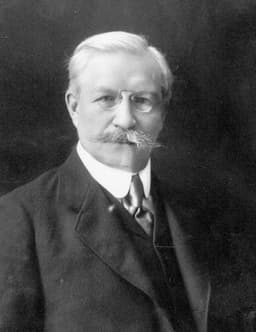
Lavr Kornilov
General · Modern
42.9Total

Tanaji Malusare
General · Modern
44.0Total
Basic Information
Born
1870
1620
Died
1918
1670
Era
Modern
Modern
Nationality
Russia
India
Occupation
General
General
Civilization
Western
Indian
Score Comparison
Military (10%)
25.0
45.0
Political (20%)
35.1
26.4
Influence (20%)
55.7
56.4
Legacy (20%)
46.7
45.8
Leadership (15%)
30.0
40.9
Strategy (15%)
50.0
38.6
TOTAL
42.9
44.0
Lavr Kornilov — Complete Timeline
1917 AD
Kornilov AffairPolitical Action
General Kornilov, as Commander-in-Chief, marched troops toward Petrograd in an attempt to seize power from the Provisional Government. The coup failed due to lack of support and resistance from workers and soldiers. Kornilov was arrested and imprisoned.
Kornilov AffairCoup AttemptProvisional Government
Impact: nationaldestructive
1918 AD
Command of the White Army in the Russian Civil WarWar◆ Major
After escaping from prison, Kornilov became the commander of the Volunteer Army, the core of the White forces in southern Russia. He led the First Kuban Campaign, a strategic retreat through hostile territory, but was killed by a shell in April 1918.
White ArmyRussian Civil WarVolunteer Army
Impact: national
Death at the Battle of YekaterinodarWar◆ Major
Kornilov was killed by a direct hit from a Bolshevik shell while besieging Yekaterinodar. His death was a severe blow to the White movement. The Bolsheviks exhumed his body and publicly displayed it before burning it.
DeathWhite ArmyYekaterinodar
Impact: nationaltragic
Tanaji Malusare — Complete Timeline
1647 AD
Capture of Kondhana FortWar◆ Major
Tanaji Malusare assisted Shivaji in capturing Kondhana Fort (later renamed Sinhagad) from the Adil Shahi Sultanate. This was one of the early Maratha conquests.
ConquestMarathaFort
Impact: regionalconstructive
1659 AD
Participation in the Battle of PratapgadWar◆ Major
Tanaji Malusare fought in the Battle of Pratapgad, where Shivaji killed Afzal Khan. He was part of the Maratha force that defeated the Adil Shahi army.
BattleMarathaVictory
Impact: regionalconstructive
1670 AD
Battle of SinhagadWar
Tanaji Malusare led a night assault on Sinhagad Fort, scaling the walls with a monitor lizard named Yashwanti. He captured the fort from the Mughals but was killed in the fighting.
BattleMarathaFort
Impact: regionaltragic
This comparison has not been analyzed yet.
One-time AI generation (~1 minute). Scores and timeline are already available below.
Rankings
🥇
Tanaji MalusareLeader
Mil: 45.0Pol: 26.4Inf: 56.4
44.0
🥈
Lavr Kornilov
Mil: 25.0Pol: 35.1Inf: 55.7
42.9
+1.1 behind
How This Comparison Works
Algorithm
Each figure is scored on 6 dimensions (0—100 scale) based on structured historical data: Military (10%), Political (20%), Influence (20%), Legacy (20%), Leadership (15%), Strategy (15%). The weighted total produces the final ranking.
Data Sources
Scores are computed from structured sub-indicators in the database. Scale factors adjust for era (Ancient ×0.85, Modern ×1.0) and civilization size (Eastern ×1.05, Other ×0.80) to account for differences in population and military scale.
Maximum 3 Figures
Comparisons are limited to 2—3 figures to ensure readability and statistical meaningfulness.
Error Margins
±5 points per dimension — Sub-scores are derived from historical records with inherent uncertainty. Two figures within 5 points on a dimension should be considered roughly equivalent in that area.
Total Score Accuracy
±3 points overall — The weighted combination of 6 dimensions produces a total score with approximately ±3 points of uncertainty. Differences of less than 3 points are not statistically significant— the figures are effectively tied.
Known Limitations
- Historical records are incomplete and uneven across civilizations
- Figures from oral-tradition societies may be underrepresented
- Occupation labels can misclassify multi-role figures
- Scores measure capability and impact, not moral character
- Quantitative scoring is a comparison tool, not absolute truth
Capability Radar
Military (10%) — Battles & Warfare
Battles
45
25
Win Rate
40
30
Expansion
20
10
Political (20%) — Governance & Reform
Reform
30
5
Diplomacy
20
10
Economy
10
5
Influence (20%) — Cultural & Global Reach
Cultural
25
40
Global
20
10
Legacy (20%) — Historical Impact
Historical
40
35
Longevity
30
30
Leadership (15%) — Power & Stability
Tenure
15
5
Stability
5
5
Strategy (15%) — Tactics & Innovation
Strategy
50
20
Tactics
55
35
Reform
60
5
Similar Comparisons
Comments & Discussion
No comments yet. Be the first to share your thoughts!