Loading...
This comparison has not been analyzed yet.
One-time AI generation (~1 minute). Scores and timeline are already available below.
Lawrence Wong vs Murad Ali Shah
Lawrence Wong leads by 1.0 pts · 2 figures compared
…

Lawrence Wong
Politician · Modern
48.3Total
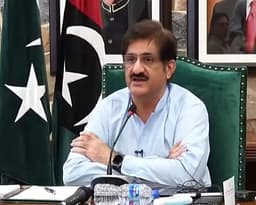
Murad Ali Shah
Politician · Modern
47.3Total
Basic Information
Born
1972
1962
Died
—
—
Era
Modern
Modern
Nationality
Singapore
Pakistan
Occupation
Politician
Politician
Civilization
Eastern
Indian
Score Comparison
Military (10%)
48.0
10.9
Political (20%)
46.6
68.0
Influence (20%)
51.0
48.6
Legacy (20%)
37.5
37.5
Leadership (15%)
65.7
72.0
Strategy (15%)
45.0
36.9
TOTAL
48.3
47.3
Lawrence Wong — Complete Timeline
2020 AD
Led COVID-19 Task ForcePolitical Action◆ Major
Lawrence Wong co-chaired the multi-ministry task force for COVID-19 from January 2020. He oversaw Singapore's pandemic response, including border controls, testing, and vaccination rollout, which was widely praised for its effectiveness.
COVID-19Public HealthTask Force
Impact: nationalconstructive
2022 AD
Announced as Fourth Generation LeaderPolitical Action◆ Major
On April 14, 2022, Lawrence Wong was announced as the leader of the People's Action Party's fourth-generation (4G) team, effectively making him the designated successor to Prime Minister Lee Hsien Loong. This formalized his position as the next prime minister.
Singapore PoliticsLeadership SuccessionPAP
Impact: national
2024 AD
Appointed Prime Minister of SingaporePolitical Action◆ Major
Lawrence Wong was appointed as the 4th Prime Minister of Singapore on May 15, 2024, succeeding Lee Hsien Loong. He became the first prime minister born after Singapore's independence, leading the People's Action Party government.
Singapore PoliticsLeadership TransitionPAP
Impact: national
Murad Ali Shah — Complete Timeline
2016 AD
Elected Chief Minister of SindhPolitical Action◆ Major
Murad Ali Shah became the Chief Minister of Sindh after the death of his predecessor. He has since been re-elected, leading the PPP government in the province and focusing on infrastructure and social development.
Chief MinisterSindhPPP
Impact: regionalconstructive
2017 AD
Launched Karachi Transformation PlanReform◆ Major
Shah initiated the Karachi Transformation Plan, a comprehensive development project aimed at improving infrastructure, water supply, and transport in Karachi. The plan faced delays and funding issues but represented a major effort to address urban challenges.
KarachiUrban DevelopmentInfrastructure
Impact: regionalconstructive
2020 AD
Managed COVID-19 Response in SindhPolitical Action◆ Major
Shah led Sindh's response to the COVID-19 pandemic, implementing lockdowns and health measures. His approach was praised for being proactive but also criticized for economic impacts and coordination issues with the federal government.
COVID-19Pandemic ResponseSindh
Impact: regionalconstructive
2022 AD
Survived No-Confidence MotionPolitical Action
Shah faced a no-confidence motion in the Sindh Assembly, which he survived due to PPP's majority. The motion was part of broader political turmoil following the ouster of Prime Minister Imran Khan.
No-ConfidenceSindh AssemblyPolitical Turmoil
Impact: regional
This comparison has not been analyzed yet.
One-time AI generation (~1 minute). Scores and timeline are already available below.
Rankings
🥇
Lawrence WongLeader
Mil: 48.0Pol: 46.6Inf: 51.0
48.3
🥈
Murad Ali Shah
Mil: 10.9Pol: 68.0Inf: 48.6
47.3
+1.0 behind
How This Comparison Works
Algorithm
Each figure is scored on 6 dimensions (0—100 scale) based on structured historical data: Military (10%), Political (20%), Influence (20%), Legacy (20%), Leadership (15%), Strategy (15%). The weighted total produces the final ranking.
Data Sources
Scores are computed from structured sub-indicators in the database. Scale factors adjust for era (Ancient ×0.85, Modern ×1.0) and civilization size (Eastern ×1.05, Other ×0.80) to account for differences in population and military scale.
Maximum 3 Figures
Comparisons are limited to 2—3 figures to ensure readability and statistical meaningfulness.
Error Margins
±5 points per dimension — Sub-scores are derived from historical records with inherent uncertainty. Two figures within 5 points on a dimension should be considered roughly equivalent in that area.
Total Score Accuracy
±3 points overall — The weighted combination of 6 dimensions produces a total score with approximately ±3 points of uncertainty. Differences of less than 3 points are not statistically significant— the figures are effectively tied.
Known Limitations
- Historical records are incomplete and uneven across civilizations
- Figures from oral-tradition societies may be underrepresented
- Occupation labels can misclassify multi-role figures
- Scores measure capability and impact, not moral character
- Quantitative scoring is a comparison tool, not absolute truth
Capability Radar
Military (10%) — Battles & Warfare
Battles
31
21
Win Rate
39
26
Expansion
40
29
Political (20%) — Governance & Reform
Reform
30
45
Diplomacy
40
50
Economy
45
55
Influence (20%) — Cultural & Global Reach
Cultural
20
20
Global
25
10
Legacy (20%) — Historical Impact
Historical
15
20
Longevity
10
15
Leadership (15%) — Power & Stability
Tenure
15
60
Stability
50
50
Strategy (15%) — Tactics & Innovation
Strategy
43
30
Tactics
44
39
Reform
47
38
Similar Comparisons
Comments & Discussion
No comments yet. Be the first to share your thoughts!